Society

walking
Society

Walking Clubs Are Bringing People Together Again

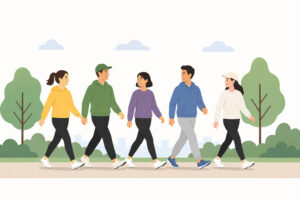
Not long ago, fitness culture seemed dominated by intense workouts. Social media was filled with marathon training, high-intensity interval workouts, cycling challenges, and gym transformations. Many people felt that exercise had become something competitive, demanding, and often intimidating. Yet in 2026, a much simpler activity is gaining attention around the world: walking. Walking clubs are becoming increasingly popular in cities, suburbs, and small towns alike. Groups of strangers gather in parks, along rivers, in city centers, and through residential neighborhoods simply to walk together. Unlike traditional sports clubs, there are often no scores, no winners, and no pressure to perform. At first glance, the trend may seem surprisingly ordinary. After all, people have always walked. But the growing popularity of
public drinking fountains
Society

Public Drinking Fountains Are Making a Quiet Return

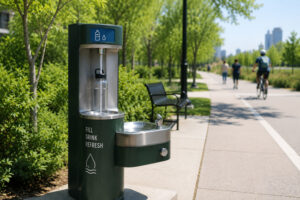
For many people, public drinking fountains are easy to overlook. They sit along walking paths, inside parks, near sports facilities, and in transportation hubs. Most people pass by without giving them much thought. Yet in a growing number of communities, public drinking fountains are receiving renewed attention as cities reconsider how public spaces can better serve residents. While they may seem like a small feature compared to larger infrastructure projects, drinking fountains play a surprisingly practical role in everyday life. Their gradual return to parks, trails, and public gathering places reflects changing attitudes toward health, accessibility, and the design of shared spaces. In many ways, the story of public drinking fountains is not simply about access to water. It is

parks
Society

Public Benches Are Playing a Bigger Role in Urban Life Than Many Realize

Most people rarely think about public benches. They sit down for a few minutes, check their phone, wait for a friend, or simply take a short break before continuing with their day. The bench serves its purpose and quickly fades into the background. Yet in many cities, these simple pieces of public furniture quietly support countless daily interactions. A walk through a busy neighborhood often reveals how frequently public seating is used. Older adults rest during morning walks. Office workers eat lunch outdoors. Parents watch children play nearby. Tourists stop to review maps or plan the next part of their trip. Throughout the day, different groups use the same spaces in different ways. What makes public benches interesting is not

Society

Community Sports Programs Continue to Bring Different Generations Together

On weekday evenings, local gyms, recreation centers, and school sports facilities often fill with people of different ages. Teenagers practice basketball on one court. Parents wait nearby while chatting with friends. Older adults participate in walking clubs, badminton groups, or fitness classes in neighboring spaces. Although everyone may arrive for different reasons, they often end up sharing the same community environment. These programs have become a familiar part of local life in many cities and towns. Unlike professional sports or highly competitive leagues, community sports programs are usually designed to be accessible. Participants do not need advanced skills or extensive experience. In many cases, the goal is simply to encourage regular activity while providing opportunities for people to spend time

parks
Society

How Apartment Living Is Changing Neighbor Relationships

For many people, apartment living has become a normal part of daily life. In large cities especially, apartment buildings continue to shape how residents experience community. Hundreds of people may live within the same complex, share the same elevators, walk through the same entrances, and use the same facilities, yet their relationships with neighbors can vary dramatically. Older generations often recall a time when neighbors knew one another more closely. Children played together outdoors, residents exchanged food, and conversations happened naturally throughout the day. While those experiences still exist in some communities, apartment living has introduced a different rhythm to neighborhood interactions. One reason is simply scale. Modern apartment complexes can house hundreds or even thousands of residents. In such

libraries
Society

Shared Workspaces Are Changing How People Use Public Places

A laptop, a pair of headphones, and a table near a power outlet are often all someone needs to work for a few hours. Not long ago, most people completed their work either in a traditional office or at home. Today, the situation looks different. Shared workspaces can be found in libraries, cafés, shopping centers, community buildings, and dedicated coworking facilities. In many cities, these spaces have quietly become part of everyday life. The change is easy to notice. On a weekday morning, a local café may contain a mix of students, freelancers, remote employees, and small business owners. Some stay for an hour. Others remain for most of the day. Although their jobs may be completely different, they often

Society

More People Are Choosing to Live Alone, But Not Necessarily in Isolation

Living alone was once often associated with a particular stage of life. It was commonly viewed as a temporary arrangement for students, young professionals, or individuals between major life transitions. Today, however, single-person households are becoming a familiar part of many communities. In cities around the world, the number of people living alone has steadily increased. Rising housing costs, changing career paths, later marriages, and shifting personal preferences have all contributed to the trend. For many people, living alone is no longer seen as an unusual choice but simply one of several ways to organize daily life. Yet one assumption continues to follow the conversation: the idea that living alone automatically means being socially disconnected. The reality is often more

libraries
Society

Public Reading Spaces Remain Popular in an Increasingly Digital World

Walk into a public library on a weekday afternoon and the scene may be surprisingly familiar. Students review notes before exams, remote workers sit quietly behind laptop screens, and readers browse shelves looking for their next book. Similar scenes can be found in university libraries, reading rooms, and even modern bookstores that provide dedicated spaces for visitors to sit and read. This may seem unexpected at a time when digital content is available almost everywhere. Smartphones, tablets, and laptops allow people to access books, articles, and educational resources within seconds. Yet public reading spaces continue to attract visitors. Part of the explanation may simply be the environment. Reading at home is not always easy. Notifications, household responsibilities, and other distractions

libraries
Society

Why Public Libraries Are Seeing More Visitors Again

For years, public libraries were often viewed as institutions struggling to remain relevant in a digital world. With smartphones providing instant access to information and e-books becoming widely available, many predicted that traditional libraries would gradually lose visitors. Surprisingly, the opposite has happened in many communities. Recent years have seen renewed interest in public libraries, not only among students and researchers but also among families, remote workers, and local residents looking for places to gather, learn, and connect. One reason is that libraries have evolved far beyond their traditional role. While books remain central, modern libraries now offer much more. Visitors can attend workshops, join community programs, use meeting rooms, access digital resources, and participate in educational events. In many