
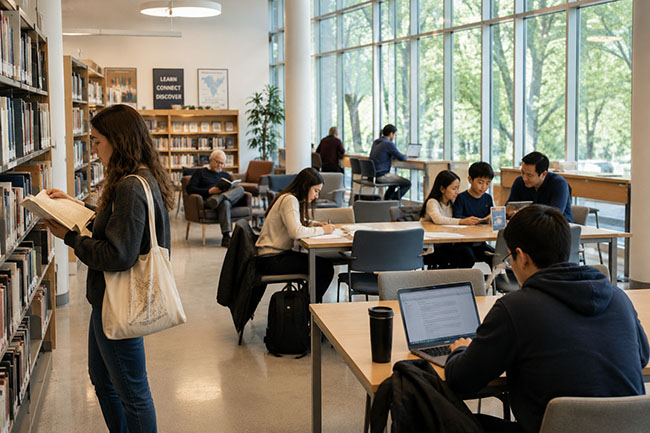
A laptop, a pair of headphones, and a table near a power outlet are often all someone needs to work for a few hours.
Not long ago, most people completed their work either in a traditional office or at home. Today, the situation looks different. Shared workspaces can be found in libraries, cafés, shopping centers, community buildings, and dedicated coworking facilities. In many cities, these spaces have quietly become part of everyday life.
The change is easy to notice. On a weekday morning, a local café may contain a mix of students, freelancers, remote employees, and small business owners. Some stay for an hour. Others remain for most of the day. Although their jobs may be completely different, they often share the same space.
The rise of remote and flexible work has played a role in this shift. For some people, working from home every day can become repetitive or distracting. Others simply prefer separating their work environment from their living space. Shared workspaces provide an alternative without requiring a full-time office.
What makes these spaces interesting is that they were not originally designed for the same purpose. A library remains a library. A café is still a café. Yet many public places now serve multiple functions depending on how people choose to use them.
Businesses have adapted as well. Some cafés have added larger tables, additional charging stations, and improved internet access. Libraries increasingly provide meeting rooms and collaborative work areas alongside traditional reading spaces. Even shopping centers have experimented with seating areas intended for work and study.
The people using these spaces are not always looking for social interaction, but the environment often creates unexpected connections. Someone may recognize a familiar face after visiting the same location for several weeks. Casual conversations sometimes develop into professional relationships or friendships.
Technology has made this lifestyle possible. Video meetings, cloud-based software, and portable devices allow work to happen almost anywhere. As a result, the definition of a workplace has become more flexible than it was for previous generations.
At the same time, the popularity of shared workspaces highlights something beyond technology. Many people appear to value environments that offer a balance between independence and community. They may not want the structure of a traditional office, but they also do not want complete isolation.
The continued growth of flexible work arrangements suggests that public spaces will keep evolving alongside changing habits. What once served a single purpose may now support several different activities throughout the day.
For many people, the workplace is no longer a single location. It is simply wherever they can focus, connect, and get things done.