
Culture

gardening
Culture

Easy Flowers for Beginner Gardeners

Starting a flower garden is an exciting and rewarding hobby, but it can also feel overwhelming for beginners. Garden centers offer countless varieties of flowers, each with different colors, fragrances, growing habits, and care requirements. It is easy to be attracted to beautiful blooms without realizing that some plants require far more attention than others. For first-time gardeners, choosing flowers that are resilient and easy to maintain is often the key to success. Plants that tolerate changing weather conditions, recover well from minor mistakes, and require simple watering routines help beginners develop confidence while learning the basics of gardening. Gardening is more than growing plants. It is an opportunity to create a relaxing outdoor or indoor environment, observe seasonal changes,

bookstores
Culture

Deckled Edges in Books: Purpose, History, and Benefits

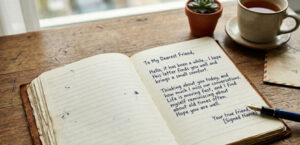
Books have evolved dramatically over the centuries, from handwritten manuscripts copied by monks to mass-produced paperbacks and digital e-books. Despite these changes, certain traditional design elements continue to appear in modern publishing. One of the most recognizable is the deckled edge—the intentionally uneven or rough edge found on the pages of some books. Many readers encounter deckled edges for the first time without knowing what they are. Some assume the book was poorly trimmed during manufacturing, while others believe the pages have been damaged during shipping. In reality, deckled edges are almost always an intentional design feature that reflects centuries of papermaking history. Although they serve little practical purpose in modern printing, deckled edges remain popular because they add character,

local content
Culture

The Rise of Local Content in Global Entertainment

For much of the twentieth century, international entertainment followed a relatively predictable pattern. Films and television programs produced in the United States and a small number of European countries were exported around the world, while productions from smaller markets usually remained within their own national borders. Local stories could become extremely successful at home, but language barriers, limited distribution networks, and high marketing costs often prevented them from reaching a wider audience. That structure has changed significantly. Today, a television series produced in South Korea, Spain, Germany, India, Türkiye, Japan, or Brazil can become a global success within a short period. Audiences regularly watch programs in languages they do not speak, and subtitles are no longer viewed as a major

Culture

What I Learned About Publishing That Matters More Than Money

When I first decided to start a publishing company, I viewed it mainly as a business. The goal seemed straightforward: find good manuscripts, produce high-quality books, and sell them to as many readers as possible. Like any other business, I assumed success would be measured by sales, revenue, and profit. After all, publishers need income to print new books, pay authors, and continue operating. That way of thinking wasn’t wrong. It simply wasn’t complete. The more books I published, the more I realized that books are fundamentally different from most products we buy every day. A jacket is judged by how well it fits. A smartphone is evaluated by its features. But a book is something entirely different. A book

Home Garden
Culture

Why We Still Need to Read Books in the Digital Age

Every day, we absorb an incredible amount of information. Before we even get out of bed, many of us check the news on our phones. During the commute, we watch YouTube videos or scroll through short-form content. Whenever a question comes to mind, we open a search engine or ask an AI assistant for the answer. Finding information has never been easier. What once required a trip to the library can now be discovered within seconds. Compared to previous generations, we have access to more knowledge than ever before, delivered almost instantly. Yet something about this feels strangely incomplete. Although information is everywhere, many people feel they have less time—and perhaps less ability—to think deeply about what they’re learning. Reading

short form content
Culture

What Are We Gaining and Losing in the Age of Short-Form Content?

A few years ago, watching a ten- or twenty-minute video felt completely normal. If I wanted to learn something new, I would read an entire blog post or watch a detailed tutorial from beginning to end. When I discovered an interesting book, I would set aside time to read it slowly instead of rushing through it. Somewhere along the way, however, my habits changed without me realizing it. Today, I can open my phone intending to watch just one short video, only to discover an hour has disappeared. My thumb keeps moving almost automatically, swiping from one thirty-second clip to the next. Each video feels so brief that it never seems like I’m spending very much time, yet together they

Writing
Culture

Why People Still Love Books in a World Full of Screens

There was a time when I thought I was slowly losing the habit of reading. It didn’t happen all at once. I didn’t wake up one morning and decide that books no longer mattered. Instead, reading quietly disappeared from my daily routine. Whenever I had a few free minutes, I reached for my phone instead of a book. If I was waiting in line, I checked social media. If I had ten spare minutes before bed, I watched short videos. If I had a question, I searched for a quick answer online. Little by little, I became someone who consumed information all day without actually spending much time reading. At first, I didn’t think there was a problem. After all,

haimnews
Culture

Timing Matters More Than We Realize

For a long time, I believed that good decisions always produced good results. If the idea was strong enough, the effort was sincere enough, and the intention was good enough, then things would eventually work out. But life has taught me something more complicated. A good decision made at the wrong time can still fail. A meaningful conversation started too early can push someone away. A great opportunity accepted before we are ready can become overwhelming. Even the right words can lose their power when spoken at the wrong moment. The older I get, the more I realize that timing is not a minor detail. Sometimes it changes everything. The Same Decision Can Have a Different Result There have been

good books
Culture

Why Good Books Sometimes Don’t Sell

When I first entered publishing, I believed something that now seems a little naive. I believed that good books would naturally find readers. It felt reasonable at the time. If a book contained valuable ideas, meaningful insights, or a powerful message, surely people would recognize its worth. Surely quality would rise to the surface. After all, isn’t that how it should work? If one book is better written, more helpful, and more thoughtful than another, shouldn’t it sell more copies? The longer I’ve worked in publishing, the more I’ve realized that reality is far more complicated. Some excellent books struggle to find readers. Some books with tremendous value sell only a few hundred copies. Meanwhile, other books seem to spread

courier box
Culture

The Day I Received My First Box of Books

There are some packages you forget about minutes after opening them. This was not one of them. I still remember the day the delivery truck arrived with the first box of books my publishing company had ever produced. From the outside, it looked completely ordinary. A brown cardboard box sealed with packing tape. Nothing about it suggested the months of work, uncertainty, excitement, and frustration that had gone into what was inside. To anyone walking past, it was just another delivery. To me, it felt like the end of one journey and the beginning of another. Because inside that box was something I had imagined, planned, worried about, and worked on for months. My first published book. Long Before There