
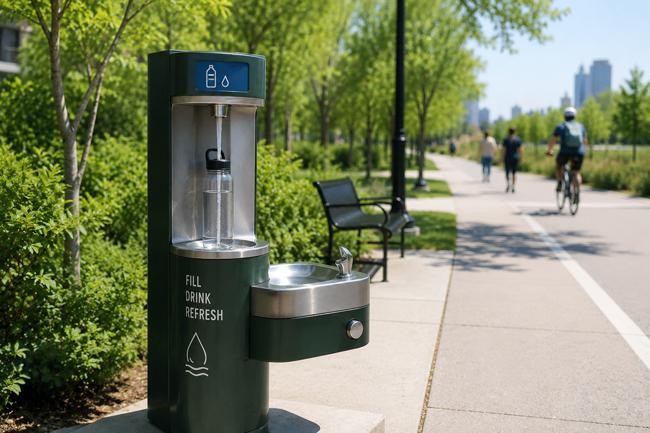
For many people, public drinking fountains are easy to overlook.
They sit along walking paths, inside parks, near sports facilities, and in transportation hubs. Most people pass by without giving them much thought. Yet in a growing number of communities, public drinking fountains are receiving renewed attention as cities reconsider how public spaces can better serve residents.
While they may seem like a small feature compared to larger infrastructure projects, drinking fountains play a surprisingly practical role in everyday life. Their gradual return to parks, trails, and public gathering places reflects changing attitudes toward health, accessibility, and the design of shared spaces.
In many ways, the story of public drinking fountains is not simply about access to water. It is about how communities think about convenience, public services, and the experience of spending time outdoors.
Why Public Drinking Fountains Declined
Public drinking fountains were once a common feature of city life.
Throughout much of the twentieth century, they could be found in schools, parks, train stations, shopping districts, and public buildings. Providing free access to drinking water was viewed as a basic public service.
Over time, however, their presence became less noticeable.
Changes in maintenance costs, concerns about sanitation, aging infrastructure, and the growing popularity of bottled water contributed to their decline in many places. As bottled beverages became widely available, some people began viewing public fountains as less necessary than they once were.
At the same time, urban development priorities shifted toward larger projects and commercial amenities. Smaller features such as public seating, shade structures, and drinking fountains often received less attention.
As a result, many residents grew accustomed to carrying bottled water or purchasing drinks whenever they needed them.
For years, this seemed like a permanent change.
Yet recent developments suggest that public attitudes may be shifting once again.
A Growing Focus on Accessibility and Outdoor Spaces
One reason public drinking fountains are receiving renewed attention is the increasing importance of outdoor public spaces.
Parks, walking trails, cycling routes, and recreational facilities have become more heavily used in many communities. People spend more time walking, exercising, and participating in outdoor activities than some planners anticipated a decade ago.
Access to drinking water becomes particularly important in these environments.
A person walking several kilometers through a park may not want to carry multiple bottles. Families visiting playgrounds, runners using public trails, and cyclists traveling through urban areas all benefit from convenient access to water.
Municipal governments and urban planners have increasingly recognized this need.
Many newly installed fountains are designed differently from older models. Some include bottle-filling stations, making it easier for people to refill reusable containers. Others are designed with accessibility features that accommodate a wider range of users, including children, older adults, and people with disabilities.
The emphasis is often on practicality rather than visibility.
Unlike major public projects, drinking fountains rarely attract headlines. Yet they contribute to the overall usability of public spaces in ways that residents notice over time.
A well-placed fountain can encourage people to stay longer, walk farther, and use public facilities more comfortably.
Small Infrastructure with Everyday Impact
The return of public drinking fountains highlights an interesting aspect of urban life.
Not every meaningful improvement requires large-scale investment.
Cities often discuss transportation systems, housing developments, and major construction projects. While these initiatives are important, smaller pieces of infrastructure can have a surprisingly direct impact on daily experiences.
Drinking fountains are one example.
Their value becomes most apparent when they are absent. A park without access to water feels less convenient. A long walking route becomes more challenging. Visitors may cut trips short or rely on disposable beverages instead.
When fountains are available, they quietly support a wide range of activities without demanding attention.
They also reflect broader discussions about sustainability. Refillable water bottles have become increasingly common, and public filling stations help support their use. While environmental considerations are only one part of the conversation, they contribute to the growing interest in maintaining accessible water infrastructure.
Perhaps most importantly, public drinking fountains reinforce the idea that cities should provide services that benefit everyone.
Unlike commercial offerings, they are available regardless of income, age, or purpose. Anyone passing through a public space can use them.
That universality remains one of their greatest strengths.
Conclusion
Public drinking fountains may not be the most noticeable feature of a city, but their quiet return reflects larger changes in how communities think about public spaces.
As parks, trails, and outdoor gathering areas become increasingly important, access to simple amenities can significantly influence how comfortable and welcoming those spaces feel. Drinking fountains help support healthy activity, improve accessibility, and encourage people to spend more time enjoying shared environments.
Their value lies not in complexity but in usefulness.
Most people will never visit a park because it has a drinking fountain. Yet many people benefit from having one available when they need it.
In an era when attention is often focused on major innovations and large-scale projects, the return of public drinking fountains serves as a reminder that small improvements can still make a meaningful difference in everyday life.