For a long time, I underestimated carnations.
Like many people, I associated them with school events, family celebrations, and the bouquets that seemed to appear every year around Mother’s Day. They were familiar, dependable, and easy to find almost anywhere.
Because of that familiarity, I never paid much attention to them.
If someone had asked me to name the most beautiful flower, I probably would have mentioned roses, tulips, or peonies long before carnations ever came to mind.
Then one day, I received a bouquet that included several carnations.
Weeks later, while the other flowers had faded and been discarded, the carnations were still standing.
Their petals remained vibrant.
Their stems remained strong.
And that was the moment I began looking at them differently.
Over the years, I’ve come to appreciate carnations not only for their remarkable longevity but also for the emotions people attach to them. Different colors carry different meanings, and I’ve found that those meanings often become intertwined with personal memories.
Today, whenever I see carnations, I don’t think about flower guides or botanical classifications first.
I think about the people and moments connected to them.
The Flower I Appreciated More as I Got Older
Some flowers impress you immediately.
Carnations tend to grow on you over time.
At least, that was my experience.
When I was younger, I preferred flowers that felt dramatic. Large blooms, bold colors, and eye-catching arrangements naturally attracted my attention.
Carnations seemed almost ordinary by comparison.
But as I spent more time around gardens and flower arrangements, I started noticing something interesting.
Carnations appeared everywhere.
Weddings.
Graduation ceremonies.
Church events.
Family celebrations.
Memorial services.
There was a reason florists continued using them decade after decade.
They were dependable.
Their blooms lasted longer than many other cut flowers.
They blended well with other flowers while still maintaining their own character.
And unlike some delicate flowers that looked beautiful for only a few days, carnations seemed determined to stay fresh for as long as possible.
I remember placing a mixed bouquet on a dining table one spring. After a week, several flowers were already showing signs of decline.
The carnations looked almost unchanged.
After two weeks, they still looked surprisingly good.
That resilience gave me a new appreciation for them.
Beauty is one thing.
Endurance is another.
Carnations have both.
What Different Carnation Colors Have Come to Mean to Me
Flower guides often provide specific meanings for different carnation colors.
While those traditional meanings are useful, I’ve found that real-life experiences often give those colors even deeper significance.
Red Carnations: More Than Romantic Love
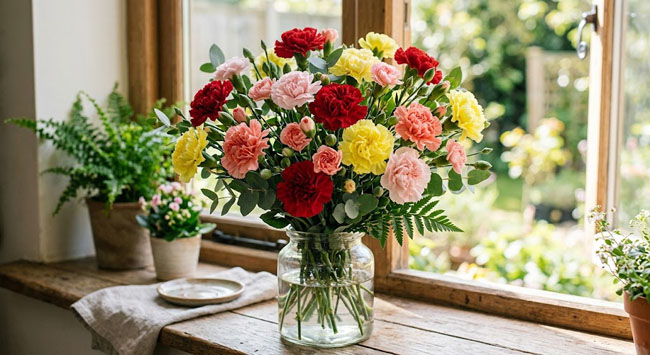
Red carnations are often associated with deep love and admiration.
At first glance, that sounds very similar to red roses.
But in my experience, red carnations feel slightly different.
Red roses often carry an unmistakable romantic message.
Red carnations seem broader.
I’ve seen them used to honor parents, mentors, teachers, and long-time friends.
I once attended a celebration recognizing someone’s decades of service in a community organization. The floral arrangements featured red carnations prominently.
Nobody interpreted them romantically.
Instead, they communicated respect, appreciation, and heartfelt gratitude.
That experience changed how I viewed them.
Red carnations still symbolize affection, but they often express admiration in a way that feels timeless and sincere.
Pink Carnations: The Color of Gratitude
If there is one carnation color I encounter most frequently, it’s pink.
And honestly, it makes sense.
Pink carnations seem perfectly suited to moments of appreciation.
I remember giving a bouquet of pink carnations to someone who had quietly helped me through a difficult season.
There was no grand occasion.
No celebration.
Just a desire to say thank you.
Looking back, pink carnations felt like the right choice because they communicated gratitude without feeling overly formal.
Whenever I see them now, I think about appreciation.
Not dramatic gratitude.
Not public recognition.
The quieter kind.
The kind that comes from remembering someone’s kindness long after the moment has passed.
Perhaps that’s why pink carnations remain so strongly connected to Mother’s Day.
Few flowers communicate thankfulness as naturally as they do.
Yellow Carnations: A Lesson in Changing Meanings
Yellow carnations have one of the most interesting reputations in the flower world.
Historically, they were often associated with disappointment, rejection, or strained emotions.
When I first learned that, I was surprised.
Because visually, yellow carnations seem cheerful.
Bright.
Optimistic.
They don’t look like flowers carrying negative messages.
Over time, I’ve noticed that modern interpretations have softened considerably.
Many people now view yellow carnations as symbols of friendship, positivity, and encouragement.
In fact, I’ve seen yellow carnations used successfully in celebrations and cheerful arrangements without anyone thinking twice about older meanings.
That experience taught me something larger about flowers.
Meanings evolve.
Culture changes.
What matters most is often the intention behind the gesture.
When someone gives yellow flowers today, they are usually trying to brighten someone’s day, not communicate disappointment.
The Secret to Why Carnations Last So Long
One reason carnations continue to be popular is surprisingly practical.
They last.
I’ve tested this many times without intending to.
Whenever I bring flowers home, carnations consistently outlast many of their companions.
The first few times this happened, I assumed it was coincidence.
Eventually, I realized it was one of their defining characteristics.
A little care goes a long way.
I’ve learned to trim the stems as soon as I bring them indoors and replace the water every few days.
Those simple habits can dramatically extend their lifespan.
One arrangement remained attractive for nearly three weeks.
That kind of durability is rare.
For gardeners, carnations offer similar rewards.
A friend once told me that carnations are among the easiest flowers to appreciate because they don’t constantly demand attention.
After seeing them grow in several gardens, I understand what he meant.
They enjoy sunlight.
They dislike soggy soil.
They reward basic care with long-lasting blooms.
Many gardening lessons become complicated.
Carnations are refreshingly straightforward.
Why I Think Carnations Deserve More Credit
If someone asked me which flower is most underrated, carnations would probably be near the top of my list.
They may never generate the excitement that roses or orchids do.
They rarely become the centerpiece of elaborate flower festivals.
They don’t have the dramatic reputation of some luxury blooms.
Yet they continue showing up in meaningful moments of people’s lives.
They appear in celebrations.
In expressions of gratitude.
In moments of remembrance.
In ordinary acts of kindness.
And perhaps that’s their greatest strength.
Carnations don’t need to be extraordinary to matter.
They simply need to be present.
Reliable.
Beautiful.
Lasting.
The older I get, the more I appreciate those qualities.
Conclusion
For years, I viewed carnations as ordinary flowers.
Now I see them differently.
I’ve come to admire their resilience, their versatility, and the quiet way they become part of important memories.
Red carnations remind me of admiration and heartfelt respect.
Pink carnations bring thoughts of gratitude and kindness.
Yellow carnations remind me that meanings can evolve and that bright gestures often matter more than old traditions.
Most of all, carnations have taught me that beauty doesn’t always need to be dramatic to leave an impression.
Sometimes the flowers that stay with us longest are the ones we almost overlooked at first.
And perhaps that’s why carnations continue to endure, generation after generation.
Not because they demand attention.
But because they quietly earn it.