Every spring, there is one flower I find myself looking forward to more than almost any other.
Not because it’s rare.
Not because it’s difficult to grow.
But because few flowers announce the arrival of spring as beautifully as tulips.
I still remember the first time I planted tulip bulbs. It felt strange burying something in the soil during autumn and then walking away for months with nothing visible to show for it. Through winter, there was no sign of life above ground. If I hadn’t known better, I might have assumed nothing was happening.
Then one spring morning, small green shoots appeared.
Within weeks, those shoots transformed into elegant flowers swaying in the cool breeze.
That experience taught me why gardeners love tulips so much. They are more than colorful flowers. They are a reminder that growth often happens long before we can see the results.
Over the years, I’ve grown, photographed, and admired many tulips, and I’ve learned that each color seems to tell its own story. Understanding those meanings makes tulips even more special, whether you’re planting them in a garden or giving them as a gift.
Why Tulips Continue to Capture People’s Hearts
What fascinates me about tulips is their simplicity.
Many flowers rely on complex petals or dramatic shapes to attract attention.
Tulips do the opposite.
Their clean lines and elegant form feel almost effortless.
Perhaps that’s why they work equally well in formal gardens, flower arrangements, and simple bouquets placed on a kitchen table.
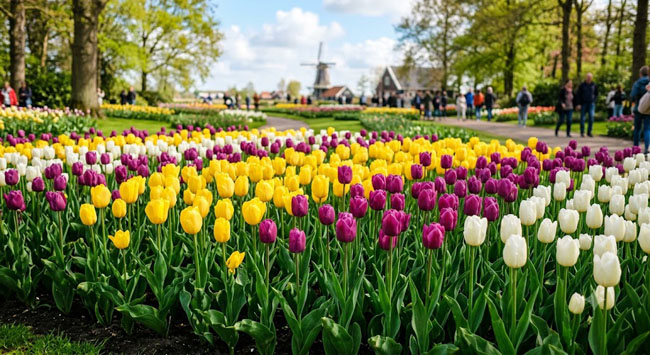
I remember visiting a public garden one spring where thousands of tulips were planted together. There were no elaborate landscaping features competing for attention. Just rows upon rows of tulips in different colors.
Yet it was one of the most beautiful displays I had ever seen.
The flowers seemed to create an atmosphere rather than simply decorate a space.
Another reason tulips remain so popular is their connection to the seasons.
Unlike many flowers that bloom repeatedly, tulips make a brief appearance each year.
Their beauty feels temporary.
And perhaps that’s part of what makes them so memorable.
When something only lasts for a short time, we tend to appreciate it more.
What Different Tulip Colors Have Come to Mean to Me
Most flower guides will give you a list of tulip meanings, but I’ve always found it more interesting to observe how people respond to different colors in real life.
Yellow Tulips: Brightness and Optimism
Yellow tulips are impossible to ignore.
The first time I planted them, I expected them to look cheerful. What surprised me was how much energy they seemed to bring to the garden.
Even on cloudy days, they appeared bright.
Historically, yellow tulips were sometimes associated with unrequited love or disappointment. Today, however, most people view them very differently.
When I see yellow tulips, I think of optimism.
Friendship.
Encouragement.
New opportunities.
They are the kind of flowers I would choose for someone starting a new job, graduating, or beginning a new chapter in life.
Their presence feels uplifting.
Purple Tulips: Elegance and Lasting Affection
Purple tulips have a completely different personality.
There is something sophisticated about them.
I remember seeing a bouquet of deep purple tulips at an anniversary celebration. Unlike red flowers, which often communicate passion, purple tulips seemed to express something calmer and more enduring.
They are commonly associated with eternal love and admiration.
What I appreciate most is their sense of maturity.
They don’t demand attention the way brighter colors sometimes do.
Instead, they quietly create an impression that lingers.
White Tulips: Simplicity and New Beginnings
If I had to choose the most peaceful tulip color, it would probably be white.
White tulips possess a clean, understated beauty that works in almost any setting.
I’ve seen them used at weddings, graduation events, and celebrations marking significant life transitions.
Their symbolism of purity and new beginnings feels especially appropriate in those moments.
What I love most about white tulips is their versatility.
They can feel joyful without being loud.
Elegant without being formal.
Simple without being boring.
Whenever I encounter a bed of white tulips, I find myself slowing down and appreciating them more carefully.
The Surprisingly Rewarding Process of Growing Tulips
For many people, tulips are flowers they admire in parks or buy from florists.
Growing them yourself is a completely different experience.
One thing that surprised me when I first started gardening was how much of tulip growing happens before spring arrives.
Choosing Healthy Bulbs
The quality of the bulb determines much of what happens later.
I learned this lesson the hard way.
One year I bought discounted bulbs near the end of the planting season.
Some felt soft.
Others showed signs of damage.
I planted them anyway.
The following spring, the results were disappointing.
Since then, I’ve become much more selective.
Healthy tulip bulbs should feel firm and heavy for their size.
They should be free from mold, soft spots, and visible damage.
Good bulbs often produce noticeably stronger plants.
Planting in Autumn Requires Patience
Perhaps the most unusual thing about tulips is that you plant them months before you see flowers.
In my climate, autumn is the ideal planting season.
At first, this felt counterintuitive.
Why plant flowers just before winter arrives?
The answer lies in how tulips naturally grow.
They need a period of cold weather before they can develop properly.
Without that winter chilling period, many tulips struggle to bloom successfully.
Planting them in autumn feels like an act of trust.
You place the bulbs underground and simply wait.
Winter comes.
Nothing happens.
Then spring arrives, and suddenly the garden transforms.
Sunlight Matters More Than Most People Realize
One mistake I made early on was planting tulips in an area that received limited sunlight.
The plants survived, but the flower stems were weak and stretched.
The blooms were smaller than expected.
After moving future plantings to a sunnier location, the difference was remarkable.
Tulips thrive in bright conditions.
The healthiest blooms I’ve grown have always been in areas receiving at least six hours of sunlight each day.
Lessons I Learned from Common Tulip Problems
Like every gardener, I’ve made mistakes.
Fortunately, tulips are good teachers.
One common issue is producing lots of leaves but very few flowers.
When this happened to me, I initially blamed the bulbs.
Later I discovered the real problem was insufficient sunlight combined with excessive nitrogen fertilizer.
The plants were producing beautiful foliage but lacked the conditions needed for strong blooms.
Another challenge occurs when flower stems remain unusually short.
The first time I experienced this, I couldn’t understand what had gone wrong.
Eventually I learned that the bulbs hadn’t received enough cold exposure during winter.
Tulips depend on that cold period to develop properly.
Without it, their growth becomes irregular.
These experiences taught me something important about gardening.
Plants usually tell us what they need.
We simply have to learn how to listen.
Conclusion
Tulips have remained one of my favorite spring flowers not because they are rare or difficult to grow, but because they combine beauty, symbolism, and anticipation in a way few plants can.
Yellow tulips remind us of hope and optimism.
Purple tulips represent enduring affection and admiration.
White tulips symbolize purity and fresh beginnings.
But beyond their meanings, tulips teach something deeper.
They remind us that some of the most beautiful things in life require patience.
Months before the flowers appear, the bulbs are already doing their work beneath the soil.
Growth is happening, even when nothing is visible.
Perhaps that’s one reason tulips continue to resonate with so many people.
Every spring, they arrive as a reminder that new beginnings often emerge after seasons of waiting.
And when those first blooms finally open, the wait always feels worthwhile.