The first rose I ever bought wasn’t for a romantic occasion.
At least, not intentionally.
I was still young, standing awkwardly in a flower shop, trying to choose something for a teacher who had helped me through a difficult season. The shop was filled with roses of every color, and I remember staring at them longer than I should have.
Red felt too serious.
White felt too formal.
Yellow seemed cheerful.
Pink felt gentle.
In the end, I chose pink roses simply because they looked kind.
Years later, I realized that choice wasn’t accidental at all.
Flowers have a strange way of communicating things we struggle to put into words. We often think of roses as symbols of romance, but the more time I’ve spent around gardens, flower markets, weddings, church events, and even country roads where wild roses grow, the more I’ve come to appreciate how different each type of rose feels.
What fascinates me isn’t simply what flower guides say about roses.
It’s how people actually respond to them.
Over time, I’ve noticed that the color people choose often reveals what they are trying to say.
And sometimes, what they are unable to say.
The First Time I Realized Rose Colors Actually Matter
For a long time, I assumed flower color was mostly a matter of personal preference.
A rose was a rose.
The color was simply decoration.
That changed when I began paying attention to how roses were used in different situations.
One of the most memorable examples happened at a wedding I attended several years ago.
The entire venue was filled with white roses.
Not red.
Not pink.
Not yellow.
White.
At first I didn’t think much about it. But as the ceremony unfolded, I realized how perfectly the flowers matched the atmosphere.
Everything felt peaceful.
Elegant.
Simple.
The white roses weren’t demanding attention. Instead, they quietly supported the mood of the day.
A few months later, I attended a retirement celebration where the centerpiece arrangements were filled with yellow roses.
The feeling was completely different.
The room felt brighter.
More energetic.
More joyful.
The flowers seemed to communicate appreciation and friendship rather than romance.
That was probably the first time I understood that flower colors genuinely influence how people experience a space.
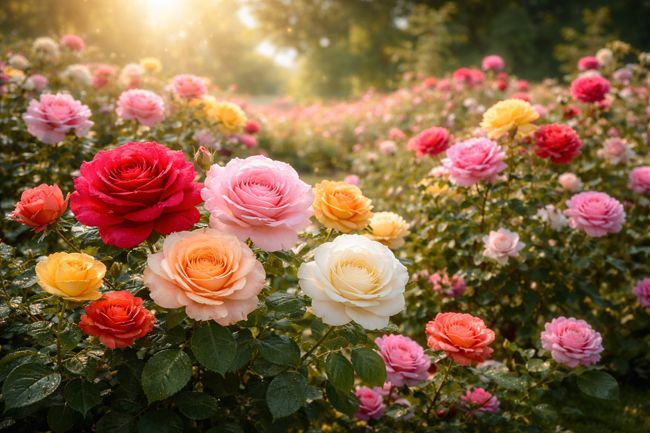
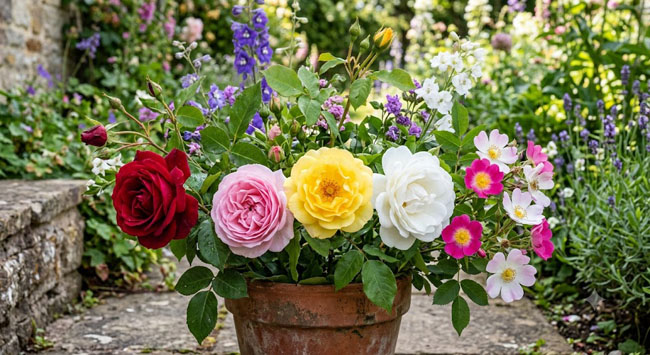
Red roses create intensity.
Pink roses create warmth.
Yellow roses create happiness.
White roses create calm.
The flowers may belong to the same family, but emotionally they feel like completely different plants.
Since then, I’ve noticed these patterns everywhere.
At anniversaries.
At graduations.
At church events.
Even in casual bouquets displayed at local markets.
People instinctively understand the language of roses, even if they couldn’t explain it.
What Different Rose Colors Have Come to Mean to Me
Most flower guides provide a list of symbolic meanings.
Red equals love.
Yellow equals friendship.
White equals purity.
While those interpretations are helpful, my understanding of roses has become more personal over the years.
Red Roses: More Than Romance
Red roses are impossible to separate from the idea of love.
That association is so deeply rooted that almost everyone recognizes it immediately.
But one thing I’ve noticed is that red roses often appear in situations that have nothing to do with romance.
I once attended an event honoring a community leader who had served faithfully for decades.
At the end of the ceremony, several red roses were presented as part of a commemorative arrangement.
Nobody found it strange.
In that moment, the flowers represented respect, sacrifice, and deep appreciation.
That experience changed how I viewed red roses.
They still symbolize love.
But they can also communicate admiration and honor.
Perhaps that is why they remain so popular.
The emotion they represent is powerful enough to apply in many different contexts.
Pink Roses: The Most Underrated Rose
If someone asked me which rose color I personally encounter most often, I would probably say pink.
Not because they are the most dramatic.
Quite the opposite.
Pink roses seem to occupy a space between friendship and romance.
Between celebration and comfort.
Between admiration and affection.
They fit almost anywhere.
I’ve seen pink roses given to mothers, teachers, friends, coworkers, and family members.
Unlike red roses, they rarely create misunderstandings.
Their message feels gentle.
Gracious.
Thoughtful.
Whenever I see pink roses, I think back to that first bouquet I bought years ago.
Without realizing it, I had chosen the color that best matched what I wanted to communicate.
Gratitude.
Respect.
Kindness.
Yellow Roses: The Color That Changed My Mind
For years, yellow roses were probably my least favorite.
I associated roses with red, so yellow felt unusual.
Then one summer I visited a public garden that had an entire section dedicated to yellow roses.
The experience completely changed my perspective.
The garden felt alive.
The flowers seemed to capture sunlight even on cloudy days.
Unlike red roses, which often create a sense of intensity, yellow roses feel approachable.
Comfortable.
Optimistic.
Since then, I’ve started noticing how often yellow roses appear during happy occasions.
Celebrations.
Homecomings.
Friendships.
New beginnings.
They don’t demand emotional depth.
Instead, they communicate joy.
And sometimes joy is exactly what people need.
White Roses: Quiet Strength
White roses have always impressed me for a different reason.
They don’t rely on bold color to create impact.
Their beauty comes from simplicity.
I’ve seen white roses used at weddings, baptisms, and memorial services.
What amazes me is that they somehow feel appropriate in all three settings.
That versatility says something about the symbolism people associate with them.
Purity.
Peace.
Sincerity.
Hope.
White roses seem to remind people of what truly matters.
Whenever I encounter them, they create a sense of stillness that few other flowers can match.
Why Wild Roses Left a Bigger Impression Than Any Cultivated Variety
As much as I appreciate cultivated roses, some of my strongest memories involve wild roses.
One spring afternoon, I was walking along a rural path outside the city.
The landscape wasn’t particularly remarkable.
A few fields.
Some old fences.
Scattered trees.
Then I noticed a cluster of wild roses growing along the edge of the road.
At first glance, they looked insignificant compared to the large roses sold in flower shops.
Their blooms were smaller.
Their petals were simpler.
There was nothing particularly dramatic about them.
Yet I found myself stopping to look.
Then staying longer than I expected.
The fragrance reached me before I got close.
And unlike many cultivated roses, the scent felt natural rather than manufactured.
The flowers seemed completely at home in their environment.
Nobody had planted them.
Nobody was pruning them.
Nobody was fertilizing them.
They simply existed.
Growing where they wanted.
Blooming when they wanted.
Thriving without attention.
In Korea, wild roses—often called Jjire-kkot—carry a strong sense of nostalgia.
Many people associate them with childhood memories, country roads, and simpler times.
Standing there beside that trail, I understood why.
The experience felt authentic.
The flowers weren’t trying to impress anyone.
They weren’t competing for attention.
Yet they left a deeper impression on me than many carefully maintained gardens.
That moment taught me something about beauty.
We often assume bigger is better.
More expensive is better.
More refined is better.
Wild roses challenge those assumptions.
Their beauty comes from resilience.
From simplicity.
From being exactly what they are.
I think that’s why people continue to love them.
Not despite their imperfections.
Because of them.
Conclusion
Over the years, I’ve seen roses in flower shops, public gardens, weddings, church celebrations, memorial services, and quiet country roads.
Each encounter has taught me something slightly different.
Red roses taught me that love and respect often overlap.
Pink roses showed me the beauty of gratitude and kindness.
Yellow roses reminded me that happiness deserves celebration.
White roses revealed the power of simplicity.
And wild roses taught me that beauty doesn’t always need careful cultivation to be meaningful.
When people talk about the symbolism of roses, they often focus on definitions.
Red means this.
Yellow means that.
White represents something else.
Those meanings are useful, but I think the real significance of roses comes from the memories attached to them.
A bouquet given during a difficult season.
A flower arrangement at a wedding.
A rose bush planted by a grandparent.
A wild rose discovered during an unexpected walk.
Those experiences stay with us far longer than any definition in a gardening guide.
Perhaps that is why roses have remained beloved for centuries.
Not because they are perfect flowers.
But because they become part of our stories.
The next time you see a rose, whether it is bright red, soft pink, cheerful yellow, elegant white, or growing wild beside a forgotten road, take a moment to look a little closer.
You may find that it is reminding you of something far more important than its color.