The first time I noticed snowdrops, I almost walked right past them.
It was late winter, and the garden looked much the same as it had for months. The trees were bare, the flower beds appeared lifeless, and the air still carried the chill of winter. Nothing about the landscape suggested that spring was anywhere close.
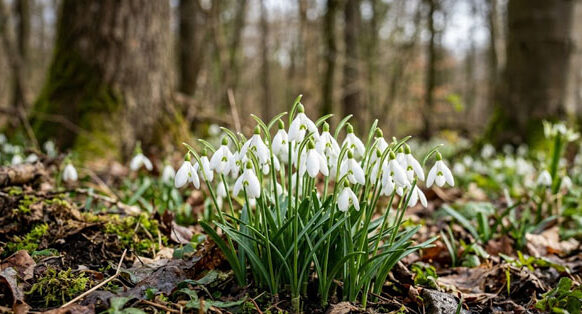
Then I saw a small cluster of white flowers pushing through the ground.
At first, I assumed they were early crocuses. When I looked closer, I realized they were snowdrops.
They weren’t large.
They weren’t colorful.
In fact, compared to many spring flowers, they seemed surprisingly modest.
Yet those tiny white blooms instantly became the most interesting thing in the entire garden.
Since then, I’ve developed a deep appreciation for snowdrops. They are among the first flowers to bloom each year, often appearing when winter still feels firmly in control. Their ability to emerge through cold soil, and sometimes even through patches of snow, makes them feel less like ordinary flowers and more like a promise that warmer days are coming.
Over the years, I’ve learned that snowdrops are not only beautiful but also surprisingly easy to grow if you understand a few simple principles.
Why Snowdrops Feel Different from Other Spring Flowers
Many spring flowers announce themselves with bright colors and dramatic displays.
Snowdrops take a different approach.
Their beauty is quieter.
The first thing most people notice is their shape. The flowers hang downward like tiny white lanterns, gently swaying whenever a breeze passes through. I’ve always thought this gives them a certain elegance that larger flowers sometimes lack.
One year, after a particularly long winter, I found myself checking the garden almost every day.
Nothing happened for weeks.
Then one morning, a handful of snowdrops appeared seemingly overnight.
Of course, they hadn’t actually appeared overnight. Growth had been happening underground for months. I simply couldn’t see it.
That experience became one of the reasons I love snowdrops so much.
They remind me that growth often happens long before visible results appear.
Perhaps that’s why these flowers have become symbols of hope, resilience, and renewal in many cultures.
They’re not the loudest flowers in the garden.
They’re simply the first to arrive.
A Flower Built for Cold Weather
One thing that surprised me when I started learning about snowdrops is how comfortable they are in cold conditions.
Many plants wait patiently for warmer temperatures before showing signs of growth.
Snowdrops do the opposite.
They seem eager to get started while winter is still lingering.
I’ve seen them blooming during frosty mornings when most other plants remained dormant.
That toughness is part of their charm.
While many flowers require ideal conditions, snowdrops seem determined to bloom regardless.
What I Learned About Growing Snowdrops Successfully
Like many gardeners, I initially assumed that growing snowdrops would be complicated because they bloom so early.
Fortunately, I was wrong.
In many ways, they are easier to grow than some of the more demanding spring bulbs.
Planting the Bulbs Requires Thinking Ahead
One of the biggest lessons snowdrops taught me is the importance of patience.
The first year I planted them, it felt strange putting bulbs into the ground during autumn and then doing absolutely nothing for several months.
There were no immediate results.
No visible growth.
No flowers.
Just waiting.
I planted the bulbs in a partially shaded area beneath a deciduous tree, mostly because I had read that snowdrops enjoy conditions similar to woodland environments.
Looking back, that turned out to be one of the best decisions I made.
During winter and early spring, the tree had no leaves, allowing plenty of sunlight to reach the bulbs.
Later in the year, the developing canopy provided shade and cooler soil conditions.
Nature had essentially created the perfect growing environment.
Good Soil Matters More Than Fancy Fertilizers
If there’s one thing I’ve learned from growing bulbs, it’s that drainage matters.
A lot.
The healthiest snowdrops I’ve seen were growing in soil that remained moist but never soggy.
One section of my garden tended to hold water after heavy rain, and plants there struggled far more than those planted in better-drained areas.
Snowdrop bulbs dislike sitting in water for extended periods.
Too much moisture can lead to rot before the flowers ever have a chance to emerge.
Nowadays, whenever I plant bulbs, I focus less on fertilizers and more on soil quality.
Healthy soil solves many problems before they begin.
The Biggest Mistake I Made After the Flowers Bloomed
Ironically, one of the most important lessons came after the flowers had already finished blooming.
The first year my snowdrops flowered successfully, I was thrilled.
Then the blooms faded.
The leaves remained.
And honestly, the leaves weren’t particularly attractive.
They looked untidy compared to the flowers.
My first instinct was to trim them away.
Fortunately, I spoke with a more experienced gardener before doing so.
He explained something simple that completely changed my approach.
The leaves were still working.
Even though the flowers were gone, the foliage was gathering energy from sunlight and storing it inside the bulb for next year’s growth.
Removing the leaves too early would weaken future blooms.
That conversation saved me from making a mistake many beginners make.
Since then, I’ve learned to leave snowdrop foliage alone until it naturally yellows and dies back.
Patience once again turns out to be part of successful gardening.
Dividing Snowdrops After Several Years
Another interesting discovery came a few years later.
The original clump of snowdrops had become crowded.
The flowers were still appearing, but they seemed less vigorous than before.
After some research, I learned that snowdrops benefit from occasional division.
I carefully lifted and separated some of the bulbs, replanting them in other parts of the garden.
The following spring, the results were remarkable.
Not only did the original patch improve, but new colonies began appearing elsewhere.
Over time, a few snowdrops had become dozens.
That’s one of the joys of growing bulbs.
A small beginning can eventually create a beautiful display with surprisingly little effort.
Why Snowdrops Continue to Be One of My Favorite Flowers
There are certainly more dramatic flowers.
Larger flowers.
More colorful flowers.
Flowers that attract far more attention.
Yet every year, I find myself looking for snowdrops first.
I think it’s because they arrive when we need them most.
By the end of winter, many people are ready for signs of life returning to the landscape.
Snowdrops provide exactly that.
They appear quietly.
Without fanfare.
Without demanding attention.
But once you notice them, it’s impossible not to feel encouraged.
They represent resilience.
They represent patience.
And perhaps most importantly, they remind us that spring often begins long before the rest of the world realizes it.
Conclusion
Snowdrops may not be the largest or most colorful flowers in the garden, but they possess a unique charm that has made them beloved for generations.
Their ability to bloom during the final weeks of winter gives them a special place in the gardening world. They symbolize hope, perseverance, and the promise of new beginnings.
From my own experience, growing snowdrops has taught me that success often comes from simple things: planting healthy bulbs, choosing well-drained soil, allowing the foliage to finish its natural cycle, and exercising patience.
Most importantly, they’ve taught me to appreciate subtle beauty.
Not every flower needs to dominate a garden to make an impact.
Sometimes the smallest flowers are the ones we remember most.
And every year, when those tiny white blooms emerge from the cold ground once again, they remind me that spring is never as far away as it seems.