For years, I couldn’t tell the difference between many of the flowers that appeared every autumn.
Whenever I visited a garden center or walked through a botanical garden in September, I would point at almost every daisy-shaped flower and simply call it a chrysanthemum. It didn’t seem to matter whether the petals were long or short, purple or yellow, or whether the plant stood two feet tall or barely reached my knees. They all looked similar enough to me.
Looking back, I realize I wasn’t paying attention.
I was looking at flowers the same way people often look at strangers in a crowd. I noticed the general appearance, but not the little details that made each one unique.
That changed after I started gardening.
It began with a small flower bed that was honestly more ambitious than successful. I planted flowers simply because I liked their colors. I didn’t think much about bloom times, growing habits, or how they would look together a few months later.
The first autumn after planting, something unexpected happened.
The flowers I thought would all bloom together had completely different personalities.
One seemed perfectly happy growing taller every week. Another stayed compact and covered itself with blooms. One flower handled weeks of dry weather without complaint, while another clearly preferred cooler days.
Even though they belonged to the same large plant family and shared a similar daisy-like shape, they behaved nothing alike.
That was when I stopped asking, “Which flower is prettier?”
Instead, I started asking, “What makes each flower special?”
Surprisingly, learning the answer made gardening much more enjoyable.
Every Flower Has Its Own Personality
The first flower that truly caught my attention was the chrysanthemum.
Before I started gardening, I thought chrysanthemums were simply flowers that appeared at garden centers every fall. I had no idea how many different varieties existed.
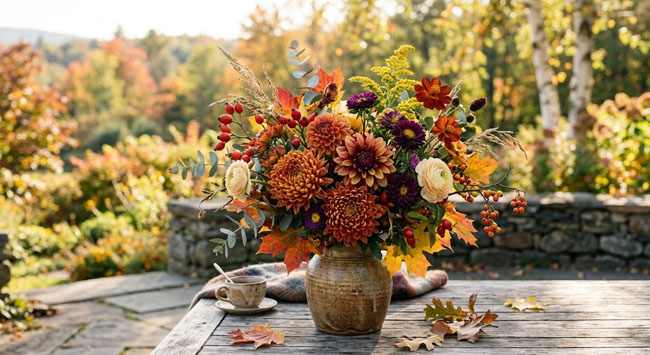
Some looked almost perfectly round, covered with hundreds of petals.
Others resembled little fireworks exploding in every direction.
Some were elegant and simple.
Others looked almost too extravagant to be real.
The more I saw them, the more I realized why people associate chrysanthemums with autumn.
They don’t quietly blend into the background.
They announce that the season has changed.
Not long after that, I planted China asters for the first time.
At first glance, I assumed they would give me exactly the same experience.
They didn’t.
Their flowers felt softer somehow.
The colors looked brighter in the afternoon sunlight, and there was something cheerful about them that reminded me of old cottage gardens.
Unlike chrysanthemums, which often felt formal and carefully cultivated, China asters gave my garden a more relaxed atmosphere.
I hadn’t expected flowers that looked somewhat similar to create such different feelings.
That became one of my favorite parts of gardening.
Flowers aren’t just different because of their colors.
They change the mood of a space.
A garden filled with chrysanthemums feels very different from one filled with asters, even if someone who isn’t familiar with plants might struggle to explain why.
Once I noticed that, I found myself choosing plants based on the feeling they created rather than simply picking whichever flowers looked the brightest at the store.
The Flowers Taught Me to Pay Attention
As my garden grew, I became fascinated by the flowers that many visitors barely noticed.
Among them were asters.
The first time I planted them, I honestly expected them to disappear behind the larger flowers.
Instead, they became one of the busiest places in the garden.
Almost every afternoon, bees arrived.
Butterflies seemed to prefer them over flowers I considered much more impressive.
Watching that happen taught me something interesting.
The flowers that attract the most attention from people aren’t always the ones that matter most in a garden.
Nature has its own priorities.
Pollinators didn’t care which flower looked the most dramatic in photographs.
They simply visited the flowers that provided what they needed.
That changed the way I looked at gardening.
I stopped asking whether a flower would impress visitors.
Instead, I wondered whether it would make the garden feel alive.
Around the same time, I added a few blanket flowers without knowing much about them.
I mostly chose them because of their warm red and golden colors.
I expected them to bloom for a few weeks before fading away.
Instead, they kept blooming long after I expected them to stop.
While other flowers slowed down during hot weather, the blanket flowers seemed completely unbothered.
They looked as if they enjoyed the heat.
Some mornings I would walk outside expecting to remove faded blooms, only to find new flowers already opening.
They gradually became some of the most reliable plants in my garden.
Not because they were the most elegant.
Not because they were the rarest.
Simply because they showed up day after day with very little complaint.
I found myself appreciating that kind of consistency.
Gardening has a funny way of changing what you admire.
When I first started, I was attracted to spectacular flowers that looked perfect in photographs.
Now I pay more attention to flowers that quietly perform well throughout the season.
Perhaps people aren’t so different.
The individuals who make the biggest difference in our lives are often not the loudest or the most noticeable.
They’re simply dependable.
I Stopped Looking for the “Best” Flower
One question I hear surprisingly often is, “Which one would you recommend?”
At first, I tried to answer it.
I would think about which flower bloomed the longest, which one was easiest to grow, or which one looked the most impressive.
Eventually, I realized there isn’t a single right answer.
It depends on the kind of garden you want to create.
Some mornings I walk outside and appreciate the structured beauty of chrysanthemums. Their blooms feel intentional, almost as though every flower knows exactly where it belongs. They bring a sense of celebration to the garden, especially when autumn arrives and many other plants begin slowing down.
On other days, I find myself drawn to asters instead.
They seem less formal.
More relaxed.
They remind me of wild meadows rather than carefully designed flower beds.
Even when the breeze moves through them, they never seem out of place.
Then there are the blanket flowers.
If I had judged them only by photographs, I probably wouldn’t have planted them.
But living with them changed my opinion completely.
Their warm red, orange, and yellow colors seemed to brighten even cloudy afternoons, and they continued blooming when I expected them to be finished for the season.
I came to appreciate them not because they were perfect, but because they were dependable.
China asters surprised me in a different way.
Their soft texture and vivid colors gave certain corners of the garden a welcoming feeling that I hadn’t planned for.
Visitors often commented on them without even knowing their name.
They simply smiled and said the garden felt cheerful.
That made me realize something important.
Most people don’t remember the names of flowers.
They remember how a garden made them feel.
Since then, I’ve stopped trying to build the “perfect” flower bed.
Instead, I try to create one that feels alive.
I like seeing different heights, different colors, and different blooming times.
Some flowers become the center of attention for a few weeks.
Others quietly fill the spaces in between.
Together they create something that none of them could create alone.
Gardening has also taught me to accept surprises.
Not every plant grows exactly as the label promises.
Sometimes a flower struggles even though I think I’ve done everything correctly.
Other times a plant I almost ignored becomes the highlight of the entire season.
I’ve learned not to control every detail.
Part of the joy comes from discovering what the garden wants to become.
In many ways, flowers have changed how I think about people as well.
We often compare ourselves the same way we compare plants.
Who stands taller.
Who receives more attention.
Who seems more successful.
But flowers don’t compete.
A chrysanthemum doesn’t try to become an aster.
A blanket flower doesn’t wish it looked like a China aster.
Each one simply grows according to its own nature.
Perhaps that’s one reason gardens feel so peaceful.
Everything belongs without needing to be the same.
Conclusion
Looking back, I’m almost embarrassed by how confidently I used to call every autumn flower a chrysanthemum.
The more time I spent gardening, the more I realized how much I had overlooked.
What once looked like a collection of similar flowers slowly became a group of unique personalities.
Some brought elegance.
Some brought color.
Some attracted butterflies and bees.
Some quietly bloomed through the hottest weeks of summer without asking for much attention.
None of them were better than the others.
They were simply different.
That may be the greatest lesson gardening has taught me.
The beauty of a garden doesn’t come from planting the most expensive flowers or finding a single perfect variety.
It comes from learning to appreciate differences.
Now, whenever I visit a garden in autumn, I no longer rush past the flower beds.
I stop.
I look a little closer.
Sometimes I still don’t know the name of every flower I see.
But I notice far more than I used to.
And I think that’s one of the unexpected gifts of gardening.
It teaches you to slow down.
To observe.
To become curious.
Not only about flowers, but about the world around you.
In the end, I never really found the “best” autumn flower.
Instead, I discovered something much better.
I learned to enjoy each one for exactly what it is.
And somehow, that made every autumn garden feel a little more beautiful.