
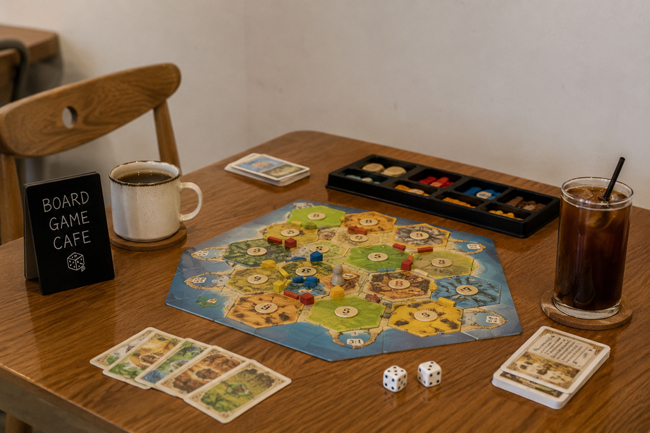
On a typical weekend evening, many board game cafés are filled with groups gathered around tables covered in cards, dice, and game boards. Some visitors arrive with friends they have known for years. Others are meeting new people through local gaming communities. What they have in common is a willingness to spend several hours focused on something that doesn’t involve a screen.
That alone makes board game cafés stand out.
Over the past decade, digital entertainment has become the default option for many people. Movies, games, music, and social media are available almost instantly. Yet despite the convenience of digital entertainment, board game cafés continue to attract steady crowds in many cities.
Part of the appeal comes from the pace. Board games require participants to sit together, pay attention, and interact directly. A game cannot continue if someone becomes distracted for too long. Unlike many online activities, the experience depends on everyone being present and engaged at the same time.
The atmosphere is often different from a traditional café as well. Conversations tend to revolve around strategy, teamwork, unexpected outcomes, and friendly competition. Even people who have never met before can quickly find common ground through a shared game.
Many café owners have noticed that their customer base has expanded beyond younger audiences. University students remain regular visitors, but families, office workers, and older adults are increasingly taking part as well. Some locations host beginner nights designed for newcomers, while others organize tournaments and community events for experienced players.
The variety of games available today has also contributed to the trend. Modern board games cover a wide range of themes and difficulty levels. Some can be learned in minutes, while others require long-term planning and cooperation. As a result, visitors can often find something that suits their interests regardless of age or experience.
Social media has helped these venues reach wider audiences, but the experience itself remains firmly offline. Photos and recommendations may bring people through the door, yet the main attraction is what happens after they arrive. The games create opportunities for conversation and interaction that are difficult to replicate online.
Interestingly, many visitors describe board game cafés less as entertainment venues and more as gathering places. The games provide a reason to meet, but they are not always the main focus. Spending time together often becomes just as important as winning.
The continued popularity of board game cafés suggests that convenience is not the only factor shaping cultural habits. Even as digital entertainment becomes more sophisticated, people still seek activities that encourage direct participation and shared experiences.
For a few hours, phones are often set aside, conversations become longer, and attention shifts to the people sitting across the table. In a culture increasingly centered around digital interaction, that simple change may be part of the reason board game cafés continue to attract visitors from different generations.