
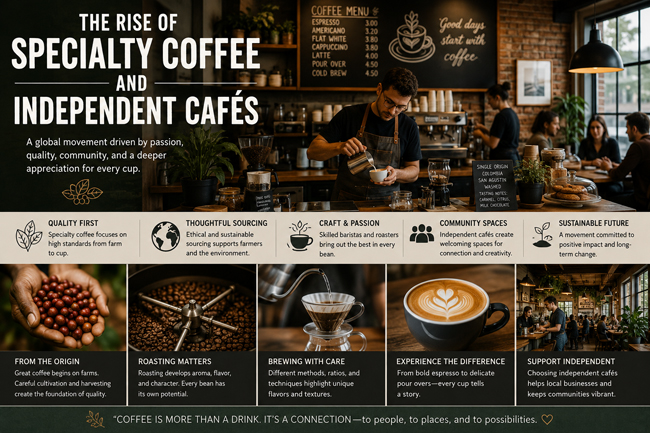
Coffee has become far more than a morning beverage. Across the world, coffee culture has evolved into a global phenomenon that influences social interactions, business practices, tourism, and lifestyle trends. While coffee has been consumed for centuries, the modern coffee experience differs significantly from the traditional approaches of previous generations.
One of the most important developments in recent decades has been the rise of specialty coffee and independent cafés. These businesses have transformed how people think about coffee, encouraging consumers to appreciate quality, craftsmanship, and sustainability in ways that were once reserved for industry professionals.
Today, specialty coffee shops can be found in cities, suburbs, and small communities around the world. Their growth reflects changing consumer preferences and a broader interest in authenticity, education, and meaningful experiences.
Understanding Specialty Coffee
The term “specialty coffee” refers to coffee that meets high standards of quality throughout the production process.
Unlike mass-produced coffee products, specialty coffee emphasizes excellence at every stage, including:
- Cultivation
- Harvesting
- Processing
- Roasting
- Brewing
Each step is carefully managed to preserve the unique characteristics of the coffee beans.
Specialty coffee producers often focus on transparency, allowing consumers to learn about the origins of their coffee and the journey it takes from farm to cup.
This emphasis on quality has helped create a deeper appreciation for coffee as an agricultural product rather than simply a commodity.
The Evolution of Coffee Culture
Coffeehouses have existed for hundreds of years.
Historically, cafés served as gathering places where people discussed politics, literature, business, and culture. In many cities, coffeehouses became important centers for intellectual exchange and community engagement.
Over time, large coffee chains expanded globally, making coffee more accessible to wider audiences.
However, many consumers eventually began seeking alternatives that offered greater individuality, craftsmanship, and local character.
This shift contributed to the growth of independent cafés, which focused on creating unique customer experiences and emphasizing product quality.
Today, independent coffee shops often serve as both social spaces and cultural hubs within their communities.
Why Consumers Are Choosing Specialty Coffee
Several factors have contributed to the growing popularity of specialty coffee.
Greater Interest in Quality
Modern consumers are increasingly interested in understanding the products they purchase.
Just as people have become more knowledgeable about food, wine, and sustainable agriculture, many are also developing a greater appreciation for coffee quality.
Consumers often want to know:
- Where the coffee was grown
- How it was processed
- Who produced it
- What flavor characteristics it offers
This curiosity has encouraged greater transparency throughout the coffee industry.
Desire for Unique Experiences
Specialty cafés often provide experiences that extend beyond simply purchasing a beverage.
Customers may enjoy:
- Personalized service
- Carefully designed environments
- Educational opportunities
- Seasonal coffee selections
- Community events
These experiences help create stronger connections between businesses and customers.
Support for Local Businesses
Independent cafés frequently play an important role in local economies.
Many consumers actively support small businesses because they value community engagement, local entrepreneurship, and unique offerings.
Independent cafés often contribute to neighborhood identity and help create vibrant social spaces.
Understanding Coffee Origins
Coffee is grown in diverse regions around the world, and geography plays a significant role in flavor development.
Different growing conditions influence characteristics such as sweetness, acidity, body, and aroma.
African Coffees
Many African coffees are known for bright acidity and fruit-forward flavors.
Countries such as Ethiopia and Kenya have developed strong reputations for producing distinctive specialty coffees.
Central American Coffees
Coffee from Central America often displays balanced flavor profiles with clean acidity and consistent quality.
South American Coffees
South American coffee-producing countries contribute significantly to global coffee production and offer a wide range of flavor experiences.
Asian Coffees
Many Asian coffee-growing regions produce coffees with rich body, earthy characteristics, and unique processing traditions.
Learning about coffee origins allows consumers to better understand the diversity that exists within the global coffee industry.
The Importance of Roasting
Coffee roasting is both an art and a science.
Green coffee beans contain the potential for flavor, but roasting unlocks the aromas and characteristics that consumers recognize in brewed coffee.
Roasters make numerous decisions during the roasting process, including:
- Temperature management
- Roasting duration
- Airflow control
- Development timing
These factors influence the final flavor profile.
Light roasts often emphasize the bean’s natural characteristics, while darker roasts produce stronger roasted flavors and deeper body.
Specialty roasters typically focus on highlighting the unique qualities of each coffee rather than applying a uniform roasting approach.
Modern Brewing Methods
The growth of specialty coffee has encouraged greater interest in brewing techniques.
Different brewing methods extract flavors differently, resulting in unique drinking experiences.
Popular methods include:
Pour-Over Brewing
This method emphasizes precision and control, allowing brewers to carefully manage extraction.
French Press
French press brewing produces a rich, full-bodied cup with substantial texture.
Espresso
Espresso serves as the foundation for many popular beverages and requires specialized equipment and expertise.
Cold Brew
Cold brew uses extended extraction times and lower temperatures, creating a smoother flavor profile.
The diversity of brewing methods has contributed to the educational aspect of modern coffee culture.
Independent Cafés as Community Spaces
One reason independent cafés continue to thrive is their ability to create welcoming community environments.
Unlike purely transactional retail spaces, cafés often encourage people to spend time socializing, studying, working, or relaxing.
Many independent cafés host:
- Community gatherings
- Art exhibitions
- Music performances
- Educational workshops
- Local business events
These activities strengthen community connections while supporting local culture.
For many customers, the atmosphere of a café is just as important as the coffee itself.
Sustainability in the Coffee Industry
Sustainability has become a major focus within specialty coffee.
Coffee production involves millions of people around the world, including farmers, processors, exporters, roasters, and retailers.
Key sustainability concerns include:
- Environmental protection
- Water conservation
- Soil health
- Fair labor practices
- Economic stability for farming communities
Many specialty coffee businesses actively support responsible sourcing practices designed to create long-term benefits throughout the supply chain.
Consumers increasingly consider sustainability when making purchasing decisions, encouraging continued improvements within the industry.
Technology and the Future of Coffee
Technology continues to influence how coffee is produced, marketed, and consumed.
Modern innovations include:
- Precision roasting systems
- Advanced brewing equipment
- Digital traceability tools
- Online coffee education
- Mobile ordering platforms
These developments improve consistency while increasing consumer access to information.
Technology also allows coffee professionals to better understand production processes and quality standards.
As innovation continues, coffee culture is likely to become even more interconnected and transparent.
The Economic Impact of Independent Cafés
Independent cafés contribute significantly to local economies.
Beyond beverage sales, they support employment opportunities, attract visitors, and stimulate surrounding businesses.
Their economic contributions often include:
- Job creation
- Local purchasing
- Community investment
- Tourism support
- Entrepreneurial development
Many neighborhoods benefit from the presence of independent cafés that encourage foot traffic and create welcoming public spaces.
This economic impact extends beyond the coffee industry itself.
Why Coffee Culture Continues to Grow
The continued growth of specialty coffee reflects broader social trends.
Consumers increasingly value:
- Authenticity
- Transparency
- Quality
- Sustainability
- Community engagement
Specialty coffee aligns closely with these priorities.
Rather than focusing solely on convenience, modern coffee culture encourages deeper appreciation for craftsmanship, education, and responsible consumption.
As awareness continues to grow, specialty coffee is likely to remain an influential part of global food and beverage culture.
Conclusion
The rise of specialty coffee and independent cafés represents one of the most significant developments in modern consumer culture. What was once viewed primarily as a daily beverage has evolved into a sophisticated industry that combines agriculture, science, craftsmanship, sustainability, and community engagement.
Independent cafés continue to provide spaces where people can connect, learn, and enjoy carefully prepared coffee experiences. At the same time, specialty coffee encourages greater appreciation for the farmers, producers, and professionals who contribute to every cup.
As consumer preferences continue to evolve, the future of coffee culture will likely emphasize quality, transparency, and meaningful experiences. These values have helped shape the modern specialty coffee movement and will continue influencing the industry for years to come.