The first hydrangea I ever bought was an impulse purchase.
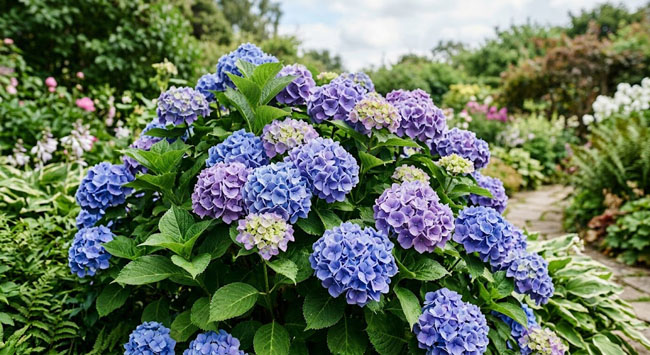
I wasn’t planning to bring home a new plant that day. I had stopped by a local garden center to look around, and there it was—covered in huge blue flowers that looked almost unreal. Compared to the other flowering plants around it, the hydrangea seemed to command attention without even trying.
Within minutes, it was in my shopping cart.
At the time, I considered myself reasonably good at keeping plants alive. Houseplants were doing well, a few herbs were thriving on the patio, and I assumed a flowering shrub couldn’t be that much different.
I was wrong.
A few weeks later, the beautiful plant I had proudly brought home looked exhausted. The leaves drooped during the day, some flowers started turning brown around the edges, and new growth seemed slower than expected.
I remember standing in front of the plant one evening wondering how something that looked so healthy at the garden center could suddenly appear so unhappy.
Looking back, that hydrangea taught me more about gardening than many books ever did.
Why I Chose a Hydrangea in the First Place
What attracted me to hydrangeas wasn’t just the flowers.
It was their ability to completely transform a space.
A single hydrangea in bloom can make an ordinary garden corner feel intentional and inviting. Unlike many flowers that produce a handful of blooms, hydrangeas create large clusters that seem to dominate the landscape.
I also loved how different they looked throughout the season.
In spring, they produced fresh green growth.
By early summer, flower buds began forming.
Then suddenly the plant exploded with color.
Even after flowering, the dried blooms often remained attractive for months.
It felt like a plant that offered something interesting almost year-round.
What I didn’t realize was that those spectacular blooms require the right conditions to develop properly.
Hydrangeas are generous plants, but they aren’t completely carefree.
The First Mistake I Made: Assuming More Sun Was Better
Like many beginners, I assumed flowering plants wanted as much sunlight as possible.
That seemed logical.
More sunlight equals more flowers, right?
So I placed my hydrangea in one of the brightest spots available.
At first everything seemed fine.
Then summer temperatures arrived.
The leaves began wilting by afternoon.
The flowers looked tired.
The plant appeared stressed despite regular watering.
Eventually, I learned that many hydrangea varieties prefer something gardeners often describe as “morning sun and afternoon shade.”
That single lesson changed everything.
Morning sunlight is usually gentle enough to encourage healthy growth, while protection from intense afternoon heat helps prevent excessive stress.
After moving my hydrangea to a more suitable location, the difference was noticeable within weeks.
The leaves looked healthier.
The flowers lasted longer.
The plant seemed far more comfortable.
Now, whenever someone tells me their hydrangea struggles during summer, sunlight is one of the first things I ask about.
The Biggest Lesson: Hydrangeas Are Thirstier Than Most People Expect
If I had to identify one reason beginners struggle with hydrangeas, it would probably be watering.
The name hydrangea itself is connected to water, and after growing one, that makes perfect sense.
During hot weather, hydrangeas can consume surprising amounts of moisture.
I learned this during a particularly warm stretch of summer.
One afternoon, my plant looked completely wilted.
The leaves hung downward, and I was convinced something was seriously wrong.
The next morning, after a deep watering the previous evening, the plant looked almost normal again.
That experience taught me an important lesson.
Wilting doesn’t always mean a plant is dying.
Sometimes it’s simply asking for water.
Of course, there is another side to the story.
Hydrangeas like moisture, but they don’t enjoy sitting in waterlogged soil.
Overwatering can be just as harmful as underwatering.
Finding the balance took practice.
Instead of watering according to a strict schedule, I started checking the soil itself.
If the top layer felt dry, I watered thoroughly.
If it still felt moist, I waited.
That simple habit improved my results dramatically.
The Different Types of Hydrangeas I Discovered
Before growing hydrangeas, I assumed they were all essentially the same plant.
I quickly learned otherwise.
The more I explored garden centers and botanical gardens, the more varieties I encountered.
Bigleaf Hydrangeas
These are the hydrangeas most people recognize immediately.
They produce large globe-shaped flower clusters in shades of blue, pink, purple, and white.
They’re also the varieties most famous for changing color depending on soil conditions.
When people picture a classic hydrangea, this is usually what they imagine.
Mountain Hydrangeas
The first time I saw a mountain hydrangea, I almost overlooked it.
Its flowers appeared more delicate and natural compared to the large showy blooms of bigleaf varieties.
Over time, however, I began appreciating their subtle beauty.
Many gardeners consider them slightly more tolerant of challenging conditions.
Panicle Hydrangeas
If someone asked me which hydrangea is easiest for beginners, panicle hydrangeas would be high on the list.
Their flowers develop in cone-shaped clusters rather than rounded balls.
They’re generally more cold-hardy and often easier to manage.
I’ve noticed that many experienced gardeners recommend panicle varieties to people planting their first hydrangea.
The right choice depends on climate, available space, and personal preference.
Learning that there wasn’t just one type of hydrangea opened an entirely new world of possibilities.
The Color-Changing Mystery That Fascinated Me
One of the reasons hydrangeas remain so popular is their ability to surprise people.
I still remember hearing someone explain that the same plant could produce different flower colors depending on soil conditions.
At first, I assumed it was a gardening myth.
It sounded too strange to be true.
Yet the science behind it is surprisingly simple.
Certain hydrangea varieties respond to the amount of aluminum available in the soil.
Soil acidity influences how easily the plant absorbs that aluminum.
The result is a shift in flower color.
Acidic soils often encourage blue blooms.
More alkaline conditions frequently produce pink flowers.
What fascinated me wasn’t just the science.
It was the idea that the environment could influence something as visible as flower color.
Few garden plants demonstrate that relationship so dramatically.
Even today, people often stop and ask questions when they see hydrangeas blooming in unusual shades.
Why Patience Matters More Than Perfect Care
One mistake many new gardeners make is expecting immediate results.
I certainly did.
Whenever a leaf looked unusual or a flower seemed smaller than expected, I wanted to fix the problem immediately.
Over time, I learned that gardening often rewards patience more than perfection.
Plants grow according to seasons, not schedules.
Hydrangeas are especially good at teaching this lesson.
Sometimes a plant simply needs time to adjust to its environment.
Sometimes roots are developing even when visible growth appears slow.
Sometimes next year’s flowers are already being prepared long before anyone notices.
Understanding this helped me become a better gardener overall.
I stopped trying to control every detail and started paying more attention to observation.
That shift in mindset made gardening far more enjoyable.
The Gardening Advice That Actually Helped
Over the years, I’ve heard countless gardening tips.
Some were useful.
Others were contradictory.
The advice that helped most was surprisingly simple:
“Watch the plant.”
Healthy leaves look different from stressed leaves.
A thirsty hydrangea behaves differently from one receiving adequate moisture.
Plants communicate constantly.
The challenge is learning how to recognize the signals.
Once I started observing more carefully, I became less dependent on rigid rules and more responsive to the plant’s actual needs.
That was perhaps the most valuable lesson my first hydrangea taught me.
The Pruning Mistake That Cost Me an Entire Season of Blooms
If there is one mistake I wish I could go back and undo, it would be pruning my hydrangea at the wrong time.
After my first successful season, I felt confident enough to start “improving” the plant.
By late winter, some stems looked untidy, and I decided it would be a good idea to trim everything back neatly before spring arrived.
The plant responded with healthy green leaves.
At first, I thought I had done exactly the right thing.
Then summer arrived.
And I waited.
And waited.
Very few flowers appeared.
The plant itself looked healthy, but the blooms I had been anticipating never arrived.
After some research, I discovered what had happened.
Many bigleaf hydrangeas develop their flower buds on old wood, meaning the stems that grew during the previous year. By pruning aggressively in late winter, I had unknowingly removed many of the buds that would have become flowers.
It was one of those frustrating gardening lessons that you never forget.
Since then, I’ve become much more cautious.
Now I always identify the type of hydrangea before pruning and avoid removing healthy stems unless I know exactly how the plant flowers.
That single mistake taught me more than any gardening guide ever could.
The Summer Challenge Every Hydrangea Owner Faces
If spring is the season of excitement, summer is the season of maintenance.
This is when hydrangeas are at their most beautiful, but it is also when they demand the most attention.
One particularly hot summer taught me just how quickly conditions can change.
The plant looked perfect in the morning.
By afternoon, the leaves drooped dramatically.
At first, seeing wilted leaves caused panic.
Over time, I learned that temporary wilting during extreme heat is not always a disaster. Hydrangeas sometimes lose moisture faster than their roots can replace it.
The important thing is what happens later.
If the plant recovers during the evening or after watering, it is usually responding normally to hot weather.
If it remains wilted for extended periods, that is when closer attention is needed.
Mulching around the base of the plant became one of the most helpful habits I adopted.
A layer of mulch helped retain moisture, reduced temperature fluctuations, and made summer care significantly easier.
Sometimes the simplest solutions have the biggest impact.
Learning to Spot Problems Before They Become Serious
One thing I appreciate about hydrangeas is that they often provide early warning signs.
The challenge is learning how to interpret them.
Yellow leaves may indicate watering issues.
Brown leaf edges often suggest heat stress or inconsistent moisture.
Poor flowering can point to pruning mistakes, insufficient sunlight, or winter damage.
At first, every symptom felt alarming.
Now I view them as information.
Plants rarely become unhealthy overnight.
Most problems develop gradually.
The earlier they’re noticed, the easier they are to address.
I also discovered that good air circulation matters more than many people realize.
When plants become overcrowded, moisture can linger on leaves longer than necessary.
Providing enough space between plants helps reduce stress and encourages healthier growth overall.
Growing Hydrangeas in Pots vs. In the Ground
One question I hear frequently is whether hydrangeas grow better in containers or directly in the garden.
Having experimented with both, I think each option has advantages.
Container-grown hydrangeas offer flexibility.
You can move them if sunlight conditions change.
You can protect them more easily during extreme weather.
And for people with limited outdoor space, containers make hydrangeas accessible.
However, container plants generally require more frequent watering.
During summer, I often found myself checking potted hydrangeas daily.
Plants growing in the ground tend to be more forgiving.
Their roots have access to a larger volume of soil, which helps maintain moisture more consistently.
If space allows, I generally prefer planting hydrangeas in the ground.
They seem more resilient and require less constant monitoring.
That said, some of the most beautiful hydrangeas I’ve seen were growing in containers on patios and balconies.
Success is possible with either approach.
How Hydrangeas Change Through the Seasons
One reason I continue enjoying hydrangeas is that they never look exactly the same throughout the year.
Spring begins quietly.
New buds emerge.
Fresh leaves unfold.
The plant slowly wakes from winter dormancy.
By early summer, anticipation builds as flower buds become visible.
Then comes the spectacular blooming period that attracts so much attention.
But what surprised me most was discovering beauty beyond flowering season.
As summer transitions into autumn, many hydrangea blooms begin changing color.
Some fade into soft green shades.
Others develop antique pink, burgundy, or bronze tones.
Even dried flower heads can remain attractive well into winter.
Instead of viewing the end of flowering as the end of the plant’s appeal, I learned to appreciate each stage for what it offered.
Hydrangeas taught me that gardens are not static.
They are constantly changing.
The Unexpected Lessons Hydrangeas Taught Me
When I first bought my hydrangea, I thought I was simply adding another plant to my garden.
Looking back, I learned something much more valuable.
Hydrangeas taught me patience.
Not every problem has an immediate solution.
Not every season produces perfect results.
Gardening often requires trust in processes happening beneath the surface.
They also taught me observation.
For years, I looked at plants without really paying attention to them.
Growing hydrangeas changed that.
I started noticing differences in leaf color, soil moisture, flower development, and seasonal growth patterns.
Those observations improved not only my hydrangea care but my gardening skills overall.
Perhaps most importantly, hydrangeas reminded me that failure is often part of learning.
The plants that taught me the most were not the ones that grew perfectly from the beginning.
They were the ones that challenged me.
The ones that forced me to pay attention.
The ones that survived my mistakes long enough for me to become a better gardener.
Why Hydrangeas Remain One of My Favorite Garden Plants
After everything I’ve learned, people occasionally ask whether hydrangeas are worth the effort.
My answer is always yes.
Not because they’re the easiest plants to grow.
And not because they’re completely trouble-free.
I recommend them because they reward attention.
Few garden plants create the same visual impact.
Few flowering shrubs offer such dramatic seasonal changes.
And few plants provide so many opportunities to learn as a gardener.
Every year feels slightly different.
Weather changes.
Growing conditions change.
The plant changes.
Yet that unpredictability is part of what makes gardening enjoyable.
If every season were identical, there would be far less to discover.
Conclusion
The hydrangea I almost killed years ago is the reason I approach gardening differently today.
What began as a simple purchase became an ongoing lesson in observation, patience, and adaptability.
Along the way, I learned that successful hydrangea care is not about following complicated rules.
It’s about understanding the plant.
Give it consistent moisture.
Protect it from harsh afternoon heat.
Prune carefully.
Pay attention to what the leaves and flowers are telling you.
Most importantly, allow yourself the freedom to learn through experience.
Every gardener makes mistakes.
I certainly have.
But some of the most rewarding gardening successes begin with plants that nearly failed.
For me, that plant was a hydrangea.
And every summer when the blooms return, I’m reminded that good gardening is rarely about perfection.
It’s about learning, improving, and appreciating the process along the way.