The first time I planted poppies, I honestly didn’t expect much.
I had seen countless photos of bright red poppy fields online and in gardening magazines, but I assumed those dramatic displays required perfect conditions and years of gardening experience. My own garden was far from perfect, and I wasn’t exactly known for successfully growing flowers from seed.
Still, I bought a packet of poppy seeds one spring and decided to give them a try.
Looking back, that simple decision introduced me to one of the most rewarding flowers I have ever grown.
Poppies have a reputation for being delicate. Their thin petals look almost like tissue paper, and even a light breeze can make them sway dramatically. Because of that appearance, I expected them to be fragile and difficult to maintain.
What I discovered was quite the opposite.
While poppies certainly have a delicate beauty, they are surprisingly resilient when planted in the right conditions.
Why I Was Drawn to Poppies in the First Place
Most flowers catch your attention because of their color.
Poppies caught mine because of their movement.
Unlike many garden flowers that remain relatively still, poppies seem alive. Their stems move with the wind, and their petals almost glow when sunlight passes through them.
The first flowers that opened in my garden were bright orange California poppies.
I remember walking outside early one morning and noticing that flowers which had been closed the previous evening were suddenly wide open and facing the sun.
That moment completely changed my opinion of them.
They didn’t just add color to the garden. They added personality.
The Different Types of Poppies I Learned About
Before growing poppies, I assumed there was only one type.
I quickly learned that the poppy family is much more diverse than most people realize.
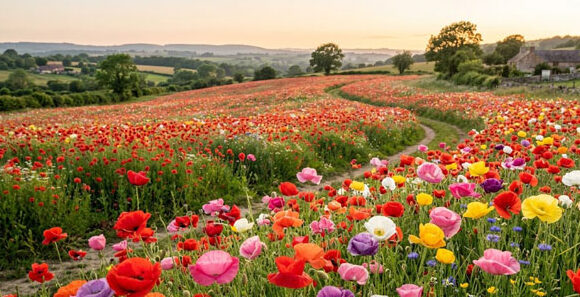
The variety most people recognize is the common red poppy, often associated with wildflower fields and remembrance ceremonies.
However, there are many others.
California poppies produce brilliant golden-orange blooms and are among the easiest varieties to grow.
Iceland poppies offer softer colors such as yellow, white, peach, and pale orange. Their blooms look almost delicate enough to float away.
Shirley poppies come in shades of pink, red, salmon, and white, creating a softer and more romantic appearance.
Seeing different varieties growing together helped me appreciate how versatile poppies can be in a garden setting.
The Biggest Mistake I Made
If there is one lesson I learned quickly, it is this:
Don’t treat poppies like most other flowers.
When I first planted them, I started several seedlings in containers because I planned to transplant them later.
That turned out to be a mistake.
Many flowers tolerate transplanting without much trouble, but poppies dislike having their roots disturbed.
Several seedlings struggled after being moved, and a few never recovered.
After some research, I discovered that experienced gardeners often sow poppy seeds directly into their final growing location.
The following season, I scattered seeds directly into the garden bed.
The results were noticeably better.
The plants grew stronger, flowered earlier, and required far less attention.
Sometimes the simplest approach really is the best one.
Why Sunlight Matters More Than Anything Else
One thing I noticed almost immediately was how strongly poppies respond to sunlight.
A section of my garden receives sunlight for most of the day, while another area becomes shaded by afternoon.
The difference between the two locations was remarkable.
The poppies growing in full sun produced more flowers, stronger stems, and healthier foliage.
The plants in partial shade survived, but they never performed nearly as well.
Since then, I have always recommended that anyone growing poppies prioritize sunlight before worrying about anything else.
You can improve soil.
You can adjust watering.
You can fertilize if necessary.
But you cannot replace hours of missing sunlight.
Learning Not to Overwater
Like many beginner gardeners, I believed more water would help plants grow faster.
My poppies taught me otherwise.
During my first growing season, I watered far too frequently.
The soil remained damp for days, and the plants seemed less vigorous than expected.
Eventually, I learned that poppies prefer conditions that are slightly on the dry side.
After allowing the soil surface to dry between waterings, the plants actually improved.
The stems became stronger, and flowering increased.
That experience taught me a valuable gardening lesson that extends far beyond poppies:
Many plants suffer more from too much care than too little.
The Meaning Behind Poppy Flowers
As I became more interested in poppies, I also became curious about their symbolism.
Throughout history, poppies have carried different meanings depending on their color and cultural context.
Red poppies are often associated with remembrance, comfort, and reflection.
White poppies symbolize peace and rest.
Purple poppies are sometimes connected with imagination and creativity.
Whether or not someone believes in flower symbolism, I think these meanings add another layer of appreciation.
Knowing the story behind a flower often makes it feel more personal.
One Surprise I Didn’t Expect
The biggest surprise wasn’t how beautiful the flowers were.
It was how many pollinators they attracted.
Once the poppies began blooming, bees appeared almost immediately.
On warm mornings, I would often find multiple bees moving from flower to flower.
Butterflies visited as well, creating even more movement throughout the garden.
What started as an attempt to grow attractive flowers gradually became an effort to create a more welcoming environment for beneficial insects.
That unexpected benefit made me appreciate poppies even more.
Why I Continue Growing Them Every Year
Many flowers come and go from my garden.
Some perform well one season and disappear the next.
Poppies are different.
Every year, I find myself planting them again.
Part of the reason is their beauty.
Part of it is their simplicity.
But most of all, I appreciate how little they ask for in return.
They do not require constant fertilizing.
They do not demand daily attention.
They simply need sunlight, reasonable drainage, and a bit of patience.
In return, they provide weeks of color and movement that completely transform a garden space.
Advice for First-Time Poppy Growers
If you’re thinking about growing poppies for the first time, my advice is simple.
Don’t overcomplicate it.
Choose a sunny location.
Scatter the seeds directly where you want them to grow.
Keep the soil lightly moist until germination.
After that, resist the temptation to fuss over them too much.
Nature often does the rest.
One of the most enjoyable aspects of growing poppies is watching how effortlessly they fit into a garden once established.
They have a way of looking natural, as if they chose the location themselves.
Final Thoughts
When I planted my first packet of poppy seeds, I expected a few flowers.
What I gained was a greater appreciation for one of the most charming plants a gardener can grow.
Poppies taught me patience.
They taught me that some plants thrive when left alone.
Most importantly, they reminded me that beauty does not always require complicated care routines.
Whether you choose bright California poppies, elegant Iceland poppies, or traditional red poppies, these flowers have a unique ability to bring life, movement, and color to a garden.
If you’ve never grown them before, consider giving them a try this season.
You might discover, as I did, that some of the most memorable flowers are also some of the simplest to grow.