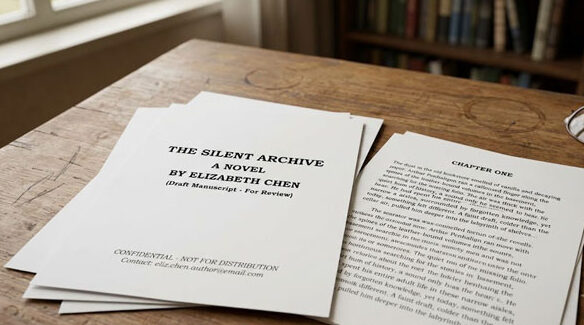

When I first entered the publishing industry, I believed something that many aspiring authors believe.
If a manuscript was good enough, it would eventually become a book.
It seemed like a simple equation. Write something valuable, polish it carefully, find a publisher, and the rest would take care of itself.
Years later, after running a small publishing company and working on multiple publishing projects, I can honestly say that I was wrong.
Some of the best manuscripts I have ever read were never published.
At the same time, I have seen books with imperfections reach readers successfully because they met a need at the right moment.
This realization completely changed the way I think about books, authors, and publishing.
The truth is that publishing is not simply a process of identifying the best writing. It is the process of connecting a manuscript with real readers in the real world.
That may sound obvious, but it took me years to understand what it actually means.
The First Mistake: Assuming Quality Is Everything
Before becoming a publisher, I evaluated books the same way most readers do.
I focused on the writing.
If the author communicated clearly, offered valuable insights, and maintained my interest, I considered the manuscript successful.
In many ways, that instinct was correct.
Good writing matters.
Strong writing creates trust. It keeps readers engaged. It makes complex ideas easier to understand.
However, publishing taught me that quality alone rarely determines whether a manuscript becomes a book.
I remember reading manuscripts that were thoughtful, well organized, and clearly written by knowledgeable people. Some of them contained ideas that genuinely impressed me.
Yet despite their strengths, I knew they would struggle in the marketplace.
That realization felt uncomfortable at first.
I wanted publishing decisions to be based entirely on quality.
But publishing operates in a world where quality is only one piece of a much larger puzzle.
A Publisher Sees Different Things Than a Reader
One of the biggest changes in my perspective happened when I stopped reading manuscripts only as a reader.
Instead, I started reading them as a publisher.
Readers ask questions like:
- Is this interesting?
- Is this helpful?
- Do I enjoy reading this?
Publishers ask different questions:
- Who is this book for?
- How large is the audience?
- Why would someone choose this book instead of another?
- What problem does this book solve?
- How will readers discover it?
These questions may seem less romantic than discussions about writing quality, but they determine whether a book can realistically succeed.
A manuscript can be excellent while still lacking clear answers to these questions.
That is often where the challenge begins.
The Hardest Question: Who Is This Book For?
Over time, I discovered that one question influences publishing decisions more than almost any other.
Who is this book for?
Many manuscripts try to appeal to everyone.
Ironically, that often makes them appealing to no one.
Readers are looking for books that speak directly to their interests, challenges, goals, or experiences.
When a manuscript lacks a clearly defined audience, marketing becomes difficult.
Bookstores struggle to categorize it.
Online retailers struggle to recommend it.
Readers struggle to recognize that it was written for them.
Some of the strongest publishing proposals I have encountered could answer this question immediately.
The target reader was obvious.
The purpose was clear.
The value proposition was easy to communicate.
Those books had a significant advantage before they were ever printed.
What Translation Publishing Taught Me About Book Selection
One of the most valuable lessons I learned came through translation publishing.
Many people assume that once a successful foreign book is identified, the rest of the process is straightforward.
My experience has been very different.
Finding the right book is often more difficult than translating it.
A book may sell well in one country and perform poorly in another.
A message that resonates strongly with one audience may fail to connect with readers elsewhere.
Whenever I evaluated foreign titles, I found myself asking questions beyond the quality of the content.
Would local readers care about this subject?
Would they understand the cultural references?
Would the message feel timely?
Would the book address questions people are actually asking today?
These considerations often mattered as much as the manuscript itself.
I learned that publishing is not only about finding good books.
It is about finding books that fit a particular audience at a particular moment.
The Importance of Author Credibility
Another lesson I learned surprised me.
Readers care deeply about who is telling the story.
Years ago, information itself carried tremendous value because it was difficult to access.
Today, information is everywhere.
Readers can find facts within seconds.
As a result, expertise and experience have become increasingly important.
When evaluating manuscripts, I pay attention to the author’s background more than I once did.
Not because credentials automatically make a book better, but because readers want to understand why a particular author is qualified to discuss a topic.
A manuscript about leadership carries more weight when written by someone who has actually led organizations.
A manuscript about entrepreneurship feels different when written by someone who has built businesses.
A manuscript about personal transformation becomes more compelling when the author has lived through meaningful change.
Readers are looking for authenticity.
That authenticity often influences purchasing decisions as much as the content itself.
Why Timing Matters More Than Most Authors Realize
One publishing reality that rarely gets discussed is timing.
A great manuscript at the wrong time can struggle.
A good manuscript at the right time can flourish.
This does not mean publishers should chase trends blindly.
However, awareness of timing matters.
Readers’ interests change.
Markets change.
Cultural conversations change.
Questions that felt urgent five years ago may no longer feel relevant today.
As publishers, we constantly evaluate not only whether a manuscript is good but whether it is needed right now.
This can be frustrating for authors because timing is largely outside their control.
Nevertheless, it remains one of the most important factors influencing publishing decisions.
Differentiation Is Often More Important Than Perfection
One misconception I frequently encounter is the belief that publishers are searching for perfect manuscripts.
In my experience, publishers are often searching for distinctive manuscripts.
Perfection is rare.
Differentiation is valuable.
The publishing world already contains millions of books.
When evaluating a new manuscript, I frequently ask:
What makes this different?
Why should readers choose this book instead of another?
Some manuscripts are technically excellent but feel familiar.
Others have imperfections but offer a perspective readers have not encountered before.
The second category often generates more excitement.
Readers are naturally drawn to unique voices, unusual experiences, and fresh perspectives.
That does not mean quality is unimportant.
It simply means that quality alone is rarely enough.
The Reality of Publishing Economics
One lesson every publisher eventually learns is that books are not created in isolation.
Every publishing decision involves resources.
Editing costs money.
Design costs money.
Printing costs money.
Marketing costs money.
Distribution costs money.
Even digital publishing requires investments of time, expertise, and effort.
Because of this reality, publishers must consider whether a manuscript has a realistic path toward reaching readers.
This does not mean every book must become a bestseller.
Far from it.
Many worthwhile books serve relatively small audiences.
However, publishers still need confidence that a book can justify the resources required to bring it into the world.
This economic reality influences far more publishing decisions than most readers realize.
What I Wish Every Aspiring Author Knew
If I could share one lesson with aspiring authors, it would be this:
Do not focus exclusively on writing a good manuscript.
Focus on writing a manuscript that serves readers.
Ask yourself questions such as:
Who specifically needs this book?
What problem does it solve?
What perspective do I bring that others cannot?
Why should someone spend time and money reading it?
These questions may feel less creative than writing itself, but they are essential.
The strongest books answer them naturally.
They combine quality writing with clear purpose, relevant insight, and a defined audience.
That combination dramatically increases the chances of publication.
Conclusion
Running a publishing company has changed the way I think about manuscripts.
When I first entered publishing, I believed the best manuscripts would naturally rise to the top.
Today, I understand that publishing is far more complex.
A great manuscript is important, but it is only the beginning.
Publishable books connect strong writing with reader needs, author credibility, market awareness, and meaningful differentiation.
That is why some excellent manuscripts never become books.
Not because they lack quality.
Not because they lack value.
But because publishing requires more than quality alone.
It requires a connection between a manuscript and the people it is meant to serve.
The manuscripts that ultimately succeed are often the ones that make that connection most effectively.
And after years of working in publishing, I have come to believe that helping readers find the right book is every bit as important as finding a great manuscript in the first place.