Every spring, I notice the same thing happening.
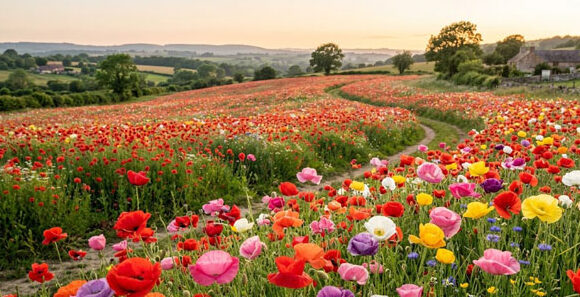
The hills begin turning pink.
Parks suddenly look more colorful.
Garden centers fill their entrances with bright flowering shrubs.
And every year, I find myself staring at these flowers and asking the same question:
“Is that an azalea or a rhododendron?”
For a long time, I honestly couldn’t tell the difference.
To me, they all looked similar. Pink flowers. Green leaves. Blooming at roughly the same time. Whenever someone pointed to a flowering shrub and confidently identified it, I simply nodded as if I understood.
The truth was that I had no idea.
It wasn’t until I became more interested in gardening and plants that I realized these spring flowers had far more differences than I imagined.
What surprised me most wasn’t how different they were.
It was how long I had been walking past them without really noticing.
The Day I Realized They Weren’t the Same Plant
One spring afternoon, I was walking through a local park when I overheard two people talking about a flowering shrub nearby.
One person called it an azalea.
The other immediately corrected them.
“No, that’s a rhododendron.”
The conversation lasted only a few seconds, but it caught my attention.
I remember looking at the plant and thinking it looked exactly like every other pink flowering shrub I had seen that season.
How could they tell the difference so quickly?
Curiosity eventually led me down a rabbit hole of plant guides, gardening forums, and countless photos.
The more I learned, the more I realized that distinguishing these plants wasn’t actually difficult.
I had simply never paid close enough attention.
Sometimes the Leaves Tell the Story
One of the easiest ways I eventually learned to identify them was by looking at the leaves.
Before that, I focused almost entirely on the flowers.
After all, flowers are what attract attention first.
But experienced gardeners often look at the foliage before anything else.
Azaleas generally have smaller, softer leaves.
Many varieties appear lighter and more delicate.
Rhododendrons often have larger, thicker leaves that feel more substantial.
Once I started paying attention to the leaves, I began noticing details I had completely overlooked for years.
It reminded me how often we assume we’re observing something carefully when we’re actually only seeing the most obvious features.
Flowers Can Be Deceptive
The flowers themselves can also offer clues, although they often confuse beginners.
When I first started comparing photographs, I focused entirely on color.
That turned out to be a mistake.
Both azaleas and rhododendrons come in similar shades.
Pink.
Purple.
White.
Red.
Color alone rarely helps.
Instead, I learned to pay attention to shape and structure.
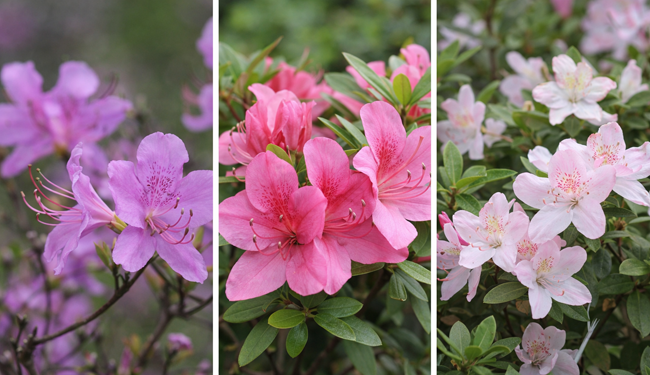
Many azalea flowers appear lighter and more delicate.
Rhododendron flower clusters often look fuller and more dramatic.
Of course, there are countless exceptions.
Nature rarely follows simple rules.
But once I stopped looking only at color, identification became much easier.
The Flower You Can Enjoy and the Flower You Shouldn’t Taste
Growing up, I occasionally heard stories about people making flower pancakes using edible spring blossoms.
What surprised me later was learning that not every beautiful flower should be treated the same way.
Certain flowering plants that look harmless can actually contain toxic compounds.
This was another reminder that appearance alone doesn’t tell the whole story.
Plants have personalities, preferences, strengths, and weaknesses hidden beneath their appearance.
The more time I spend around gardens, the more I realize how much there is to learn from looking beyond first impressions.
My First Attempt at Growing an Azalea
After becoming fascinated by these spring blooms, I eventually decided to bring one home.
It seemed simple enough.
Buy a healthy plant.
Place it near a bright window.
Water occasionally.
Enjoy the flowers.
At least that was my plan.
Reality turned out differently.
Within a few weeks, the leaves looked less healthy.
Some flowers faded quickly.
A few branches appeared stressed.
I couldn’t understand what was happening.
The plant looked fine when I bought it.
Why was it struggling now?
Like many beginner gardeners, I eventually discovered that I had been loving my plant a little too much.
More specifically, I was watering it too often.
The Lesson I Learned About Watering
Many new plant owners assume more water is better.
I certainly did.
Whenever the soil looked slightly dry, I reached for the watering can.
What I didn’t understand was that azaleas dislike sitting in constantly wet soil.
Their roots need both moisture and air.
Too much water can be just as damaging as too little.
Once I adjusted my watering habits, the plant slowly recovered.
That experience taught me one of the most valuable gardening lessons I’ve ever learned:
Plants usually prefer consistency over intensity.
Small, thoughtful care often produces better results than constant intervention.
Why Gardeners Care So Much About Soil
Before I started gardening, soil was just soil.
I never thought much about it.
Then I discovered how particular some plants can be.
Azaleas prefer acidic soil conditions.
The type of soil directly affects nutrient absorption, root health, and flowering performance.
Suddenly, something I had barely considered became one of the most important parts of plant care.
It’s funny how gardening changes the way you see ordinary things.
You begin noticing sunlight differently.
Rainfall becomes interesting.
Even soil starts feeling important.
The Importance of Airflow
Another lesson I learned involved something I couldn’t even see.
Air.
When people discuss plant care, they usually focus on sunlight and water.
Ventilation rarely gets the same attention.
Yet good airflow can make a significant difference.
Plants kept in stagnant conditions often become more vulnerable to pests and disease.
I learned this after noticing small pest problems developing on a few indoor plants.
Since then, I’ve become much more intentional about airflow.
Sometimes the smallest adjustments produce the biggest improvements.
Why Spring Flowers Feel Special
Part of my fascination with azaleas and rhododendrons comes from timing.
They appear at a moment when people are eager for signs of life.
Winter feels long.
Trees remain bare.
The landscape often looks muted.
Then suddenly these flowers appear.
Bright.
Colorful.
Impossible to ignore.
Their arrival feels like an announcement.
Spring has finally arrived.
Maybe that’s why so many people love them.
They’re not just flowers.
They’re reminders that seasons change.
That growth returns.
That beauty often follows periods that seem lifeless.
The More I Learned, the More I Noticed
One unexpected result of learning about these plants is that I now notice them everywhere.
Before, they were simply background scenery.
Now I find myself stopping during walks.
Looking more closely.
Examining leaves.
Comparing flower shapes.
Observing details I would have ignored in the past.
The flowers themselves haven’t changed.
My attention has.
And that might be one of the greatest rewards of learning anything new.
The world becomes more interesting.
What These Flowers Taught Me
In the end, learning the difference between azaleas and rhododendrons wasn’t really about plant identification.
It taught me something broader.
Many things appear similar when viewed from a distance.
People.
Places.
Plants.
Ideas.
But the closer we look, the more unique they become.
For years, I thought every pink flowering shrub in spring was basically the same.
Now I know better.
Not because I became a gardening expert.
Simply because I slowed down long enough to notice.
Conclusion
Every spring, azaleas and rhododendrons return once again.
Their flowers brighten gardens, parks, and hillsides.
Most people probably walk past them without thinking twice.
I know I used to.
But now, whenever I see those colorful blooms, I remember how long I spent confusing them.
And I smile.
Because sometimes the joy of gardening isn’t just growing plants.
It’s learning to see them.
What once looked like a blur of pink flowers has become something far more interesting.
And all it took was paying attention.