
What Gardening Taught Me About Patience, Growth, and Life
There was a time when I believed gardening was simply about growing beautiful flowers.
Whenever I visited botanical gardens or walked through neighborhoods filled with colorful plants, I admired the beauty they created. Fresh green leaves, blooming flowers, and the peaceful atmosphere always made me feel relaxed. I often thought how nice it would be to bring that same feeling into my own home.
That simple desire was what led me to gardening.
At first, I wasn’t searching for life lessons or personal growth. I simply wanted healthier plants and prettier flowers. Like many beginners, I spent hours reading articles, watching videos, and asking experienced gardeners countless questions.
How often should I water my plants?
Which flowers grow well in partial shade?
What type of soil should I buy?
Why are the leaves turning yellow?
I assumed gardening was mostly about finding the correct answers.
If I followed every instruction perfectly, I believed every plant would naturally thrive.
Looking back now, I smile at how simple my expectations were.
Gardening certainly involves practical knowledge, but I eventually discovered that plants do not always follow perfect schedules. Every garden is different. Every season is different. Even two plants of the same species can grow differently depending on their environment.
The more time I spent caring for plants, the more I realized that gardening is less about controlling nature and more about learning to work with it.
That unexpected realization gradually changed the way I viewed not only gardening, but many other parts of life as well.
Today, many people begin gardening for practical reasons. Some want fresh vegetables. Others enjoy decorating their balconies with flowers. Some simply hope to spend less time looking at screens and more time outdoors.
Research has also shown that gardening offers numerous benefits beyond growing plants. Spending time around greenery may help reduce stress, improve mood, encourage physical activity, and promote mindfulness. For many people, gardening becomes a healthy routine that supports both physical and mental well-being.
I did not realize it when I bought my first plant, but I was beginning a hobby that would quietly reshape the way I think about patience, success, failure, and even happiness.
Gardening Begins with Curiosity, Not Perfection
One mistake many beginners make is believing that experienced gardeners never lose plants.
I certainly believed that.
When I saw beautiful gardens online or visited professional nurseries, everything looked perfect. Every flower seemed healthy, every leaf looked green, and every arrangement appeared effortless.
What I didn’t see were the years of experience behind those gardens.
Like many beginners, I accidentally overwatered certain plants.
Some received too little sunlight.
Others stayed in containers that had become too small for healthy root growth.
A few simply failed despite my best efforts.
Every dead leaf felt like a personal failure.
I wondered whether gardening simply wasn’t for me.
Over time, however, I noticed something interesting.
Experienced gardeners rarely became discouraged when a plant struggled.
Instead of becoming frustrated, they became curious.
Why are these leaves turning yellow?
Has the weather changed recently?
Could the roots be holding too much moisture?
Is this plant receiving enough light?
Rather than immediately blaming themselves, they observed.
That approach completely changed how I cared for my own plants.
Instead of reacting quickly, I learned to watch more carefully.
Healthy gardening begins with observation.
Plants constantly communicate through small changes.
Leaves lose their color.
Stems become softer.
Flowers bloom earlier than expected.
New shoots appear.
Roots slowly fill a container.
Every small detail tells part of the story.
The challenge is learning to notice those details.
I gradually realized that successful gardening is much less about having perfect knowledge and much more about paying close attention.
Nature rarely rushes.
It also rarely wastes effort.
Every leaf, root, flower, and seed develops for a reason.
The more carefully I observed these patterns, the more enjoyable gardening became.
Rather than treating plants as decorations, I began seeing them as living systems constantly responding to their environment.
That shift made gardening far more interesting.
Instead of asking, “How do I make this plant grow faster?”
I started asking,
“What is this plant trying to tell me?”
That single question improved my gardening more than any instruction manual.
Growth Often Happens Before We Can See It
One of the greatest lessons gardening has taught me is that real growth usually begins long before we notice it.
Modern life encourages visible progress.
We like measurable results.
More followers.
Better grades.
Higher income.
Faster success.
Immediate improvement.
Because we are surrounded by numbers and achievements, we often judge our progress only by what we can see.
Gardening quietly challenges that mindset.
After planting a seed, there is often nothing to admire for days or even weeks.
The soil appears unchanged.
Nothing seems to happen.
For someone unfamiliar with gardening, that silence can feel disappointing.
It is tempting to wonder whether the seed failed.
But beneath the surface, life has already begun.
Moisture activates the seed.
The protective shell slowly softens.
Tiny roots begin searching for water.
The first shoots prepare to move toward sunlight.
The most important stage of growth happens completely out of sight.
Watching this process changed the way I think about many areas of life.
Learning a language often feels similar.
Months of studying may produce little visible confidence.
Yet vocabulary continues building.
Listening improves.
Patterns become familiar.
Then one day, conversations suddenly feel easier.
The same thing happens when developing new skills, exercising regularly, writing consistently, or building relationships.
Progress often feels invisible until enough small improvements accumulate.
Gardening helped me become more patient with that invisible stage.
Another lesson came from watering.
Like many new gardeners, I assumed more water meant healthier plants.
Whenever the surface of the soil looked slightly dry, I reached for the watering can.
Surely more water would help.
Instead, several plants became weaker.
Some leaves turned yellow.
Growth slowed.
Eventually I learned something surprisingly simple.
Roots need oxygen just as much as they need water.
Healthy roots require balance.
Too much care can sometimes become harmful.
That lesson stayed with me.
In modern life, we often believe doing more is always better.
Working longer hours.
Studying without breaks.
Constantly checking progress.
Repeatedly changing plans.
Sometimes these actions help.
Sometimes they simply create unnecessary pressure.
Plants reminded me that healthy growth depends on consistency rather than constant intervention.
They taught me that patience is not passive.
It is an active decision to continue caring even when visible results have not yet appeared.
That idea became one of the most valuable lessons gardening has ever given me.
The longer I worked in the garden, the more I realized that nearly everything worthwhile follows this pattern.
Strong trees spend years developing roots before reaching impressive heights.
Perennial flowers disappear during winter only to return stronger the following season.
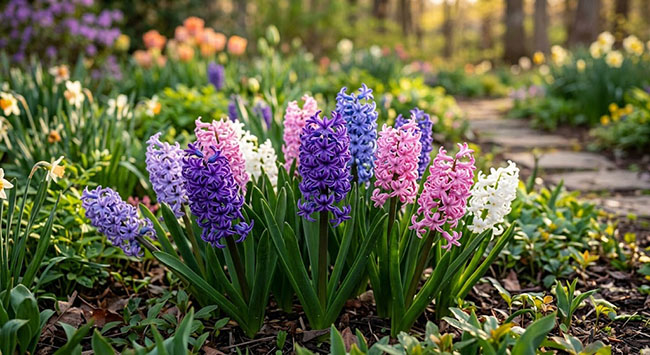
Bulbs remain hidden underground for months before producing spectacular blooms.
Nature never apologizes for taking its time.
Perhaps people shouldn’t either.
Every Living Thing Has Its Own Season
One of the most beautiful discoveries I have made through gardening is that nature never seems to be in a hurry.
When I first started growing flowers, I expected every plant to grow at roughly the same speed. If one flower bloomed within a few weeks while another remained unchanged, I assumed I had done something wrong. I compared one pot with another and wondered why they looked so different despite receiving similar care.
Eventually I realized that I was expecting nature to follow my schedule rather than its own.
Some flowers welcome the first warmth of early spring.
Others remain quiet until the middle of summer.
Certain perennials spend an entire season strengthening their roots before producing impressive blooms the following year.
Trees often require years before revealing their true beauty.
Nothing in a healthy garden grows at exactly the same pace.
That difference is not a flaw.
It is part of the design.
The changing rhythm of the seasons is what gives a garden its character.
Imagine visiting a garden where every flower bloomed on exactly the same day.
For one brief moment it might look spectacular.
Then, just as quickly, everything would begin to fade together.
Instead, nature creates beauty through variety.
Some flowers begin.
Others finish.
New blossoms replace old ones.
Different colors appear throughout the year.
Every season has something unique to offer.
Watching this happen year after year quietly changed my perspective on life.
People naturally compare themselves with others.
Someone starts a successful business at twenty-five.
Someone else earns a graduate degree later in life.
One friend buys a house.
Another travels the world.
Someone seems to discover their purpose almost immediately, while others spend years searching.
Social media has made these comparisons even more common.
We scroll through carefully selected moments of other people’s lives and quietly wonder why our own journey feels slower.
Gardening gently challenges that way of thinking.
A tulip never tries to bloom like a sunflower.
Lavender does not compete with roses.
A maple tree does not feel unsuccessful because cherry blossoms appear first.
Every plant grows according to its own design.
Its own environment.
Its own season.
The longer I spent in the garden, the less interested I became in comparing my progress with other people.
Instead, I found myself asking a much healthier question.
Am I growing compared with who I was yesterday?
That question shifted my attention away from competition and toward personal growth.
It reminded me that success does not always happen according to a universal timeline.
Some dreams require longer seasons.
Some goals need deeper roots.
Others appear quickly but disappear just as fast.
Gardening taught me that delayed growth is not failed growth.
Sometimes it is simply preparation.
Small Daily Habits Create Extraordinary Results
Another lesson that surprised me was how little dramatic action actually happens in a healthy garden.
When people imagine gardening, they often picture colorful flowers in full bloom.
They think about the final result.
Very few people think about the ordinary routines that make those flowers possible.
Most gardening days are remarkably simple.
Checking whether the soil is still moist.
Removing a few yellow leaves.
Turning a pot toward the sunlight.
Adding compost.
Watching for insects.
Pulling a handful of weeds.
Cleaning fallen leaves after a windy day.
None of these tasks feel impressive.
In fact, many of them are almost boring.
Yet these quiet routines are exactly what create healthy gardens.
The same pattern appears in nearly every meaningful part of life.
Healthy relationships are built through regular conversations rather than one grand gesture.
Physical fitness develops through repeated exercise instead of one intense workout.
Learning a language happens through hundreds of small study sessions.
Writing improves one page at a time.
Financial stability often grows through consistent saving rather than unexpected windfalls.
Gardening helped me appreciate something our culture often overlooks:
Consistency is usually more powerful than intensity.
There were weekends when I spent hours planting flowers and redesigning flower beds.
Those days were exciting.
But the health of the garden depended much more on the quiet ten-minute visits that happened throughout the week.
Small attention repeated consistently always produced better results than occasional bursts of enthusiasm.
That realization influenced many other areas of my life.
Instead of waiting until I felt highly motivated, I began focusing on simple routines.
Reading a few pages each morning.
Taking a short walk after work.
Writing regularly instead of waiting for inspiration.
Cleaning a little instead of letting everything pile up.
These habits seemed insignificant individually.
Months later, however, they had completely changed my daily life.
Gardening reminded me that meaningful transformation rarely arrives all at once.
It usually grows quietly through hundreds of ordinary moments.
Why Gardening Is Good for Mental Health
Perhaps the greatest gift gardening has given me has nothing to do with flowers.
It has changed the way I experience everyday life.
Before gardening became part of my routine, I rarely slowed down enough to notice small details.
I walked past trees without paying attention to new leaves.
I admired flowers without really observing them.
The changing seasons seemed to happen almost unnoticed.
That gradually changed.
Now I notice how morning sunlight reaches different parts of the garden throughout the year.
I recognize when a plant is becoming thirsty before its leaves begin to droop.
I appreciate tiny buds that would have escaped my attention in the past.
Even rainfall has become more meaningful because I know how much my garden benefits from it.
These observations may sound simple, but they have quietly changed my pace of life.
Gardening encourages mindfulness without requiring complicated techniques.
When I water plants, pull weeds, or prune branches, my attention naturally stays in the present moment.
Instead of thinking about tomorrow’s schedule or yesterday’s problems, I focus on what is happening right in front of me.
Many researchers have explored the relationship between gardening and mental well-being.
Studies suggest that spending time in green spaces may help reduce stress, improve mood, encourage gentle physical activity, and provide opportunities for relaxation.
Although gardening is not a replacement for professional mental health care when it is needed, many people describe it as one of the healthiest hobbies they have ever developed.
I understand why.
Unlike many modern activities, gardening has no constant notifications.
No deadlines.
No endless scrolling.
No competition.
Plants simply grow.
They ask for patience rather than urgency.
The garden operates according to natural rhythms that existed long before smartphones or busy schedules.
Spending time there reminds me that not everything important has to happen quickly.
Some of life’s greatest rewards cannot be rushed.
Failure Is Part of Every Beautiful Garden
If someone tells you they have never lost a plant, they probably have not been gardening very long.
Every gardener experiences disappointment.
Seeds fail to germinate.
Flowers bloom for only a short time.
Unexpected weather damages healthy plants.
Insects appear overnight.
A perfectly healthy plant may suddenly decline for reasons that are difficult to understand.
When I first encountered these setbacks, I took them personally.
I assumed every struggling plant meant I had failed.
Eventually my perspective changed.
Failure stopped being proof that I was a bad gardener.
Instead, it became part of the learning process.
One plant taught me that too much water can be as harmful as too little.
Another reminded me that the right amount of sunlight depends on the individual species rather than my personal preferences.
Every mistake added another piece of understanding.
Without realizing it, I had also changed the way I viewed failure in everyday life.
Not every project succeeds immediately.
Not every opportunity works out.
Not every plan develops exactly as expected.
Yet failure often provides information that success never could.
It encourages observation.
Adjustment.
Humility.
Resilience.
A gardener never expects perfection.
Instead, each season becomes another opportunity to learn something new.
Life feels much healthier when approached with the same attitude.
Conclusion
Looking back, I realize I never truly started gardening because I wanted to become a more patient person.
I simply wanted beautiful flowers.
Somewhere along the way, the flowers became teachers.
They taught me that growth often begins long before it becomes visible.
They reminded me that every living thing follows its own season.
They showed me that small daily habits eventually produce remarkable results.
They demonstrated that failure is often part of learning rather than the end of the journey.
Most importantly, gardening encouraged me to slow down.
In a world that constantly celebrates speed, productivity, and immediate success, the garden quietly offers a different message.
Observe carefully.
Care consistently.
Trust the process.
Allow time to do its work.
Perhaps that is why gardening continues to attract so many people around the world.
It certainly produces beautiful flowers.
But its greatest gift may be something far less visible.
A calmer mind.
A more patient heart.
And a deeper appreciation for the quiet, steady rhythm through which both gardens—and people—continue to grow.