The Electric Surge: Tata Motors’ Commitment to a Greener Future
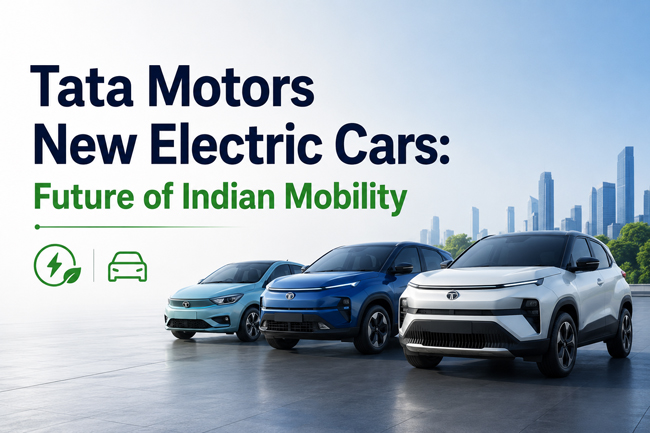
Tata Motors, a name synonymous with Indian automotive history, is aggressively steering towards an electric future. The company isn’t just dipping its toes into the EV market; it’s making a significant splash, aiming to redefine personal mobility in India with a range of compelling electric vehicles. This commitment is driven by a global shift towards sustainability, government incentives, and a growing consumer appetite for eco-friendly transportation. Tata Motors’ strategy involves not only launching new models but also investing heavily in charging infrastructure and battery technology, ensuring a holistic approach to EV adoption.
Unveiling the Current Electric Fleet: The Pioneers
Tata Motors has already established a strong presence in the Indian EV market with its current offerings. These vehicles are not just electric; they are designed with the Indian consumer in mind, balancing performance, features, and affordability.
Tata Nexon EV: The Reigning SUV Champion
The Tata Nexon EV has been a runaway success, consistently topping the sales charts for electric SUVs in India. Its popularity stems from a well-rounded package that offers:
-
Impressive Range: With a certified range of up to 300 km on a single charge (depending on the variant and driving conditions), it addresses range anxiety for many daily commuters.
-
Feature-Rich Interior: The Nexon EV boasts a modern interior with features like a touchscreen infotainment system, automatic climate control, and a sunroof, making it a comfortable and desirable vehicle.
-
Robust Performance: The electric powertrain delivers instant torque, providing a zippy and responsive driving experience, especially in city traffic.
-
Safety First: Built on a strong platform, it comes with multiple airbags, ABS with EBD, and other safety features, earning it a good safety rating.
Tata Tigor EV: The Sedan for the Masses
The Tata Tigor EV targets a different segment, offering an electric sedan experience at a more accessible price point. It’s an excellent option for those looking for an eco-friendly city car with a comfortable ride and practical features.
-
Urban Commuting Focus: With a range suitable for daily commutes, the Tigor EV is designed for efficiency and ease of use in urban environments.
-
Affordability: It offers a compelling entry point into the EV market, making electric mobility more attainable for a broader audience.
-
Practical Design: The sedan body style provides ample boot space, making it a practical choice for small families or individuals needing cargo capacity.
Tata Tiago EV: The Entry-Level Electric Hatchback
The recently launched Tata Tiago EV has democratized electric mobility further. As India’s first electric hatchback, it aims to make EVs accessible to a much wider demographic.
-
Compact and Agile: Perfect for navigating congested city streets, the Tiago EV offers nimble handling and a compact footprint.
-
Cost-Effective: It presents an attractive proposition for first-time EV buyers looking for an economical and eco-friendly alternative to traditional petrol or diesel hatchbacks.
-
Modern Features: Despite its entry-level positioning, it doesn’t skimp on essential modern features, including connectivity options and safety aids.
The Horizon: Upcoming Tata Electric Cars
Tata Motors is not resting on its laurels. The company has ambitious plans to expand its EV portfolio significantly in the coming years, introducing new models and exploring different vehicle segments.
Tata Punch EV: The Micro-SUV Electrified
The Tata Punch, a popular micro-SUV, is expected to join the electric ranks soon. This move is strategic, tapping into the growing demand for compact SUVs and offering an electric powertrain in this highly sought-after segment.
-
SUV Styling, Compact Size: The Punch EV will likely retain the rugged and stylish appeal of its ICE counterpart, making it an attractive option for young buyers.
-
Advanced Powertrain: Expect it to feature Tata’s latest EV technology, potentially offering improved range and performance compared to existing models.
-
Enhanced Features: The interior is anticipated to be modern and feature-rich, aligning with the expectations of the target demographic.
Tata Harrier EV and Safari EV: Electrifying the Flagships
Perhaps the most exciting upcoming additions are the electric versions of the popular Tata Harrier and Safari SUVs. These will represent Tata’s push into the premium electric SUV segment.
-
Flagship Performance: These models are expected to offer segment-leading performance, potentially featuring dual-motor all-wheel-drive systems for enhanced capability.
-
Luxurious Interiors: Expect premium materials, advanced comfort features, and cutting-edge technology to match their flagship status.
-
Extended Range: With larger battery packs, these EVs will likely offer significantly longer ranges, catering to those who need to travel longer distances or seek greater peace of mind.
-
Advanced Architecture: These might be built on new, dedicated EV platforms or heavily modified versions of existing architectures, optimized for electric powertrains and battery integration.
Other Potential Models: Expanding the Spectrum
While the Punch EV and the Harrier/Safari EVs are heavily anticipated, Tata Motors is also reportedly exploring other possibilities, including:
-
Electric Sedans: Potentially a larger sedan to compete in a higher segment.
-
Commercial EVs: Continued expansion of their electric commercial vehicle range.
Beneath the Hood: Tata’s EV Technology and Innovation
Tata Motors’ success in the EV space is underpinned by its continuous investment in technology and innovation.
Ziptron Technology: The Powerhouse
The Ziptron technology is the backbone of Tata’s current electric vehicles (Nexon EV, Tigor EV, Tiago EV). It’s an advanced EV architecture designed for:
-
High Torque: Delivering instant and exhilarating acceleration.
-
Long Range: Optimized battery management for extended driving distances.
-
Fast Charging: Supporting DC fast charging, allowing for quick top-ups.
-
Reliability: Built with robust components for durability and performance.
-
IP67 Rating: Ensuring battery and motor protection against water and dust ingress, crucial for Indian conditions.
Future Platforms: Acti.ev and Sigma
Tata Motors is developing new, dedicated EV platforms to support its future ambitions:
-
Acti.ev: This is an advanced, flexible EV architecture designed for a range of vehicles, from compact to larger SUVs. It emphasizes modularity, allowing for various battery sizes, motor configurations, and body styles. It’s expected to be rear-wheel-drive biased but capable of supporting all-wheel-drive.
-
Sigma: While less detailed publicly, Sigma is also understood to be a dedicated EV platform, possibly focused on specific vehicle types or performance characteristics.
Battery Technology and Charging Solutions
Tata Motors understands that the EV ecosystem extends beyond the vehicle itself. They are actively working on:
-
Battery Pack Advancements: Researching and developing next-generation battery chemistries for higher energy density, faster charging, and improved longevity.
-
Charging Infrastructure: Collaborating with partners and investing in public charging networks across India to ease charging concerns.
-
Home Charging Solutions: Offering convenient home charging options for EV owners.
The Tata Motors EV Ecosystem: More Than Just Cars
Tata Motors is building a comprehensive ecosystem to support its electric vehicle push. This includes:
Charging Network Expansion
Realizing that charging infrastructure is key to EV adoption, Tata Motors is actively expanding its charging network through partnerships and its own initiatives. This aims to ensure that EV owners have access to charging stations wherever they go.
Battery Swapping Technology (Potential Future)
While not currently a primary focus for passenger cars, Tata Motors has shown interest in battery swapping technology, particularly for its commercial vehicle segment. This could offer a faster alternative to charging for specific use cases.
Software and Connectivity
Modern EVs are increasingly defined by their software. Tata Motors is investing in connected car technologies, offering features like remote vehicle monitoring, over-the-air (OTA) updates, and advanced infotainment systems.
Addressing Common Concerns: Range Anxiety and Charging
Two of the biggest hurdles for EV adoption are range anxiety and charging availability. Tata Motors is tackling these head-on:
-
Increasing Range: Newer models and future platforms are designed with larger battery packs and more efficient powertrains to offer significantly longer driving ranges.
-
Faster Charging: The widespread adoption of DC fast charging technology allows EVs to gain substantial range in a short amount of time (e.g., 80% charge in under an hour for some models).
-
Expanding Network: Continuous efforts to build a robust public charging infrastructure are crucial to alleviating range anxiety. Tata aims to have a charging station accessible within a reasonable distance across major urban and highway routes.
The Cost Equation: Purchase Price and Running Costs
While the initial purchase price of an EV can sometimes be higher than its internal combustion engine (ICE) counterpart, the total cost of ownership often favors EVs.
-
Lower Running Costs: Electricity is generally cheaper than petrol or diesel. This translates to significant savings on fuel costs over the life of the vehicle.
-
Reduced Maintenance: EVs have fewer moving parts than ICE vehicles (no engine oil changes, fewer brake replacements due to regenerative braking), leading to lower maintenance expenses.
-
Government Incentives: Various government subsidies and tax benefits for EVs further reduce the overall cost of ownership, making them increasingly competitive.
Why Choose a Tata Electric Car?
-
Pioneering Spirit: Tata Motors is a leader in the Indian EV market, offering proven technology and a wide range of options.
-
Robust Engineering: Their vehicles are built to withstand Indian road conditions and consumer needs.
-
Comprehensive Ecosystem: They are building not just cars but the entire infrastructure to support EV ownership.
-
Commitment to Sustainability: By choosing Tata, you’re contributing to a greener future and reducing your carbon footprint.
-
Value Proposition: A blend of performance, features, safety, and increasingly competitive pricing.
The Road Ahead: Tata’s Vision for Electric Mobility
Tata Motors’ vision extends beyond simply selling electric cars. They aim to be a catalyst for the transformation of mobility in India. This involves:
-
Electrification of Fleets: Partnering with ride-sharing services and fleet operators to electrify their operations.
-
Innovation Hubs: Investing in R&D to stay at the cutting edge of battery, motor, and software technology.
-
Customer Education: Actively educating consumers about the benefits and practicality of EVs.
The future of mobility in India is undeniably electric, and Tata Motors is firmly in the driver’s seat, shaping that future with its innovative and accessible range of electric vehicles. As new models emerge and technology continues to advance, Tata’s electric cars are poised to become an even more significant part of the Indian automotive landscape.
Frequently Asked Questions (FAQ)
Q1: What is the expected range of the upcoming Tata Harrier EV?
A1: While official figures are not yet released, based on its larger size and expected battery capacity, the Tata Harrier EV is anticipated to offer a substantial range, potentially exceeding 400-500 km on a single charge under standard driving conditions.
Q2: Are Tata electric cars eligible for government subsidies in India?
A2: Yes, many Tata electric cars are eligible for subsidies under government schemes like the FAME II (Faster Adoption and Manufacturing of Electric Vehicles) scheme, which helps reduce the upfront cost for consumers. Specific eligibility and subsidy amounts can vary by model and state policies.
Q3: How does regenerative braking work in Tata EVs?
A3: Regenerative braking in Tata EVs captures kinetic energy that would normally be lost as heat during deceleration and braking, converting it back into electrical energy to recharge the battery. This not only increases the vehicle’s range but also reduces wear on the conventional brake pads.
Q4: What is the difference between Tata’s Ziptron and the upcoming Acti.ev platform?
A4: Ziptron is Tata’s current, proven EV powertrain technology used in models like the Nexon EV and Tiago EV. Acti.ev is a next-generation, dedicated EV architecture designed for greater flexibility, modularity, and scalability, enabling a wider range of future EV models with enhanced performance and integration capabilities.
Conclusion
Tata Motors is leading India’s electric vehicle revolution with a diverse and expanding lineup. From the popular Nexon EV to the upcoming Harrier EV and Punch EV, they offer compelling options for various consumer needs. Their commitment to advanced Ziptron and Acti.ev technology, alongside charging infrastructure development, ensures a practical and sustainable future for Indian mobility.
Actionable Steps:
-
Research Current Models: Explore the Tata Nexon EV, Tigor EV, and Tiago EV for immediate EV ownership.
-
Stay Updated: Follow Tata Motors’ announcements for details on upcoming models like the Punch EV, Harrier EV, and Safari EV.
-
Consider Total Cost of Ownership: Evaluate the long-term savings from lower running and maintenance costs compared to traditional cars.