
#reading habits

Home Garden
Culture

Why We Still Need to Read Books in the Digital Age

Every day, we absorb an incredible amount of information. Before we even get out of bed, many of us check the news on our phones. During the commute, we watch YouTube videos or scroll through short-form content. Whenever a question comes to mind, we open a search engine or ask an AI assistant for the answer. Finding information has never been easier. What once required a trip to the library can now be discovered within seconds. Compared to previous generations, we have access to more knowledge than ever before, delivered almost instantly. Yet something about this feels strangely incomplete. Although information is everywhere, many people feel they have less time—and perhaps less ability—to think deeply about what they’re learning. Reading

Writing
Society

Is Reading Really Disappearing? Why Books Still Matter in the Digital Age

Not long ago, I looked at the books on my shelf and realized they had been collecting dust for months. That simple observation led me to ask myself an uncomfortable question. When did I start spending more time looking at my phone than reading books? There was a time when visiting a bookstore felt like a small event. I enjoyed wandering through the shelves, picking out a book that caught my attention, and settling into a quiet café where I could spend an entire afternoon reading. It never felt like a waste of time. In fact, those slow afternoons often became some of my favorite memories. Today, my habits are very different. Whenever I have a few free minutes, I

Writing
Culture

Why People Still Love Books in a World Full of Screens

There was a time when I thought I was slowly losing the habit of reading. It didn’t happen all at once. I didn’t wake up one morning and decide that books no longer mattered. Instead, reading quietly disappeared from my daily routine. Whenever I had a few free minutes, I reached for my phone instead of a book. If I was waiting in line, I checked social media. If I had ten spare minutes before bed, I watched short videos. If I had a question, I searched for a quick answer online. Little by little, I became someone who consumed information all day without actually spending much time reading. At first, I didn’t think there was a problem. After all,

bookstores
Culture

Independent Bookstores Continue to Offer Experiences Beyond Shopping

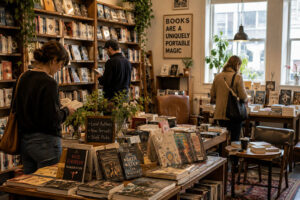
Walking into an independent bookstore often feels different from entering a large retail chain. The shelves may be smaller. The selection may be more carefully curated. There may not be hundreds of copies of the latest bestseller stacked near the entrance. Instead, visitors are often greeted by handwritten recommendations, themed displays, and books chosen with a particular audience in mind. For many customers, that difference is precisely the appeal. Independent bookstores continue to operate in communities around the world despite significant changes in the publishing and retail industries. While online shopping offers convenience and large retailers provide extensive inventories, smaller bookstores have increasingly focused on something that cannot be packaged and shipped: experience. As a result, many independent bookstores have

libraries
Society

Public Reading Spaces Remain Popular in an Increasingly Digital World

Walk into a public library on a weekday afternoon and the scene may be surprisingly familiar. Students review notes before exams, remote workers sit quietly behind laptop screens, and readers browse shelves looking for their next book. Similar scenes can be found in university libraries, reading rooms, and even modern bookstores that provide dedicated spaces for visitors to sit and read. This may seem unexpected at a time when digital content is available almost everywhere. Smartphones, tablets, and laptops allow people to access books, articles, and educational resources within seconds. Yet public reading spaces continue to attract visitors. Part of the explanation may simply be the environment. Reading at home is not always easy. Notifications, household responsibilities, and other distractions

bookstores
Culture

Independent Bookstores Maintain Their Appeal Among Readers

The rapid growth of online shopping has transformed nearly every retail industry, including books. Consumers can now order books within seconds and often receive them the next day. Despite this convenience, independent bookstores continue to attract loyal customers and maintain a meaningful presence in many communities. Unlike large online retailers, independent bookstores often focus on creating a unique browsing experience. Visitors are encouraged to explore shelves, discover unexpected titles, and interact with staff members who are passionate about literature. For many readers, this personal connection remains difficult to replicate through algorithms and recommendation engines. Many independent bookstores have also expanded their role beyond selling books. Author events, book clubs, reading groups, and community gatherings have become common features. These activities

haimnews
Culture

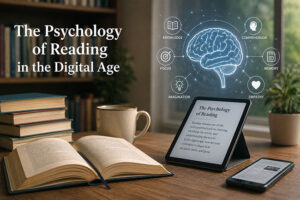
The Psychology of Reading in the Digital Age

Reading has been a fundamental part of human learning and communication for centuries. From handwritten manuscripts and printed books to e-books and online articles, the ways people consume written information have evolved dramatically. In today’s digital age, readers have access to more content than at any other point in history. Smartphones, tablets, computers, and digital platforms allow instant access to books, news, research, and educational resources from virtually anywhere. Despite these technological advancements, reading remains deeply connected to human psychology. How people process information, maintain attention, develop understanding, and retain knowledge continues to be influenced by the medium through which they read. Understanding the psychology of reading in the digital age helps explain changing reading habits and the ongoing importance