Choosing flowers based only on their appearance is common, but understanding their meanings can make a gift feel much more thoughtful. A bouquet can communicate gratitude, affection, encouragement, celebration, or sincere love without relying on a long message.
Among the many flowers used for gifts and home decoration, lisianthus, tulips, and peonies are especially popular. Each has a distinctive shape and mood, and each is associated with different emotions and occasions.
Lisianthus is often chosen to express gratitude and sincere affection. Tulips are known for their simple form and color-based meanings. Peonies are admired for their full blooms and their association with romance, prosperity, and happy marriage.
This guide explains the meanings of these three flowers, the occasions they suit best, practical styling ideas, and basic care methods for keeping cut flowers fresh.
Lisianthus: A Graceful Flower for Gratitude and Sincere Affection
Lisianthus is known for its delicate petals, soft colors, and elegant appearance. Its blooms can resemble roses, but lisianthus usually has a lighter and more relaxed look.
Because of its gentle shape and refined colors, it is widely used in bouquets, wedding arrangements, flower boxes, table decorations, and event displays. It works especially well in designs that need to feel romantic without appearing overly dramatic.
Lisianthus is commonly associated with several meanings:
- Gratitude
- Sincere affection
- Lasting love
- Elegance
- Appreciation
These meanings make lisianthus a suitable flower for expressing emotions that may be difficult to put into words. It can be given to a partner, family member, friend, teacher, coworker, or anyone who deserves a thoughtful thank-you.
When to Give Lisianthus
Lisianthus is appropriate for a wide range of occasions because its meaning is warm but not limited to romantic relationships.
It is a good choice for:
- Thank-you gifts
- Anniversaries
- Birthdays
- Graduations
- Wedding celebrations
- Housewarming gifts
- Appreciation bouquets
- Professional congratulations
A bouquet of lisianthus can feel personal without being too intense. This makes it especially useful when giving flowers to a teacher, colleague, mentor, or family member.
White or ivory lisianthus creates a clean and elegant impression. Pale pink varieties feel gentle and affectionate, while lavender and purple varieties can make an arrangement look more sophisticated.
How to Style Lisianthus
Lisianthus works well both as a focal flower and as a supporting flower.
A simple arrangement of white lisianthus in a clear glass vase can suit a modern or minimalist interior. Pink and ivory varieties create a soft, romantic mood, while purple lisianthus adds depth to neutral-colored arrangements.
It also combines well with:
- Roses
- Tulips
- Peonies
- Calla lilies
- Ranunculus
- Eucalyptus
- Baby’s breath
For a calm and natural bouquet, combine ivory lisianthus with pale pink flowers and light greenery. For a more formal arrangement, use purple lisianthus with white roses or cream-colored flowers.
Lisianthus is also frequently used in wedding bouquets because it adds volume without making the arrangement feel heavy. Its layered petals create softness, while its long stems help maintain structure.
How Long Does Lisianthus Last?
Lisianthus is generally considered a relatively long-lasting cut flower. With proper care, it may remain fresh for a week or longer, although vase life depends on the condition of the flowers, room temperature, and water quality.
To help lisianthus last longer:
- Cut about one inch from the bottom of each stem at an angle.
- Remove any leaves that would sit below the waterline.
- Place the flowers in a clean vase filled with fresh water.
- Replace the water every day or every other day.
- Keep the arrangement away from direct sunlight and heat.
- Remove wilted flowers and damaged leaves as needed.
There is usually no need to wipe delicate flower petals with a cloth. Petals can bruise easily, so it is better to handle them as little as possible.
Lisianthus is a practical choice for people who want elegant flowers that can remain attractive for several days.
Tulips: Simple Spring Flowers With Different Meanings by Color
Tulips are among the most recognizable spring flowers. Their smooth stems, curved petals, and simple form give them a clean and modern appearance.
Unlike highly layered flowers, tulips have a minimal shape that works well in both traditional and contemporary arrangements. They can create a cheerful mood in a colorful bouquet or a calm atmosphere when displayed in soft neutral tones.
One of the most interesting features of tulips is that their symbolic meaning often changes depending on their color.
Tulip Meanings by Color
Different cultures and florists may interpret flower meanings differently, but tulips are commonly associated with the following ideas:
- Red tulips: deep love and romantic devotion
- Pink tulips: affection, care, and good wishes
- White tulips: purity, forgiveness, and sincerity
- Purple tulips: admiration, dignity, and elegance
- Yellow tulips: happiness, cheerfulness, and positive energy
Older traditions sometimes connected yellow tulips with unreturned love, but today they are more often used to express warmth, friendship, and optimism.
Because meanings can vary, the color and the accompanying message should be considered together. A short card can make the intention of the gift much clearer.
When to Give Tulips
Tulips can be used for both romantic and nonromantic occasions.
Red tulips are suitable for anniversaries, Valentine’s Day, or romantic celebrations. Pink tulips work well for birthdays, friendship gifts, and expressions of care. White tulips can be appropriate for apologies, sympathy arrangements, or peaceful home decoration.
Yellow tulips are often chosen for congratulations, recovery wishes, and cheerful spring gifts. Purple tulips can suit formal celebrations, professional achievements, or elegant event arrangements.
Tulips are especially popular for:
- Spring birthdays
- Romantic gifts
- Mother’s Day
- Thank-you bouquets
- Housewarming gifts
- Easter decorations
- Graduation celebrations
- Seasonal home decor
Their simple shape makes them easy to give without the bouquet feeling overly formal.
How to Decorate With Tulips
Tulips are well suited to minimalist home decoration. A small group of tulips in a clear vase can make a room feel brighter without taking up much space.
For a Scandinavian-inspired interior, white, pale pink, or light yellow tulips can be arranged in a simple ceramic or glass vase. For a more colorful display, combine red, orange, and yellow varieties.
Tulips also pair well with:
- Ranunculus
- Lisianthus
- Peonies
- Daffodils
- Hyacinths
- Eucalyptus
- Waxflower
However, tulips continue to grow and move after being cut. Their stems may bend toward light, and the arrangement can change shape over several days. This natural movement is part of their charm, but it should be considered when selecting a vase.
A taller vase can support straight stems, while a shorter vase allows the tulips to curve more naturally.
How to Keep Cut Tulips Fresh
Tulips require clean water and a cool environment.
Follow these steps:
- Trim a small amount from the bottom of each stem.
- Use a clean vase with cool, fresh water.
- Remove leaves that would remain underwater.
- Change the water daily or whenever it becomes cloudy.
- Keep the flowers away from heaters and direct sunlight.
- Place them away from ripening fruit.
Ripening fruit produces ethylene gas, which can shorten the life of many cut flowers.
Tulips do not always need a large amount of water. A moderate water level is often enough, as long as the stems remain submerged. Because tulips continue growing after they are cut, the arrangement may need to be adjusted every few days.
Avoid piercing the stems, adding coins, or using unverified household methods. Clean water, a clean vase, and a cool location are usually more reliable.
Peonies: Full Romantic Blooms Associated With Love and Prosperity
Peonies are admired for their large, layered flowers and soft fragrance. When fully open, a single bloom can become the center of an entire arrangement.
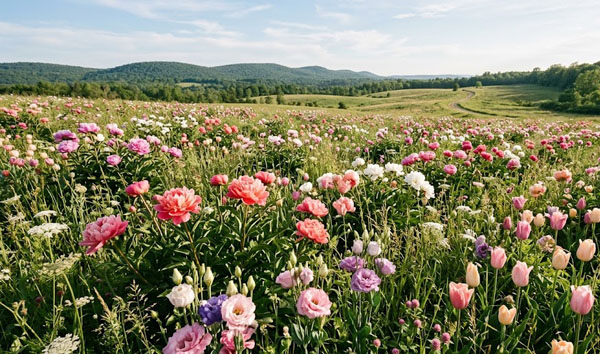
They usually appear during spring and early summer, although exact availability depends on the region and variety. Because their natural season is relatively limited, fresh peonies are often considered special and are highly requested for weddings and seasonal bouquets.
Peonies are commonly associated with:
- Romance
- Happy marriage
- Prosperity
- Good fortune
- Honor
- Shyness
- New beginnings
These meanings make peonies particularly popular for weddings, engagements, anniversaries, and romantic celebrations.
Why Peonies Are Popular for Weddings
The association between peonies and happy marriage has made them a classic wedding flower.
Their full shape creates a luxurious appearance without needing a large number of stems. Soft pink and white peonies are commonly used in bridal bouquets, reception centerpieces, ceremony decorations, and wedding photography.
Peonies also combine well with roses, lisianthus, ranunculus, hydrangeas, and seasonal greenery.
A bridal bouquet made with pale pink peonies can feel romantic and soft. White peonies create a cleaner and more formal look. Deep pink or burgundy varieties can add stronger color and visual contrast.
Their meaning also makes them suitable for engagement gifts, bridal showers, and anniversary arrangements.
When to Give Peonies
Peonies are not limited to weddings.
They can also be given for:
- Romantic anniversaries
- Engagements
- Birthdays
- Promotions
- Business openings
- Housewarming celebrations
- Mother’s Day
- Major personal achievements
Because peonies are associated with prosperity and good fortune in several traditions, they can be appropriate for celebrating a new job, promotion, business launch, or important milestone.
A single peony can also be used as a simple but impressive gift. Its large bloom provides enough visual impact without requiring a complicated arrangement.
How to Style Peonies at Home
Peonies can be displayed alone or mixed with other flowers.
A few peonies in a wide vase create a romantic centerpiece for a dining table, bedroom, or living room. White or blush-colored peonies suit calm and neutral interiors, while darker pink varieties create a stronger focal point.
For a natural garden-style arrangement, combine peonies with loose greenery and smaller seasonal flowers. For a formal arrangement, pair them with roses and structured foliage.
Because peonies open widely, they need enough space in the vase. Avoid placing too many stems into a narrow opening, as crowded blooms can become damaged or fail to open properly.
Peonies can also have a noticeable natural fragrance. The strength varies by variety, so people who are sensitive to floral scents may prefer lightly scented types.
How to Choose Fresh Peonies
Peonies are often sold while still partially closed. This helps protect the petals during transportation and allows the flowers to open after purchase.
When selecting peonies, look for buds that feel soft rather than completely hard. Florists sometimes describe a good opening stage as similar to the softness of a marshmallow.
A tightly closed bud that feels extremely hard may not open successfully. A flower that is already fully open may have a shorter vase life.
Check the stems and leaves as well. They should look firm and green rather than dry or yellow. Avoid flowers with severe browning, mold, damaged stems, or excessive petal loss.
Some peony buds have a slightly sticky surface. This natural coating can sometimes make it difficult for the petals to open. If necessary, the bud can be gently rinsed with lukewarm water, but the petals should not be forced apart.
How to Keep Peonies Fresh
Peonies can open quickly once they are placed in water, especially in a warm room.
To extend their vase life:
- Trim the stems at an angle with clean scissors or floral shears.
- Remove leaves below the waterline.
- Place the stems in a clean vase with fresh water.
- Change the water daily or every other day.
- Keep the vase in a cool place away from direct sunlight.
- Remove damaged or browning outer petals when necessary.
- Recut the stems every few days.
Peonies should be arranged with enough room for the blooms to expand. A bud that looks small at first may become several times larger after opening.
If the flowers are needed for a specific event, it is usually better to purchase them before they are fully open. Their opening speed will depend on room temperature. A warmer room encourages faster opening, while a cooler environment slows the process.
Which Flower Is Best for Each Occasion?
Lisianthus, tulips, and peonies can all be used for meaningful gifts, but they create different impressions.
Choose lisianthus when you want to express:
- Gratitude
- Sincere affection
- Appreciation
- Quiet elegance
- Lasting care
Lisianthus works especially well for thank-you gifts, professional appreciation, and gentle romantic messages.
Choose tulips when you want to express:
- Romantic love
- Friendship
- Cheerfulness
- Sincerity
- Seasonal warmth
Tulips are practical for birthdays, spring celebrations, casual romantic gifts, and home decoration.
Choose peonies when you want to express:
- Romance
- Celebration
- Prosperity
- Happy marriage
- Good fortune
Peonies are ideal for weddings, engagements, anniversaries, promotions, and significant milestones.
The recipient’s preferences should also be considered. Someone who likes minimal designs may prefer tulips, while a person who enjoys romantic and luxurious arrangements may appreciate peonies. Lisianthus is a balanced option for someone who prefers soft and elegant flowers.
Simple Flower Pairing Ideas
The three flowers can also be combined in one arrangement.
Soft Romantic Bouquet
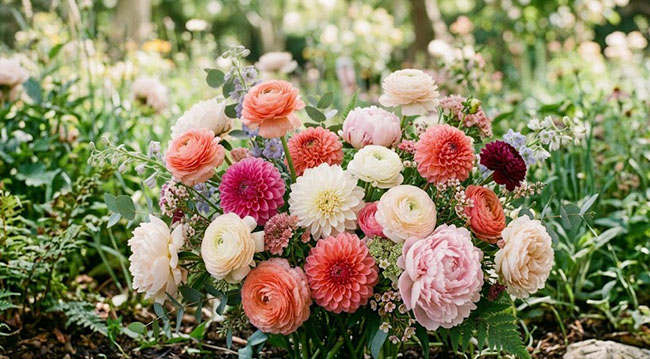
Use pale pink lisianthus, blush tulips, and white peonies. Add light greenery for a relaxed and romantic effect.
This arrangement is suitable for birthdays, anniversaries, bridal showers, and thank-you gifts.
Elegant White Arrangement
Combine white lisianthus, white tulips, and cream-colored peonies in a clear or neutral vase.
This arrangement works well for weddings, formal events, peaceful interiors, and sympathy gifts.
Colorful Spring Bouquet
Use yellow or pink tulips with lavender lisianthus and deep pink peonies.
The result is cheerful and suitable for spring celebrations, housewarming gifts, and congratulatory occasions.
When combining flowers, it is important to consider vase life. Tulips may continue growing and curving, while peonies may open quickly. Lisianthus often lasts longer and can help the arrangement remain attractive after the more delicate flowers begin to fade.
General Care Tips for Cut Flowers
Regardless of the flower type, basic care has a major effect on how long an arrangement lasts.
Always begin with a clean vase. Bacteria in an unwashed vase can block the stems and cause flowers to wilt more quickly.
Use clean scissors or floral shears to cut the stems. Cutting at an angle increases the surface area available for water absorption.
Remove all leaves that would sit below the waterline. Submerged leaves decay and encourage bacterial growth.
Change the water regularly. Daily changes are ideal, but every other day may be sufficient if the water remains clear.
Keep flowers in a cool location away from direct sunlight, heating vents, strong air conditioning, and ripening fruit.
Check the arrangement every day. Remove wilted blooms and damaged leaves so that the remaining flowers stay clean and attractive.
Commercial flower food can also be helpful when used according to the package instructions. Adding random amounts of sugar, bleach, vinegar, or other household products is not always safe and may damage the flowers if mixed incorrectly.
Conclusion
Flowers can communicate emotions that are sometimes difficult to express directly. Their colors, shapes, and traditional meanings can turn a simple bouquet into a more personal gift.
Lisianthus is a graceful choice for gratitude, sincere affection, and quiet appreciation. Tulips offer a simple way to express different emotions through color. Peonies bring romance, abundance, and a sense of celebration to important occasions.
The best flower is not always the largest or most expensive one. It is the flower that suits the recipient, the occasion, and the message being shared.
Before choosing a bouquet, consider what you want it to communicate. A thoughtfully selected flower can become more than a decoration. It can serve as a small but memorable expression of love, gratitude, encouragement, or celebration.