Spring gardens are often remembered not only for their colors but also for their fragrance. A single blooming shrub can completely change the atmosphere of a garden, filling the air with a scent that instantly reminds us that winter has finally come to an end. Among the many flowering shrubs gardeners love, few are as admired as lilac and Winter Daphne. Both produce beautiful blossoms and both are famous for their unforgettable fragrance, yet they are surprisingly different plants.
Many beginners assume they are choosing between two shrubs that offer almost the same experience. In reality, each plant has its own personality, growing habits, and environmental preferences. One rewards gardeners with large clusters of flowers and vigorous growth, while the other charms people with compact beauty and one of the richest floral scents found in nature. Choosing between them is not about deciding which one is better. It is about understanding which one better matches your climate, your garden, and the way you enjoy gardening.
I remember visiting two different gardens in early spring several years apart. In one garden, an old lilac shrub stood beside a white fence, its purple blossoms swaying gently in the breeze while bees moved busily from flower to flower. The scent reached me long before I stood beside the plant. In another garden, the flowers were much smaller and almost hidden among glossy evergreen leaves. Yet before I even noticed the shrub itself, the fragrance of Winter Daphne surrounded the entrance to the house. That experience taught me something simple but important: not all fragrant plants create the same feeling. Some fill an entire landscape with color, while others quietly transform a small corner of a garden.
Understanding these differences allows gardeners to make better decisions and enjoy healthier plants for many years.
Lilac and Winter Daphne May Both Smell Wonderful, but They Create Very Different Gardens
At first glance, it is easy to understand why people compare these two plants. Both bloom in spring. Both are grown primarily for their fragrance. Both have become classic ornamental shrubs in gardens around the world. However, once you begin growing them, the similarities quickly end.
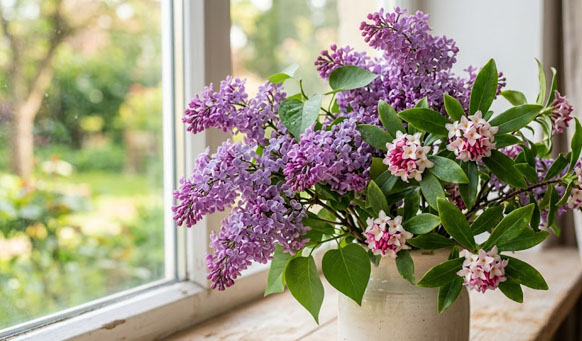
Lilacs are known for making a dramatic statement. Their flower clusters are large, colorful, and impossible to ignore. Depending on the variety, the blossoms may appear in shades of purple, lavender, white, pink, or even deep violet. When a mature lilac reaches full bloom, it often becomes the centerpiece of the entire landscape. Even from a distance, people immediately notice its vibrant flowers before they notice anything else.
Winter Daphne creates an entirely different impression. Rather than overwhelming a garden with large displays, it offers elegance through subtle beauty. Its flowers are relatively small, usually appearing in clusters of pink buds that open into delicate white blossoms. Instead of relying on visual impact alone, Winter Daphne captivates people with fragrance. Many gardeners say they smell the flowers before they even realize the shrub is nearby.
This difference influences how each plant is used in landscape design. Lilacs are often planted where they have room to spread naturally. They work beautifully along fences, beside country homes, or as focal points in larger gardens. As the years pass, they become substantial shrubs that add both height and seasonal color to outdoor spaces.
Winter Daphne, on the other hand, excels in intimate settings. Because it remains relatively compact, it is often planted beside front doors, patios, walkways, or windows where its fragrance can be appreciated every day. Even a single shrub can perfume an entire entrance during its blooming season.
Another noticeable difference is the appearance of the foliage. Lilacs are deciduous, meaning they lose their leaves during autumn and remain bare throughout winter before producing fresh growth in spring. This seasonal cycle gives gardeners something new to anticipate each year. Winter Daphne is evergreen, keeping its glossy green leaves throughout all four seasons. Even after flowering has ended, it continues contributing structure and color to the garden.
These contrasting characteristics explain why experienced gardeners rarely view the plants as direct competitors. Instead, they see them as shrubs serving completely different purposes. One celebrates the arrival of spring with spectacular flowers, while the other quietly enhances everyday life through lasting fragrance and evergreen beauty.
Climate and Growing Conditions Often Determine Which Plant Will Thrive
Many gardeners choose plants based solely on photographs, but successful gardening begins with understanding the environment each plant naturally prefers. A shrub may look beautiful at the garden center, yet struggle for years if planted in unsuitable conditions.
Lilacs are native to regions that experience cold winters and mild springs. Because of this history, they actually depend on winter chilling to develop healthy flower buds. Gardeners living in colder climates are often rewarded with spectacular blooms every spring because the plants receive exactly the conditions they evolved to expect.
Sunlight is another essential factor for lilacs. They perform best in locations receiving at least six hours of direct sunlight every day. While they tolerate light shade, too little sunlight often leads to fewer flowers, weaker stems, and reduced fragrance. They also appreciate well-drained soil, as constantly wet roots can eventually lead to disease or poor growth.
Winter Daphne tells a different story.
Although it tolerates winter weather surprisingly well, it generally prefers regions with milder seasonal changes. Intense afternoon heat can stress the plant, particularly during hot summers. For this reason, many experienced gardeners choose locations where the shrub enjoys morning sunshine followed by gentle afternoon shade.
The soil requirements also differ significantly. Winter Daphne demands excellent drainage because its roots dislike remaining wet for extended periods. Overwatering is one of the most common reasons healthy-looking plants suddenly decline. Gardeners often discover that watering less frequently actually produces healthier shrubs.
One lesson I learned while helping a friend redesign a small courtyard was that location matters far more than expensive fertilizers. We originally planned to place a Winter Daphne in the center of an open flower bed because it looked attractive there. Fortunately, a local nursery owner suggested moving it closer to the entrance where the afternoon shade protected the leaves while visitors could enjoy its fragrance every time they walked through the gate. Several years later, that single decision still proves to have been the right one.
Plants cannot tell us directly what they need, but they constantly respond to the conditions around them. When gardeners learn to observe sunlight, soil moisture, air circulation, and seasonal temperatures, they begin making decisions that benefit every plant in the landscape—not just lilacs or Winter Daphne.
The most successful gardens are rarely created by chance. They grow from understanding that every plant has its own preferences, and respecting those natural needs is often the simplest path toward healthy growth and abundant flowers.
Long-Term Care Tips That Keep Both Shrubs Healthy
One of the biggest lessons gardening teaches is that beautiful plants are rarely the result of luck. While choosing the right shrub is important, the care you provide after planting has a much greater influence on how healthy and attractive it becomes over time. Lilac and Winter Daphne may have different growing habits, but both reward gardeners who pay attention to their natural needs rather than following a routine that works for every plant.
Lilacs are often considered easy shrubs to grow, and in many ways they are. Once established, they are relatively drought tolerant and can live for decades. However, one common mistake many beginners make is pruning at the wrong time. Because lilacs develop next year’s flower buds shortly after the current flowers fade, pruning during late summer, autumn, or winter often removes the very buds that would have produced beautiful spring blossoms. The result is a healthy-looking shrub with plenty of leaves but very few flowers.
Experienced gardeners usually prune lilacs immediately after the blooming season ends. This timing allows the plant to recover while producing new shoots that will carry flowers the following year. Removing old flower clusters also helps the shrub direct more energy toward healthy growth rather than seed production. Every few years, cutting away several of the oldest stems near ground level encourages younger, stronger branches to replace aging wood, keeping the entire shrub vigorous for many seasons.
Feeding lilacs is generally straightforward. A light application of compost or balanced fertilizer in early spring is often enough. Excessive nitrogen should be avoided because it encourages leafy growth at the expense of flowers. Many people assume more fertilizer means more blossoms, but with lilacs the opposite is often true. Healthy soil, proper sunlight, and moderate feeding usually produce better results than frequent fertilizing.
Winter Daphne requires a gentler approach. Unlike lilacs, it dislikes being disturbed once its roots have settled into the soil. Transplanting an established shrub often causes stress that may take years to overcome. For this reason, selecting the right location from the beginning is especially important. Gardeners who take time to prepare the planting site carefully are often rewarded with healthier plants that require far less maintenance in the future.
Watering is another area where patience matters. Because Winter Daphne is sensitive to root rot, allowing the top layer of soil to dry slightly before watering is usually much safer than keeping the soil constantly wet. During rainy seasons, good drainage becomes even more important than additional watering. Many experienced growers would rather underwater the plant slightly than expose its roots to prolonged moisture.
Seasonal observation also plays a major role in long-term success. Instead of following a rigid schedule, experienced gardeners pay attention to how the plant responds throughout the year. New growth, leaf color, flower production, and soil moisture all provide valuable clues about the shrub’s overall health. These observations often prevent problems long before they become serious.
Perhaps the most important lesson is that gardening is never about achieving instant perfection. Every season teaches something new. A shrub that struggles in one location may flourish after being moved to a better environment, while a simple adjustment in watering or pruning can completely change the way a plant performs. Over time, gardeners begin to realize that success comes less from following strict rules and more from learning to understand the unique personality of each plant.
Both lilac and Winter Daphne reward consistency rather than perfection. A few thoughtful habits repeated year after year are far more valuable than occasional bursts of intensive care. In many gardens, these shrubs become living reminders that patience often produces the most beautiful results.
Conclusion
Lilac and Winter Daphne have earned their place among the world’s favorite flowering shrubs for very different reasons. Lilacs impress with their abundant flower clusters, vibrant colors, and ability to become a breathtaking centerpiece in larger landscapes. Winter Daphne, meanwhile, offers elegance through its compact form, evergreen foliage, and one of the richest fragrances found in any spring-blooming shrub.
Rather than asking which plant is better, gardeners should ask which plant is better suited to their own environment. Climate, available space, sunlight, and maintenance preferences all influence long-term success far more than appearance alone. A healthy shrub growing in the right conditions will always provide greater satisfaction than a more fashionable plant struggling in an unsuitable location.
Gardening is ultimately an exercise in observation and patience. Every season offers opportunities to learn how plants respond to changing weather, soil conditions, and the care they receive. Lilac and Winter Daphne each teach this lesson in their own way. One announces the arrival of spring with spectacular displays of color, while the other quietly welcomes the season with fragrance that lingers long after the flowers are noticed.
Whichever shrub you choose, the real reward extends beyond beautiful blooms. It is found in the simple routine of caring for a living plant, watching it mature year after year, and discovering that the most memorable gardens are not necessarily the largest or the most expensive. They are the ones that continue to bring joy every spring through thoughtful planting, patient care, and an appreciation for nature’s quiet beauty.