
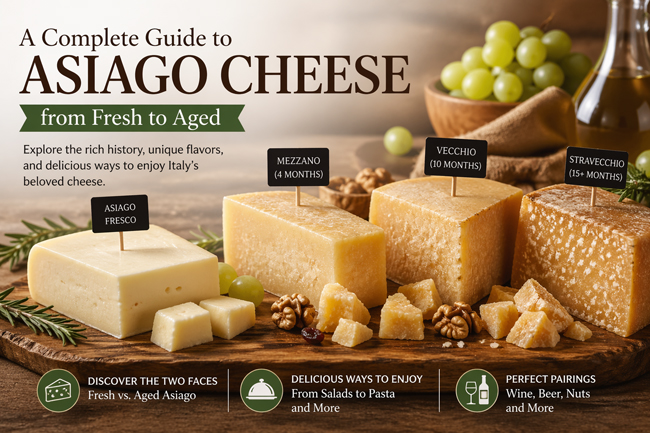
Asiago Cheese, Who Are You? Italy’s Hidden Gem
There are thousands of types of cheese loved around the world, but when people think of cheeses that represent Italy, mozzarella and Parmigiano Reggiano are usually the first to come to mind. However, the cheese we are focusing on today is none other than Asiago. Born in the small town of Asiago in the Veneto region of northeastern Italy, this cheese has a long history and a unique charm, and it is beloved by food lovers all over the world.
Asiago cheese boasts a history of more than 1,000 years. Records show that it was first made around the 10th century. In the beginning, it was made from sheep’s milk, but over time it gradually changed to cow’s milk, taking on the form of Asiago cheese that we know today. This long history has added depth and richness to Asiago cheese, and its flavor has become even more diverse as time has passed.
Why Is Asiago Cheese Special?
What makes Asiago cheese special is its diversity. Because its taste and texture change dramatically depending on the aging period, it offers an experience almost like tasting several different cheeses at once. It begins with a fresh and soft flavor, and as time goes by, it becomes firmer and develops a sharper, more pungent character, much like a well-aged wine or whiskey.
In addition, Asiago cheese is certified with DOP (Denominazione di Origine Protetta), which means Protected Designation of Origin. Under EU law, this title is given only to agricultural products made in a specific region using traditional methods, proving that Asiago cheese is recognized for both its quality and authenticity. Asiago cheese is produced only in the Veneto region and parts of neighboring Trentino, and it must pass strict quality control standards.
The Two Faces of Asiago Cheese: Fresh vs. Aged
The greatest charm of Asiago cheese lies in the wide variety of flavors and textures that develop depending on the aging period. It can generally be divided into two main styles, and let’s take a closer look at the characteristics and appeal of each.
1. Asiago Fresco
Aging period: at least 20 days and up to 40 days
Texture: Soft, moist, and elastic. Its texture is reminiscent of mozzarella or fresh cheddar cheese.
Taste: The natural sweetness and creamy flavor of milk are strongly present. It is hardly pungent or salty at all, and it is so mild and gentle that even people trying cheese for the first time can enjoy it without 부담.
Color: Light ivory
Uses: It is excellent for adding freshness to sandwiches, salads, and pasta dishes. Because it has a low melting point and melts smoothly, it can also be used in cheese sauces.
2. Aged Asiago (Asiago Stagionato)
“Stagionato” means “aged” in Italian. Aged Asiago can be further divided according to the aging period.
Mezzano (Medium-aged)
Aging period: about 4 months
Texture: Firmer than fresh Asiago, but still relatively soft. It is easy to slice and slightly crumbly.
Taste: The flavor of milk becomes deeper, with added hints of nuts and sweetness. It offers a balanced experience between the softness of fresh Asiago and the flavor of aged cheese.
Uses: It works well in salads, appetizers, and cheese boards.
Vecchio (Long-aged)
Aging period: about 10 months
Texture: Very firm and crumbly. It can feel somewhat similar to Parmigiano Reggiano.
Taste: Deep, rich, and complex. Along with saltiness, you may notice nutty notes, fruitiness, and sometimes even a slight spiciness. Its sharp, aged character is one of its defining features.
Uses: It is excellent grated over pasta, soup, and risotto to add flavor, or used on a cheese board to bring depth of taste.
Stravecchio (Extra-long aged)
Aging period: 15 months or more
Texture: Extremely firm, often forming crystals that give a pleasantly crunchy bite.
Taste: It has the strongest and most complex flavor of all. Saltiness, nuttiness, and caramel-like notes come together to leave a deep and lasting finish.
Uses: Because even a small amount delivers strong flavor, it is mainly used in appetizers or on cheese boards to highlight its rich character.
How Can You Tell Asiago Cheese Apart?
When buying Asiago cheese, it is important to look carefully at the label. In general, you can check for the following information:
“Asiago Fresco”: fresh Asiago
“Asiago Stagionato”: aged Asiago (further marked according to aging period such as Mezzano, Vecchio, Stravecchio)
Production region: Veneto or parts of Trentino
Producer information
Aging period
You can choose according to your preference—fresh Asiago if you enjoy a soft texture, or aged Asiago if you prefer a firmer cheese with a richer flavor.
How to Enjoy Asiago Cheese
Asiago cheese is wonderful on its own, but its charm doubles when it is used in a variety of dishes. What are some good ways to enjoy it?
1. Add freshness to salads
Fresh Asiago: Dice or cube it and add it to a salad with fresh vegetables, tomatoes, and olives. Its soft texture and creamy taste add richness to the salad. A simple dressing of olive oil and lemon juice works beautifully.
Medium-aged Asiago: Slice it thinly and place it on top of a salad to add a slight saltiness and nutty flavor that elevates the overall taste.
2. Add flavor to sandwiches and panini
Fresh Asiago: Place it between bread with ham, arugula, and tomatoes for a fresh sandwich. It melts well and gently wraps the other ingredients.
Medium-aged/Old Asiago: Add it to bread with ham and sauce, then grill it in a panini press or frying pan. As the aged Asiago melts, it creates a wonderful harmony of flavors.
3. Upgrade the flavor of pasta and risotto
Medium-aged/Old Asiago: When pasta or risotto is almost finished, add a generous amount of grated Asiago cheese. It can be used much like Parmigiano Reggiano, but the signature sweetness and nutty character of Asiago give the dish extra depth. It pairs especially well with cream pasta or mushroom risotto.
4. Try it in baking
Medium-aged/Old Asiago: Chop it into small pieces or grate it into bread or muffin batter, or sprinkle it on top before baking. Its salty and savory flavor makes baked goods even richer. It is also excellent for making cheese scones or cheese crackers.
5. Make it the star of a cheese board
Asiago in various stages of aging: Prepare fresh, medium-aged, and old Asiago together on a cheese board. This allows you to fully experience the changes in flavor and texture that come with different levels of aging. Serve it with honey, nuts, fruit jam, and olives for an even richer experience.
A Perfect Match for Asiago Cheese: Pairing Recommendations
Asiago cheese is excellent on its own, but it shines even more when paired with certain drinks or ingredients.
1. Pairing with wine
Fresh Asiago: It goes well with light and refreshing white wines. Sauvignon Blanc, Pinot Grigio, or sparkling wines such as Italy’s Prosecco pair beautifully with the creamy and fresh qualities of fresh Asiago.
Medium-aged Asiago: Fuller-bodied white wines or light red wines work well. Chardonnay, Pinot Noir, or Italian wines based on Sangiovese make very good matches.
Old Asiago: Since it has a strong aged character, it pairs best with rich and complex red wines. Cabernet Sauvignon, Merlot, or Italian wines such as Barolo and Amarone create a deep and luxurious tasting experience.
2. Pairing with beer
Fresh Asiago: It goes well with clean and refreshing beers such as lager and pilsner.
Aged Asiago: Pairing it with more flavorful beers such as ale, IPA, or stout creates a nice balance between the cheese’s saltiness and the beer’s bitterness.
3. Other pairings
Honey and fruit: Especially with aged Asiago, honey, dried fruit, and fresh berries are a perfect match. The sweetness of honey highlights the cheese’s salty and rich flavors.
Nuts: Roasted nuts such as walnuts and almonds make the flavor of Asiago cheese even deeper and fuller.
Balsamic vinegar: Drizzling a little balsamic glaze over aged Asiago adds a sweet and tangy note, creating a different and enjoyable flavor experience.
Things to Keep in Mind When Buying and Storing Asiago Cheese
To enjoy Asiago cheese at its best, proper purchasing and storage are important.
1. Buying tips
Check freshness: Fresh Asiago looks moist on the surface and feels soft. Aged Asiago is firm and dry on the outside, and in some cases, a small amount of mold may appear on the surface. This can be a natural part of the aging process.
Check the label: Be sure to confirm the name “Asiago” along with the aging level such as Fresco, Mezzano, Vecchio, or Stravecchio.
Buy from a reliable seller: Purchasing from a department store food hall, wine shop, or specialty cheese shop can help ensure quality.
2. Storage tips
Refrigeration: Asiago cheese must be kept refrigerated.
Seal it well: To minimize exposure to air, it is best to store it in a cheese container, wrap it tightly, or keep it in a sealed plastic bag. Using wax paper or cheese paper first and then wrapping it again allows the cheese to breathe better.
Aged cheese: Firm cheeses such as old Asiago can generally be stored for a relatively long time.
Fresh cheese: Because fresh Asiago contains more moisture and can spoil more easily, it should be eaten as soon as possible after opening.
Mold: If a little white or blue mold appears on the surface, it may be a natural part of the aging process. You can cut away about 1 cm around the mold with a clean knife and continue using the rest. However, if it smells strange or the mold is excessive, it is better not to eat it.
Conclusion: Add Something Special to Your Table with Asiago Cheese
Asiago cheese is a jewel-like cheese from Italy with a history of more than 1,000 years. From the fresh and soft Asiago Fresco to the deep and rich flavor of old Asiago, it offers a variety of tastes and textures depending on its aging period. It can be used in many dishes such as salads, sandwiches, pasta, and risotto, and its excellent pairings with wine and beer add even more pleasure to the dining experience.
Start enjoying the charm of Asiago cheese today. It will bring a special taste of Italy to your table and add richness to everyday life.
Ways to Start Using Asiago Cheese Right Away
Simple salad: Make a simple yet delicious salad with fresh vegetables, diced fresh Asiago cheese, olive oil, and lemon juice.
Cheese-loaded pasta: Add a generous amount of grated old Asiago cheese to your favorite cream pasta or tomato pasta for extra flavor.
Cheese board experience: Prepare Asiago cheeses of different ages with wine, honey, and nuts, and enjoy a special home party on a special day.