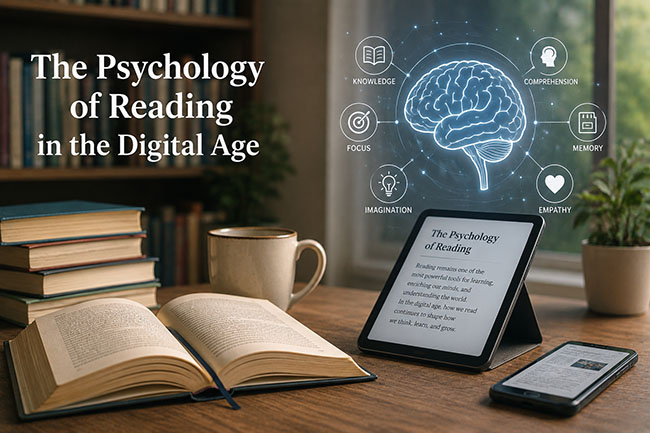
Reading has been a fundamental part of human learning and communication for centuries. From handwritten manuscripts and printed books to e-books and online articles, the ways people consume written information have evolved dramatically. In today’s digital age, readers have access to more content than at any other point in history. Smartphones, tablets, computers, and digital platforms allow instant access to books, news, research, and educational resources from virtually anywhere.
Despite these technological advancements, reading remains deeply connected to human psychology. How people process information, maintain attention, develop understanding, and retain knowledge continues to be influenced by the medium through which they read. Understanding the psychology of reading in the digital age helps explain changing reading habits and the ongoing importance of literacy in modern society.
As technology continues shaping communication and learning, exploring the relationship between reading and psychology becomes increasingly relevant.
The Human Brain and Reading
Reading is a complex cognitive process.
Unlike spoken language, reading is not a natural ability that develops automatically. Instead, the brain must learn to recognize symbols, interpret meaning, and connect information.
When people read, multiple areas of the brain work together to support:
- Language comprehension
- Memory formation
- Pattern recognition
- Critical thinking
- Emotional understanding
This combination of processes makes reading one of the most powerful tools for learning and intellectual development.
The ability to read effectively influences educational achievement, professional success, and lifelong learning opportunities.
How Reading Shapes Thinking
Reading does more than transfer information.
It influences how people think, analyze, and interpret the world around them.
Regular reading can help strengthen:
- Concentration
- Vocabulary
- Reasoning skills
- Problem-solving abilities
- Imagination
Different types of reading materials stimulate different cognitive functions.
For example, fiction often encourages empathy and creativity, while informational texts may strengthen analytical thinking and knowledge acquisition.
The diversity of reading experiences contributes to cognitive flexibility and intellectual growth.
The Rise of Digital Reading
Digital technology has transformed reading habits worldwide.
Many readers now consume content through:
- Smartphones
- Tablets
- E-readers
- Computers
- Online publications
Digital reading offers several advantages, including convenience, portability, and instant access to information.
A single device can provide access to thousands of books and articles.
These benefits have contributed to the rapid growth of digital reading over the past two decades.
As internet connectivity expands globally, digital reading continues becoming more common.
Attention and the Digital Environment
One of the most discussed psychological aspects of digital reading involves attention.
Modern digital environments often contain:
- Notifications
- Advertisements
- Hyperlinks
- Multimedia content
- Social media interactions
These features can create frequent interruptions.
Researchers and educators often discuss how constant digital stimulation may influence concentration and sustained attention.
Many readers find that maintaining focus for extended periods requires conscious effort in digital environments.
Understanding these challenges helps individuals develop more effective reading habits.
Deep Reading Versus Skimming
Digital platforms have changed how many people interact with information.
Instead of reading long texts from beginning to end, readers often scan content quickly.
This behavior is sometimes described as skimming.
Skimming can be useful for:
- Gathering information efficiently
- Identifying relevant content
- Reviewing large amounts of material
However, deep reading involves slower, more focused engagement.
Deep reading supports:
- Reflection
- Analysis
- Comprehension
- Memory retention
Both approaches have value, but they serve different purposes.
Balancing efficiency and depth remains an important challenge in the digital age.
Memory and Information Retention
Reading plays an important role in memory formation.
When individuals engage deeply with written material, they often create stronger mental connections.
Several factors influence retention, including:
- Attention level
- Reading environment
- Prior knowledge
- Reading purpose
Digital reading environments sometimes encourage rapid information consumption, which may affect long-term retention.
Many readers benefit from strategies such as note-taking, highlighting, and reflection.
These practices help strengthen understanding and memory regardless of the reading format.
The Role of Printed Books
Despite the growth of digital media, printed books remain highly valued.
Many readers report that physical books provide benefits such as:
- Reduced distractions
- Greater focus
- Improved reading comfort
- Enhanced engagement
The tactile experience of holding a book can contribute to a different type of reading experience.
Printed materials often encourage slower and more deliberate reading.
This may support deeper comprehension for certain types of content.
The continued popularity of printed books demonstrates that traditional reading formats still have an important place in modern society.
E-Books and Accessibility
Digital reading technologies have expanded access to information.
E-books offer several advantages:
- Portability
- Adjustable text size
- Search functionality
- Instant availability
These features can improve accessibility for diverse groups of readers.
Digital platforms also make educational resources more widely available.
In many regions, technology helps overcome barriers related to geography and physical access to materials.
Accessibility remains one of the most significant benefits of digital reading.
Reading and Emotional Development
Reading influences more than intellectual growth.
Stories, biographies, and literary works often help readers understand different perspectives and experiences.
Benefits may include:
- Increased empathy
- Emotional awareness
- Social understanding
- Cultural appreciation
Through reading, individuals encounter ideas and experiences beyond their immediate environments.
This exposure can broaden perspectives and encourage personal growth.
The psychological impact of reading extends far beyond information acquisition.
The Influence of Social Media
Social media has introduced new forms of reading and communication.
Users frequently engage with:
- Short-form content
- Headlines
- Comments
- Posts
- Digital discussions
These formats encourage rapid information consumption.
While social media provides opportunities for communication and information sharing, it differs significantly from traditional reading experiences.
Understanding these differences helps explain changing reading habits in contemporary society.
Many educators encourage balancing short-form digital content with more substantial reading activities.
Reading and Lifelong Learning
Reading remains one of the most effective tools for lifelong learning.
Whether through books, articles, research materials, or digital resources, reading enables continuous personal and professional development.
Lifelong learning supports:
- Career growth
- Adaptability
- Intellectual curiosity
- Knowledge expansion
As technology and industries continue evolving, the ability to learn independently becomes increasingly valuable.
Reading provides a foundation for ongoing education throughout life.
Building Healthy Reading Habits
Developing positive reading habits can help individuals navigate the digital environment more effectively.
Strategies may include:
- Setting aside dedicated reading time
- Reducing distractions
- Reading a variety of materials
- Taking notes
- Reflecting on key ideas
Small, consistent reading habits often produce significant long-term benefits.
Intentional reading encourages deeper engagement and stronger comprehension.
Healthy reading practices support both learning and personal enrichment.
The Future of Reading
The future of reading will likely involve a combination of traditional and digital formats.
Emerging technologies may introduce:
- Interactive learning experiences
- Enhanced digital books
- Artificial intelligence tools
- Personalized reading recommendations
While formats may continue evolving, the fundamental psychological value of reading is unlikely to change.
Reading remains essential for education, communication, creativity, and critical thinking.
Its role within society will continue adapting alongside technological innovation.
Conclusion
The psychology of reading in the digital age reveals the complex relationship between technology, cognition, and human behavior. While digital platforms have transformed how people access and consume information, the core psychological benefits of reading remain remarkably consistent.
Reading supports concentration, learning, memory, empathy, and intellectual growth. Whether through printed books or digital resources, meaningful reading continues to play an important role in personal development and lifelong learning. As technology evolves, understanding the psychological dimensions of reading can help individuals develop healthier habits and make the most of the opportunities provided by both traditional and digital media.