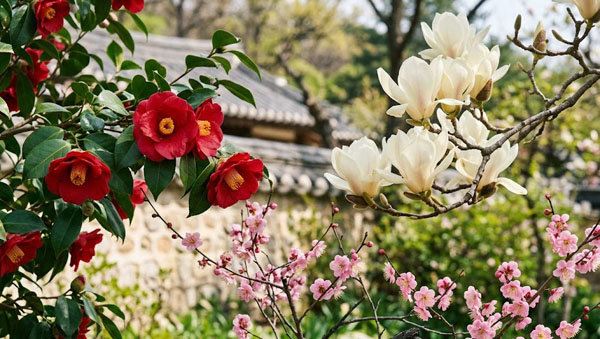
Every year, I find myself waiting for the first signs of spring. Before the trees are fully green and before gardens become filled with colorful flowers, there are always a few plants that quietly announce the changing season. Among my favorites are camellias, magnolias, and Japanese apricot blossoms. Although they bloom at slightly different times, each one carries a unique charm that makes early spring feel special.
When I first became interested in gardening, I chose these flowers simply because they were beautiful. I didn’t know much about their growing habits, and I assumed that caring for flowering plants was mostly about watering them regularly. After spending several seasons growing them in pots and observing them closely, I realized that each plant has its own personality. They respond differently to sunlight, moisture, and changing temperatures, and learning those differences became one of the most enjoyable parts of gardening.
Rather than following a strict schedule, I gradually learned to pay attention to the plants themselves. Their leaves, buds, and even the soil began to tell me what they needed. Looking back, these flowers taught me that successful gardening is less about perfection and more about careful observation and patience.
Discovering the Unique Personality of Each Flower
The camellia was the first flower that truly surprised me.
Its glossy evergreen leaves looked healthy throughout the winter, even when most other plants appeared dormant. Then, almost unexpectedly, bright flowers began to appear against the dark green foliage. Seeing vibrant blooms during the colder months felt almost magical, as if spring had quietly arrived before the calendar said it should.
At first, I placed my camellia where it received strong afternoon sunlight because I assumed more light would produce more flowers. Instead, I noticed that some of the leaves began to dry around the edges. After moving the pot to a brighter but more sheltered location where it received gentle morning light and filtered afternoon light, the plant looked much healthier.
That simple experience reminded me that every plant has different preferences. More sunlight is not always better. Sometimes the gentlest environment allows a plant to thrive.
The magnolia created a completely different impression.
Unlike the camellia, the magnolia seems to save all of its energy for one unforgettable moment. Before its leaves appear, elegant flowers suddenly cover the bare branches. Every year, I find myself looking forward to those first blossoms because they transform an ordinary tree into something almost sculptural.
Growing a magnolia taught me the importance of thinking beyond the current season. After the flowers faded, I used to pay very little attention to the tree, assuming its most beautiful moment had already passed. Later I learned that the months following the bloom are actually when the tree prepares for next year’s flowers.
Providing enough sunlight, watering consistently during active growth, and allowing the tree to remain healthy throughout summer all contribute to the development of future flower buds. Gardening constantly reminds me that today’s care often becomes tomorrow’s beauty.
The Japanese apricot blossom, often called plum blossom in many gardens, offers yet another kind of beauty.
Its flowers are much smaller than magnolia blooms, yet their delicate fragrance often fills the air before the flowers are even noticed. There is something wonderfully understated about these blossoms. They do not demand attention. Instead, they quietly reward anyone willing to pause and appreciate them.
Because I grow one as a potted tree, I often find myself admiring not only the flowers but also the graceful branches. Even during winter, when the tree stands without leaves, its elegant structure becomes part of the garden’s beauty.
Over time, I realized that these three plants reflect different expressions of spring. The camellia brings warmth during the final days of winter. The magnolia celebrates the arrival of the new season with remarkable elegance. The Japanese apricot blossom gently reminds us that beauty does not always need to be bold to leave a lasting impression.
Learning That Gardening Is About Observation, Not Perfection
When I first started gardening, I searched constantly for perfect watering schedules.
I wanted clear instructions such as watering every three days or fertilizing once each month. Those guidelines were certainly helpful, but I eventually discovered that plants rarely follow fixed calendars.
Weather changes.
Sunlight changes.
Humidity changes.
Even the same plant may require different care from one season to another.
One lesson I learned quite early involved watering.
One spring morning I noticed that my Japanese apricot seemed less lively than usual. Thinking it must be thirsty, I watered it generously. Unfortunately, the soil had not dried completely beneath the surface, and the extra water only made the situation worse.
Since then, I have stopped relying on schedules alone.
Now I lift the pot slightly to judge its weight, touch the soil with my fingers, and observe the leaves before deciding whether the plant actually needs water.
This small habit has probably improved my gardening more than any fertilizer or gardening tool.
Sunlight has been another valuable teacher.
My camellia prefers gentle, filtered light.
The magnolia enjoys long hours of sunshine.
The Japanese apricot appreciates bright conditions while remaining surprisingly tolerant of cold weather.
Although all three bloom in spring, they each respond differently to their surroundings.
Understanding those preferences has made caring for them feel much more natural.
Ventilation is something I did not think about when I first began growing flowers.
Because my plants were protected inside the balcony, I assumed they were perfectly safe.
However, still air can encourage pests such as scale insects and aphids.
Now I regularly open the windows on pleasant days, allowing fresh air to circulate around the plants. This simple habit seems to keep the foliage healthier and reduces many common problems before they begin.
One of the greatest joys of gardening is learning to slow down.
Instead of rushing to fix every small imperfection, I have learned to spend a few quiet minutes simply observing the plants.
New buds.
Fresh leaves.
Tiny changes in color.
These details often reveal far more than any gardening schedule.
Finding Joy in the Changing Seasons
Perhaps the greatest gift these flowers have given me is a new appreciation for seasonal change.
Before I began gardening, spring arrived almost unnoticed. I simply realized one day that the weather had become warmer.
Now, spring begins much earlier.
It begins when I notice the camellia producing its first flower bud.
It continues when the magnolia branches slowly swell before blooming.
It arrives fully when the gentle fragrance of Japanese apricot blossoms drifts through the morning air.
Each flower marks a different chapter of the season.
They remind me that nature rarely changes overnight.
Instead, it unfolds gradually, one small step at a time.
This has quietly influenced the way I approach gardening and even daily life.
Not every plant grows quickly.
Not every season produces spectacular flowers.
Sometimes healthy roots are developing beneath the soil where they cannot be seen.
Sometimes a tree spends an entire year preparing for a few beautiful weeks of bloom.
There is something comforting about that rhythm.
The more time I spend caring for these flowers, the more I appreciate the idea that growth often happens quietly before it becomes visible.
Even simple maintenance has become something I enjoy.
After the flowers fade, I gently remove spent blooms and trim a few branches where necessary.
Rather than feeling disappointed that flowering season has ended, I now think of these small tasks as preparing the plants for another spring.
Gardening has become less about achieving perfect results and more about participating in an ongoing cycle.
Every season teaches something different.
Some years the camellia blooms more generously.
Other years the magnolia becomes the highlight of the garden.
Sometimes the Japanese apricot surprises me with an especially rich fragrance.
Each year is slightly different, and that unpredictability keeps gardening interesting.
For anyone beginning a garden, I would encourage starting with just one plant.
There is no need to create a perfect landscape immediately.
Watching a single flower through changing seasons teaches far more than caring for dozens of plants without truly knowing them.
The quiet routine of watering, observing, and waiting gradually builds both confidence and appreciation.
Over time, those simple moments become some of the most rewarding parts of everyday life.
Conclusion
Camellias, magnolias, and Japanese apricot blossoms each welcome spring in their own unique way. While they share the same season, they express it through different colors, fragrances, and growing habits. Learning to care for them has shown me that gardening is not simply about helping plants survive—it is about learning to notice small changes, respect nature’s rhythm, and enjoy the quiet beauty that unfolds throughout the year.
Looking back, I realize that these flowers have taught me much more than how to water a plant or choose the right location for a pot. They have encouraged me to slow down, observe carefully, and appreciate that every season has its own pace.
Whether you begin with a single camellia on a balcony, a young magnolia in the garden, or a small Japanese apricot tree in a container, each plant offers its own lesson. With a little patience and consistent care, they become more than beautiful flowers—they become companions that mark the arrival of every new spring.