
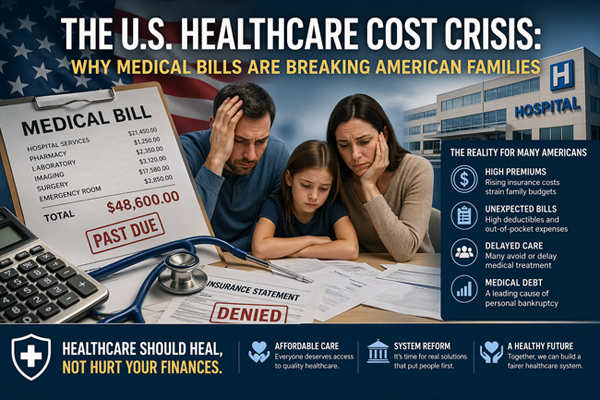
The United States is known for having one of the most advanced healthcare systems in the world. Cutting-edge technology, highly trained specialists, and innovative treatments attract patients from around the globe. However, behind this reputation lies a growing crisis—one defined by rising costs, unequal access, and increasing financial pressure on ordinary citizens.
For millions of Americans, healthcare is no longer just about staying healthy. It has become a major financial concern. Even routine checkups or minor procedures can result in unexpected bills. This reality has created a system where people must carefully weigh their health needs against their financial situation.
Why Are Healthcare Costs So High in the United States?
One of the main reasons for high healthcare costs is the structure of the system itself. Unlike countries with universal healthcare, the United States relies heavily on private insurance providers. This leads to a fragmented system where pricing lacks transparency and consistency.
Hospitals, insurance companies, and pharmaceutical firms all operate independently, often setting their own prices without a unified standard. As a result, the same medical procedure can vary significantly in cost depending on location and provider. This unpredictability makes it difficult for patients to plan or manage expenses.
Administrative complexity also adds to the burden. The process of billing, insurance claims, and regulatory compliance requires significant manpower and resources. These costs are ultimately passed on to patients. In addition, prescription drug prices in the U.S. are among the highest in the world, largely due to limited price regulation and strong pharmaceutical market power.
The Impact on Everyday Americans
The consequences of these high costs are deeply felt across society. Many Americans live with the constant fear that a medical emergency could lead to financial hardship. Even individuals with insurance are not fully protected, as high deductibles, co-payments, and coverage limitations remain common.
Medical debt has become one of the leading causes of personal bankruptcy in the United States. Families often face difficult choices—whether to seek care immediately or delay treatment to avoid costs. Unfortunately, postponing care can worsen health conditions and lead to even higher expenses in the future.
Low-income communities are particularly vulnerable. While programs such as Medicaid provide support, not everyone qualifies. This creates a “coverage gap,” where individuals earn too much to receive assistance but still cannot afford private insurance. As a result, many people remain uninsured or underinsured.
Is the Welfare System Keeping Up?
The U.S. welfare system, including programs like Medicaid and Medicare, was designed to act as a safety net. These programs play a crucial role in supporting the elderly, disabled, and low-income populations. However, as healthcare costs continue to rise, the system is under increasing strain.
Funding challenges, political debates, and policy differences make reform difficult. Some policymakers advocate for expanding public healthcare options, while others prefer market-based solutions that emphasize competition and efficiency. Despite these differing views, there is broad agreement that the current system is not sustainable in the long term.
Efforts to improve transparency, regulate drug prices, and expand coverage are ongoing, but progress has been slow. The complexity of the healthcare system makes large-scale reform both challenging and controversial.
Conclusion: A System at a Crossroads
The U.S. healthcare system stands at a critical crossroads. On one hand, it offers some of the best medical care in the world. On the other hand, its high costs and unequal access continue to create serious challenges for millions of people.
Solving this crisis will require more than temporary fixes. It demands a comprehensive approach that balances innovation with affordability, and quality with accessibility. Until meaningful changes are made, many American families will continue to struggle under the weight of rising medical expenses.