
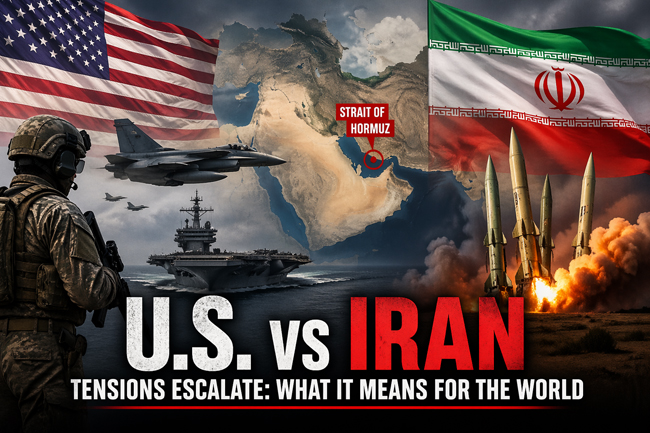
Rising Conflict Between the U.S. and Iran
Tensions between the United States and Iran have escalated significantly in recent weeks, becoming one of the most closely watched geopolitical issues in the world. The situation is not new, but the current developments suggest a more serious and potentially volatile phase than before.
The United States has increased its military readiness in key areas across the Middle East, while Iran has responded with strong political statements and strategic positioning. These actions indicate a clear rise in pressure between the two nations. While neither side has officially declared a direct conflict, the current atmosphere reflects a high-risk environment where even minor incidents could lead to broader consequences.
Historically, relations between the U.S. and Iran have been marked by distrust and periodic confrontation. However, today’s tensions are unfolding in a more complex global context, where economic instability, energy concerns, and shifting alliances are all interconnected. This makes the situation more sensitive than ever before.
As global media coverage intensifies, analysts and policymakers are carefully monitoring each development, emphasizing the importance of diplomatic caution and strategic decision-making.
Why This Conflict Matters Globally
The growing tension between the U.S. and Iran is not limited to the two countries—it has far-reaching global implications. One of the most significant concerns is the potential disruption of oil supply routes, particularly through the Strait of Hormuz, one of the world’s most critical energy corridors.
A large portion of global oil shipments passes through this narrow waterway, and any instability in the region can directly impact oil prices worldwide. Rising oil prices, in turn, affect transportation costs, manufacturing, and overall economic stability in many countries.
In addition to energy markets, the conflict also affects geopolitical relationships across the Middle East. Neighboring countries are closely observing the situation, as any escalation could draw multiple nations into a broader regional conflict. This could reshape alliances and increase instability in an already sensitive region.
Financial markets are also reacting to the uncertainty. Investors tend to respond quickly to geopolitical risks, leading to fluctuations in stock markets, especially in sectors such as energy, defense, and technology.
Furthermore, the situation highlights the ongoing importance of international diplomacy. Global organizations and allied nations are actively encouraging dialogue and de-escalation, recognizing that a prolonged conflict would have widespread consequences beyond the immediate region.
What Could Happen Next?
At this stage, the future of U.S.–Iran relations remains uncertain. Several possible scenarios are being discussed by experts and analysts around the world.
One possibility is continued tension without direct military engagement. In this scenario, both sides maintain pressure through strategic positioning, political messaging, and limited actions, while avoiding full-scale conflict. This is often referred to as a “controlled escalation.”
Another scenario involves renewed diplomatic efforts. Negotiations, whether direct or through intermediaries, could help reduce tensions and stabilize the situation. Diplomatic solutions are generally seen as the most favorable outcome, as they minimize risks to global stability.
However, there is also the possibility of limited military conflict. Small-scale incidents, such as targeted strikes or regional clashes, could occur if tensions continue to rise. While such actions may not immediately lead to a full-scale war, they could significantly increase the risk of further escalation.
The direction of this situation will depend on multiple factors, including political decisions, international pressure, and internal dynamics within both countries. Public opinion, economic conditions, and leadership strategies all play a role in shaping what happens next.
For now, the world remains focused on developments in the region, recognizing that even small changes can have major global consequences.
Conclusion: A Situation the World Cannot Ignore
The escalating tension between the United States and Iran is one of the most important global issues today. It affects not only political relations but also economic stability, energy markets, and international security.
Understanding the dynamics of this conflict is essential for anyone seeking to stay informed about global trends. As events continue to unfold, staying updated with reliable information becomes increasingly important.
While the outcome remains uncertain, one thing is clear: the U.S.–Iran situation is a critical issue that the world cannot afford to ignore.