
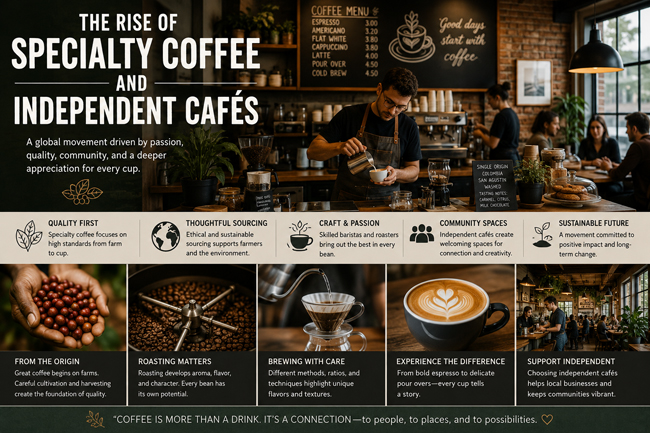
Not long ago, cafés were primarily places where people stopped for a quick cup of coffee before heading to work. Today, they have become much more than that.
Across cities, suburbs, and even small towns, cafés have evolved into important social spaces. They serve as meeting places, workspaces, creative hubs, and community gathering spots. In many parts of the world, visiting a café is no longer simply about drinking coffee—it has become a lifestyle and cultural experience.
The rapid growth of café culture reflects broader changes in how people work, socialize, and spend their free time. Understanding why cafés have become so popular helps explain a significant shift in modern culture.
From Coffee Shops to Social Spaces
Historically, coffeehouses have played an important role in society.
In Europe during the seventeenth and eighteenth centuries, coffeehouses were often referred to as places where people gathered to discuss politics, business, literature, and current events. Some historians even describe them as early centers of public conversation and intellectual exchange.
While modern cafés look very different, they continue to serve a similar purpose.
Today, people meet friends, conduct informal business meetings, study for exams, or simply spend time away from home in cafés. The environment offers something unique—a balance between privacy and social connection.
For example, a university student may spend hours preparing for exams in a café, while nearby professionals hold meetings and friends catch up over drinks. The same space accommodates a wide variety of activities.
This flexibility has helped cafés become an important part of everyday life.
Why Café Culture Has Expanded So Rapidly
Several factors have contributed to the growth of café culture.
One major reason is changing work habits.
The rise of remote work and freelance employment has increased demand for comfortable spaces outside traditional offices. Many people enjoy working from cafés because they provide internet access, background activity, and a change of environment.
A remote worker may find that spending a few hours in a café improves focus and productivity compared to working alone at home.
Another factor is urbanization.
As more people live in cities, public gathering spaces become increasingly valuable. Cafés offer accessible places where people can relax without making large financial commitments.
Unlike restaurants, which often focus on meals and turnover, cafés encourage customers to stay longer. This creates a welcoming atmosphere that many people appreciate.
The Influence of Social Media
Social media has also played a significant role in the popularity of cafés.
Platforms such as Instagram, YouTube, and TikTok have transformed how people discover new places.
A visually appealing café can quickly gain attention online through photographs, videos, and customer recommendations. As a result, café owners increasingly invest in interior design, presentation, and customer experience.
For example, a unique dessert, creative drink, or attractive interior can attract visitors who might never have discovered the business through traditional advertising.
This has changed consumer expectations.
People often seek cafés that offer memorable experiences rather than simply serving beverages.
In many cities, visiting a new café has become a leisure activity in itself.
How Café Culture Supports Local Communities
Beyond serving customers, cafés often contribute to local communities.
Independent cafés frequently support local suppliers, artists, musicians, and small businesses. Some host community events, workshops, book clubs, or live performances.
These activities help strengthen social connections within neighborhoods.
Consider a local café that displays artwork from regional artists.
Customers enjoy the creative atmosphere while artists gain exposure to potential supporters. Similar partnerships can be found in many communities around the world.
Cafés also provide opportunities for casual social interaction.
In an increasingly digital society, face-to-face conversations remain important. Cafés create environments where people can connect naturally, helping foster a sense of community.
The Economic Impact of Café Culture
The growth of café culture has created economic opportunities as well.
The global coffee industry supports farmers, distributors, equipment manufacturers, retailers, and hospitality businesses. As consumer demand increases, new cafés continue opening in both developed and emerging markets.
Entrepreneurs are often attracted to the café business because it allows them to combine hospitality, creativity, and local engagement.
In some areas, cafés have become important drivers of neighborhood revitalization. A successful café can attract visitors, increase foot traffic, and encourage the growth of nearby businesses.
This broader economic impact demonstrates how café culture extends far beyond coffee itself.
What the Future of Café Culture May Look Like
The future of café culture will likely be shaped by changing consumer preferences and technology.
Customers increasingly value sustainability, ethical sourcing, and environmentally responsible business practices. Many cafés are responding by reducing waste, using reusable materials, and supporting sustainable coffee production.
Technology is also influencing the customer experience.
Mobile ordering, digital loyalty programs, and cashless payments are becoming common features in many cafés around the world.
At the same time, the core appeal of cafés remains remarkably consistent.
People continue seeking places where they can relax, connect with others, and enjoy a break from daily routines.
While trends may evolve, the social role of cafés is unlikely to disappear.
The growth of café culture reflects a deeper human desire for connection, community, and meaningful experiences. As cities continue to develop and lifestyles continue to change, cafés will likely remain an important part of everyday life for generations to come.