
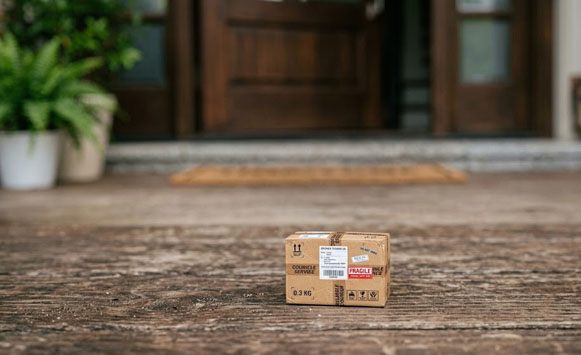
There are some packages you forget about minutes after opening them.
This was not one of them.
I still remember the day the delivery truck arrived with the first box of books my publishing company had ever produced. From the outside, it looked completely ordinary. A brown cardboard box sealed with packing tape. Nothing about it suggested the months of work, uncertainty, excitement, and frustration that had gone into what was inside.
To anyone walking past, it was just another delivery.
To me, it felt like the end of one journey and the beginning of another.
Because inside that box was something I had imagined, planned, worried about, and worked on for months.
My first published book.
Long Before There Was a Box
People often think a book begins when it is printed.
I used to think that too.
Now I know that a book exists long before ink touches paper.
A book starts as an idea.
Sometimes it arrives suddenly. Sometimes it develops slowly over months. But eventually an idea becomes a project, and a project becomes a commitment.
Once I decided to publish my first book, I imagined the process would be fairly straightforward.
Find the manuscript.
Edit the content.
Design the cover.
Send it to print.
Receive the books.
Simple.
At least that was what I thought before I actually did it.
The reality turned out to be much more complicated.
Every stage introduced questions I had never considered before.
Would readers connect with this book?
Was the translation accurate?
Was the design communicating the right message?
Was the cover appealing enough?
Had every typo been found?
Had every page been checked?
The closer we moved toward publication, the more questions seemed to appear.
Instead of feeling increasingly confident, I often felt increasingly aware of everything that could go wrong.
The Endless Revisions
One of the things that surprised me most about publishing was how difficult it was to feel finished.
At first, editing felt exciting.
Each revision improved the manuscript.
Mistakes disappeared.
Sentences became clearer.
The book became stronger.
But after enough rounds of editing, something strange happened.
Every improvement revealed another possible improvement.
A sentence could always be slightly better.
A paragraph could always be slightly clearer.
A layout could always be slightly cleaner.
Perfection remained just out of reach.
I remember staring at pages late at night, wondering whether a tiny change mattered.
Most readers would never notice.
Yet somehow I noticed.
When you spend months looking at the same manuscript, even the smallest details begin to feel significant.
Eventually I learned one of publishing’s most important lessons:
A book is never truly finished.
At some point, it is simply released.
The Waiting Period
If editing was difficult, waiting was even harder.
After the files were finally sent to the printer, something unexpected happened.
For the first time in months, there was nothing left to do.
No revisions.
No design changes.
No proofreading.
No corrections.
The project that had occupied so much of my attention was suddenly out of my hands.
All I could do was wait.
I assumed this stage would feel relaxing.
Instead, it felt strangely uncomfortable.
Questions kept appearing in my mind.
What if we missed something important?
What if the colors printed differently than expected?
What if there was a formatting issue nobody noticed?
What if the finished book looked different from what I imagined?
The printer had my files.
The decisions had already been made.
Yet my mind continued reviewing possibilities as if I could still change them.
Looking back, I realize that waiting was difficult because the project no longer belonged entirely to me.
For months, every outcome had depended on my actions.
Now I simply had to trust the process.
The Delivery Truck
Then one ordinary day, the waiting ended.
I heard a vehicle outside.
A few moments later, there was a delivery.
Nothing dramatic happened.
No music played.
No celebration appeared.
Just a cardboard box sitting at the door.
But I immediately knew what it was.
Months of effort had finally taken physical form.
I carried the box inside and placed it on the table.
For a moment, I simply looked at it.
I had imagined this moment many times.
Now it was actually happening.
Oddly enough, I didn’t open the box right away.
I hesitated.
Not because I wasn’t excited.
Because I was.
But opening the box would answer every question that had been lingering in my mind for months.
The uncertainty would disappear.
The reality would finally replace my imagination.
Opening the Box
I carefully cut through the tape.
The sound seemed louder than usual.
Maybe because I had attached so much meaning to the moment.
The cardboard flaps opened.
Books.
Stacks of books.
My books.
I reached inside and picked up the first copy.
That moment is difficult to describe.
For months, the project had existed on computer screens.
PDF files.
Word documents.
Design mockups.
Email attachments.
Suddenly it was something I could hold.
It had weight.
It had texture.
It had pages.
It had a cover.
The book was real.
I ran my hand across the cover several times.
Not because I was checking quality.
Simply because I could.
Something that had existed only as an idea was now sitting in my hands.
What Surprised Me Most
People often ask whether I felt excited.
The answer is yes.
But excitement wasn’t the strongest emotion.
What surprised me most was the sense of relief.
Relief that the project was complete.
Relief that the book looked the way I hoped it would.
Relief that months of work had led somewhere tangible.
Until that moment, there was always another task waiting.
Another revision.
Another decision.
Another problem to solve.
Holding the finished book felt like crossing a finish line I had been moving toward for a very long time.
For the first time, I could stop thinking about what still needed to be done.
The book existed.
No longer as a plan.
No longer as a possibility.
As a reality.
A Different Kind of Success
Before publishing my first book, I thought success would be measured mostly by sales.
How many copies sold.
How quickly they sold.
How much revenue they generated.
Those things certainly matter.
Publishing is still a business.
But when I held that first copy, none of those numbers entered my mind.
Instead, I found myself thinking about the journey.
The late nights.
The revisions.
The uncertainty.
The lessons learned along the way.
For the first time, I understood that creating something meaningful carries its own kind of reward.
The book had not yet sold thousands of copies.
It had not yet reached countless readers.
But it existed.
And that mattered.
In a world where many ideas never leave the planning stage, there is something powerful about bringing a project into reality.
What That Box Really Contained
Looking back now, I realize the box contained much more than books.
It contained mistakes.
Lessons.
Growth.
Patience.
Faith.
Persistence.
Every challenge from the publishing process was somehow represented inside that cardboard package.
The books themselves were only the visible part.
Hidden behind them were countless decisions and experiences that readers would never see.
And that’s perfectly fine.
Readers don’t need to know every obstacle that occurred behind the scenes.
They only need the finished book.
But as a publisher, I know those obstacles helped shape the journey.
They taught me skills I didn’t have before.
They made future projects less intimidating.
They transformed publishing from an abstract dream into a practical reality.
The Beginning, Not the End
One thing I didn’t understand at the time was that receiving the books wasn’t the end of the project.
In many ways, it was the beginning.
After printing came marketing.
Distribution.
Customer communication.
Shipping.
Promotion.
Reviews.
Sales.
New challenges quickly appeared.
Yet everything felt different after that first box arrived.
The project was no longer theoretical.
It was real.
That reality brought confidence.
If I had done it once, I could do it again.
Not perfectly.
Not without mistakes.
But successfully.
That realization became one of the greatest gifts of the entire experience.
Why I Still Remember That Day
Since then, I’ve received other boxes.
Other books.
Other projects.
The excitement never completely disappears.
But first experiences carry a unique significance.
There is only one first book.
Only one first shipment.
Only one first moment when months of work become something you can hold in your hands.
Years from now, I may forget certain details about that day.
I may not remember exactly what time the delivery arrived.
I may not remember what I was doing when the truck pulled up.
But I suspect I will always remember the feeling.
The feeling of opening a cardboard box and realizing that an idea had become reality.
Conclusion
The day I received my first box of books was not the most dramatic day of my life.
Nothing extraordinary happened from an outside perspective.
A package arrived.
I opened it.
I looked at the contents.
That was all.
And yet it remains one of the most meaningful moments of my publishing journey.
Because that box represented far more than printed pages.
It represented commitment.
Learning.
Perseverance.
The willingness to begin something before knowing exactly how it would end.
Most importantly, it reminded me that books do not appear by accident.
They begin as ideas.
They grow through effort.
And eventually, if someone is willing to keep moving forward despite uncertainty, they become real.
Sometimes all of that work fits inside a single cardboard box.
And sometimes, that box changes everything.