
#reading culture

Writing
Society

Is Reading Really Disappearing? Why Books Still Matter in the Digital Age

Not long ago, I looked at the books on my shelf and realized they had been collecting dust for months. That simple observation led me to ask myself an uncomfortable question. When did I start spending more time looking at my phone than reading books? There was a time when visiting a bookstore felt like a small event. I enjoyed wandering through the shelves, picking out a book that caught my attention, and settling into a quiet café where I could spend an entire afternoon reading. It never felt like a waste of time. In fact, those slow afternoons often became some of my favorite memories. Today, my habits are very different. Whenever I have a few free minutes, I

good books
Culture

Why Good Books Sometimes Don’t Sell

When I first entered publishing, I believed something that now seems a little naive. I believed that good books would naturally find readers. It felt reasonable at the time. If a book contained valuable ideas, meaningful insights, or a powerful message, surely people would recognize its worth. Surely quality would rise to the surface. After all, isn’t that how it should work? If one book is better written, more helpful, and more thoughtful than another, shouldn’t it sell more copies? The longer I’ve worked in publishing, the more I’ve realized that reality is far more complicated. Some excellent books struggle to find readers. Some books with tremendous value sell only a few hundred copies. Meanwhile, other books seem to spread

libraries
Society

Public Reading Spaces Remain Popular in an Increasingly Digital World

Walk into a public library on a weekday afternoon and the scene may be surprisingly familiar. Students review notes before exams, remote workers sit quietly behind laptop screens, and readers browse shelves looking for their next book. Similar scenes can be found in university libraries, reading rooms, and even modern bookstores that provide dedicated spaces for visitors to sit and read. This may seem unexpected at a time when digital content is available almost everywhere. Smartphones, tablets, and laptops allow people to access books, articles, and educational resources within seconds. Yet public reading spaces continue to attract visitors. Part of the explanation may simply be the environment. Reading at home is not always easy. Notifications, household responsibilities, and other distractions

bookstores
Culture

Independent Bookstores Maintain Their Appeal Among Readers

The rapid growth of online shopping has transformed nearly every retail industry, including books. Consumers can now order books within seconds and often receive them the next day. Despite this convenience, independent bookstores continue to attract loyal customers and maintain a meaningful presence in many communities. Unlike large online retailers, independent bookstores often focus on creating a unique browsing experience. Visitors are encouraged to explore shelves, discover unexpected titles, and interact with staff members who are passionate about literature. For many readers, this personal connection remains difficult to replicate through algorithms and recommendation engines. Many independent bookstores have also expanded their role beyond selling books. Author events, book clubs, reading groups, and community gatherings have become common features. These activities

libraries
Culture

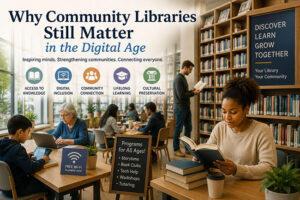
Why Community Libraries Still Matter in the Digital Age

In an era dominated by smartphones, artificial intelligence, digital media, and instant access to information, some people question whether community libraries remain relevant. With millions of books, articles, videos, and educational resources available online, it may seem that traditional libraries have lost their importance. However, despite rapid technological advancement, community libraries continue to play a vital role in education, culture, lifelong learning, and social development. Rather than becoming obsolete, libraries have evolved to meet the needs of modern society. Today’s libraries offer far more than shelves filled with books. They provide digital resources, educational programs, internet access, community services, and welcoming spaces for people of all ages. Understanding the continuing importance of community libraries helps reveal why these institutions remain