
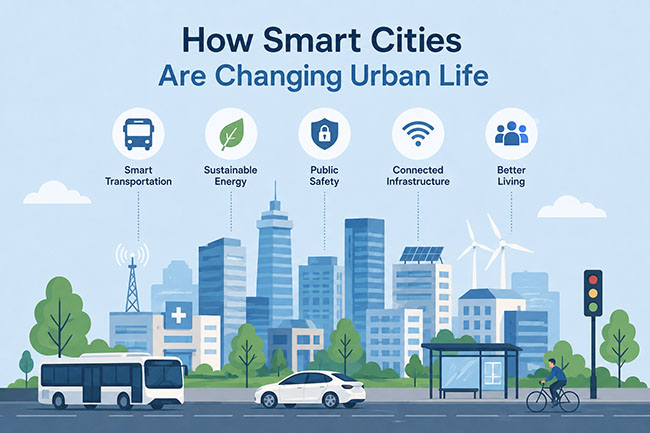
Cities around the world are experiencing rapid transformation as technology becomes increasingly integrated into daily life. Urban populations continue to grow, creating new challenges related to transportation, energy consumption, public services, environmental sustainability, and infrastructure management. In response to these challenges, many cities are adopting innovative technologies designed to improve efficiency, connectivity, and quality of life.
These technology-driven urban environments are commonly known as smart cities. By utilizing digital systems, data analytics, and connected infrastructure, smart cities aim to create more responsive and sustainable communities. The concept has gained significant attention in recent years as governments, businesses, and urban planners explore ways to improve city living in an increasingly connected world.
Understanding how smart cities are changing urban life helps explain the future of modern communities and the role technology plays in shaping everyday experiences.
What Is a Smart City?
A smart city uses technology and data to improve the operation of urban services and infrastructure.
Rather than relying solely on traditional systems, smart cities incorporate digital tools to support better decision-making and resource management.
Common areas of focus include:
- Transportation
- Energy management
- Public safety
- Environmental monitoring
- Waste management
- Communication networks
The goal is to create cities that operate more efficiently while enhancing the experiences of residents and visitors.
Technology serves as a tool for solving urban challenges and improving overall quality of life.
Why Smart Cities Are Becoming More Important
Urbanization continues to increase worldwide.
As populations grow, cities face challenges such as:
- Traffic congestion
- Pollution
- Resource demands
- Housing pressures
- Infrastructure maintenance
Traditional approaches may not always be sufficient to address these complex issues.
Smart city technologies provide new ways to gather information, analyze trends, and optimize services.
Many cities view technological innovation as an important component of long-term urban development strategies.
The ability to manage resources effectively becomes increasingly important as cities expand.
Smart Transportation Systems
Transportation is one of the most visible areas where smart city technology is making an impact.
Modern transportation systems often utilize:
- Real-time traffic monitoring
- Digital transit information
- Smart traffic signals
- Integrated payment systems
- Mobility applications
These technologies help improve travel efficiency and reduce congestion.
Residents can access transportation information through mobile devices, allowing them to make more informed travel decisions.
Improved mobility contributes to productivity, convenience, and environmental sustainability.
Transportation innovation remains a major focus of smart city initiatives.
Enhancing Public Services
Smart cities use technology to improve public service delivery.
Examples include:
- Digital government services
- Online permit applications
- Community information platforms
- Emergency communication systems
These tools make services more accessible and convenient.
Residents can often interact with government agencies more efficiently through digital platforms.
Improved communication helps strengthen connections between communities and local governments.
Technology can support more responsive and transparent public administration.
Energy Efficiency and Sustainability
Energy management is an important aspect of smart city development.
Cities increasingly utilize technologies that help monitor and optimize energy consumption.
Examples include:
- Smart lighting systems
- Energy-efficient buildings
- Digital energy monitoring
- Renewable energy integration
These initiatives can reduce waste while supporting sustainability goals.
Efficient energy use benefits both the environment and local economies.
As concerns about climate change and resource conservation continue growing, sustainable energy strategies remain a priority.
Environmental Monitoring
Smart cities often employ sensors and data systems to monitor environmental conditions.
Areas of monitoring may include:
- Air quality
- Water quality
- Noise levels
- Weather conditions
Access to real-time environmental information helps city officials make informed decisions.
Environmental monitoring also supports public awareness and sustainability initiatives.
Technology provides valuable insights that can contribute to healthier urban environments.
The ability to track conditions continuously improves urban management capabilities.
The Role of Data in Smart Cities
Data serves as the foundation of many smart city systems.
Connected devices collect information that helps cities understand how infrastructure and services are performing.
Data may be used to improve:
- Transportation planning
- Energy management
- Public safety
- Infrastructure maintenance
The ability to analyze large amounts of information supports more effective decision-making.
Data-driven approaches help cities respond more efficiently to changing needs and conditions.
Responsible data management remains an important consideration within smart city development.
Public Safety and Emergency Response
Technology can support public safety initiatives within urban environments.
Examples include:
- Emergency communication systems
- Traffic monitoring
- Disaster response coordination
- Infrastructure monitoring
Digital tools help agencies respond more quickly to incidents and emergencies.
Improved communication networks enhance coordination among public service organizations.
Public safety remains one of the most important priorities for urban communities.
Smart technologies provide additional resources that support these efforts.
Smart Buildings and Urban Development
Buildings play a significant role in smart city ecosystems.
Modern smart buildings may incorporate:
- Automated lighting
- Climate control systems
- Energy monitoring
- Security technologies
These features improve efficiency while enhancing occupant comfort.
Smart building technologies contribute to broader sustainability and resource management goals.
Urban development increasingly incorporates digital infrastructure as part of long-term planning strategies.
The integration of technology into buildings reflects the evolution of modern urban design.
Digital Connectivity and Communication
Reliable digital connectivity is essential for smart city operations.
Communication networks support:
- Public services
- Transportation systems
- Business activities
- Community engagement
High-speed internet and advanced communication technologies help connect people, organizations, and infrastructure.
Digital connectivity also supports innovation and economic development.
As more services become technology-dependent, communication infrastructure becomes increasingly important.
Connected communities often benefit from improved access to information and opportunities.
Challenges Facing Smart Cities
Despite their potential benefits, smart cities face several challenges.
These may include:
- Infrastructure costs
- Cybersecurity concerns
- Data privacy considerations
- Technology maintenance
- Digital accessibility
Addressing these challenges requires careful planning and responsible governance.
Successful smart city projects balance innovation with practical implementation and community needs.
Technology alone cannot solve every urban challenge.
Human leadership and thoughtful planning remain essential.
The Future of Urban Living
The future of cities will likely involve increasing levels of technological integration.
Emerging trends include:
- Artificial intelligence applications
- Connected transportation networks
- Advanced environmental monitoring
- Sustainable infrastructure
- Expanded digital services
These developments may create new opportunities for improving urban life.
As technologies continue evolving, cities will likely become more adaptive, efficient, and connected.
Innovation will play a key role in shaping future urban experiences.
Why Smart Cities Matter
Smart cities represent more than technological advancement.
They reflect efforts to improve:
- Quality of life
- Sustainability
- Accessibility
- Economic development
- Community engagement
Technology serves as a means of addressing real-world challenges faced by growing urban populations.
When implemented effectively, smart city initiatives can contribute to more livable and resilient communities.
The concept continues gaining relevance as urbanization and digital transformation accelerate globally.
Conclusion
Smart cities are transforming urban life by integrating technology into transportation, energy management, public services, environmental monitoring, and communication systems. These innovations help cities respond more effectively to growing populations and increasingly complex challenges.
By leveraging data, connectivity, and digital infrastructure, smart cities aim to create environments that are more efficient, sustainable, and responsive to community needs. While challenges remain, the continued development of smart city technologies is likely to play a significant role in shaping the future of urban living.
As cities evolve, smart solutions will continue helping communities build a more connected and sustainable future.
