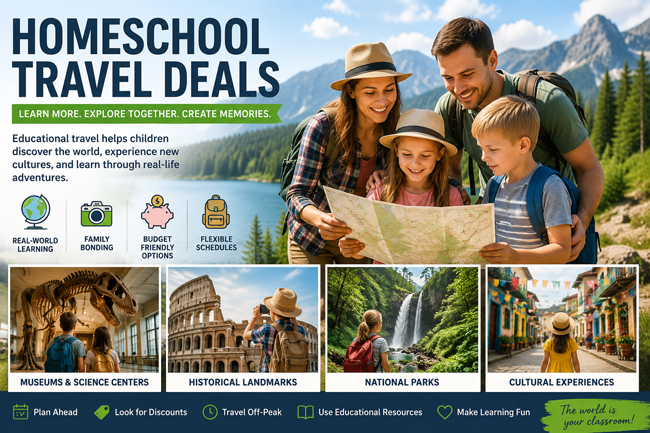
Education has evolved significantly in recent years, with families exploring new ways to combine learning experiences with everyday life. One growing trend is educational travel, particularly among homeschooling families who have the flexibility to learn beyond traditional classroom settings.
Homeschool travel has become increasingly popular because it allows families to integrate real-world experiences into their educational journey. Museums, historical landmarks, national parks, cultural destinations, and science centers provide opportunities for hands-on learning that can complement academic studies.
As interest in homeschooling continues to grow worldwide, many families are seeking practical ways to make educational travel more accessible and affordable. Understanding how travel can support learning helps explain why educational trips have become an important part of many homeschooling experiences.
Understanding Homeschool Travel
Homeschool travel refers to educational trips taken by families who educate their children outside traditional school environments.
Unlike conventional vacations, homeschool travel often incorporates structured learning opportunities alongside recreational activities.
Examples may include:
- Visiting historical sites
- Exploring museums
- Participating in cultural events
- Touring science centers
- Observing wildlife habitats
- Studying geography through travel experiences
These activities allow students to connect academic concepts with real-world observations.
Many homeschooling families view travel as an extension of their educational philosophy, emphasizing experiential learning and curiosity-driven exploration.
Why Educational Travel Matters
Travel offers unique educational opportunities that can be difficult to replicate in a traditional classroom.
When students visit new places, they encounter different cultures, environments, languages, and perspectives.
Benefits of educational travel may include:
Experiential Learning
Students often retain information more effectively when they experience concepts directly.
Learning about history while visiting historical landmarks can create stronger connections than reading about the same topics in textbooks alone.
Cultural Awareness
Travel exposes students to different traditions, customs, and ways of life.
This exposure can encourage greater understanding of global diversity and promote respect for different cultures.
Critical Thinking
Travel frequently presents unexpected situations that require problem-solving and adaptability.
Students learn to navigate unfamiliar environments, interpret new information, and make informed decisions.
Communication Skills
Interacting with people from different backgrounds helps strengthen communication and social skills.
These experiences contribute to personal growth and confidence.
The Flexibility Advantage of Homeschooling
One reason homeschooling families often travel more frequently is flexibility.
Traditional school calendars limit travel opportunities to weekends, holidays, and designated vacation periods.
Homeschooling families may have greater freedom to:
- Travel during off-peak seasons
- Visit destinations when crowds are smaller
- Adjust schedules based on educational goals
- Explore extended learning opportunities
This flexibility can create more personalized educational experiences while reducing some of the challenges associated with peak travel periods.
Educational Destinations for Homeschool Families
Many destinations offer valuable learning opportunities.
Museums
Museums provide access to history, science, art, and cultural exhibits.
Interactive exhibits often encourage hands-on engagement and exploration.
Historical Sites
Historical landmarks help students understand important events, people, and societal developments.
Visiting these locations can bring historical narratives to life.
National Parks
National parks offer opportunities to study:
- Ecology
- Wildlife
- Geology
- Conservation
- Environmental science
Outdoor learning environments often inspire curiosity and appreciation for nature.
Cultural Centers
Cultural institutions introduce students to traditions, languages, music, and artistic expressions from different communities.
These experiences broaden cultural understanding and global awareness.
Budget Considerations for Educational Travel
Travel expenses can be a significant consideration for many families.
Educational travel planning often involves balancing learning opportunities with financial responsibility.
Common travel expenses include:
- Transportation
- Accommodation
- Meals
- Attraction admissions
- Educational programs
Many families use budgeting strategies to make travel more affordable.
These may include:
- Traveling during less busy seasons
- Planning in advance
- Comparing transportation options
- Utilizing educational discounts when available
- Combining multiple learning objectives into a single trip
Careful planning can help maximize educational value while managing costs.
Technology and Modern Educational Travel
Technology has transformed the way families plan and experience travel.
Digital tools can assist with:
- Route planning
- Educational research
- Language learning
- Virtual tours
- Navigation
- Travel organization
Students can also document their experiences through:
- Photography
- Digital journals
- Video projects
- Research assignments
These activities help reinforce learning while developing digital literacy skills.
Technology allows educational travel experiences to continue even after returning home.
Learning Beyond the Classroom
One of the defining characteristics of homeschooling is the belief that learning can occur in many environments.
Travel reinforces this concept by demonstrating that education extends beyond textbooks and classrooms.
Students may learn about:
- Geography through exploration
- Economics through local markets
- History through landmarks
- Science through observation
- Culture through direct interaction
These experiences often encourage curiosity and independent learning.
Many educators recognize the value of connecting academic subjects with practical experiences.
Social Opportunities During Travel
A common misconception is that homeschooling limits social interaction.
In reality, educational travel often creates numerous opportunities for engagement with others.
Students may interact with:
- Tour guides
- Museum educators
- Local residents
- Other traveling families
- Community organizations
These interactions expose students to diverse perspectives and real-world communication experiences.
Social learning remains an important component of educational development.
The Rise of Family Learning Experiences
Modern families increasingly value experiences over material possessions.
Educational travel reflects this shift by emphasizing meaningful experiences that create lasting memories.
Family learning experiences often strengthen relationships while encouraging collaboration and shared discovery.
Travel allows parents and children to learn together, creating opportunities for discussion, reflection, and exploration.
This collaborative approach aligns closely with many homeschooling philosophies.
Sustainable and Responsible Travel
As travel becomes more accessible, sustainability has become an important consideration.
Responsible travel practices may include:
- Respecting local communities
- Supporting local businesses
- Protecting natural environments
- Reducing waste
- Learning about conservation efforts
Educational travel can help students understand the importance of environmental stewardship and responsible citizenship.
These lessons often have lasting impacts beyond the travel experience itself.
The Future of Educational Travel
Educational travel is likely to continue growing as families seek flexible and engaging learning opportunities.
Several trends support this growth:
- Increased homeschooling participation
- Greater access to digital resources
- Growing interest in experiential learning
- Expanded educational tourism options
- Improved travel planning technologies
As educational approaches continue evolving, travel will likely remain an important tool for hands-on learning and personal development.
Families are increasingly recognizing the value of combining education with exploration.
Conclusion
Homeschool travel represents a powerful example of how education can extend beyond traditional classroom settings. By combining academic learning with real-world experiences, educational travel creates opportunities for deeper understanding, cultural awareness, and personal growth.
Whether exploring museums, visiting historical landmarks, studying natural environments, or experiencing new cultures, travel provides valuable learning experiences that complement a wide range of educational goals.
As homeschooling and experiential learning continue to gain popularity, educational travel is likely to remain an important part of how families approach learning in the modern world.