
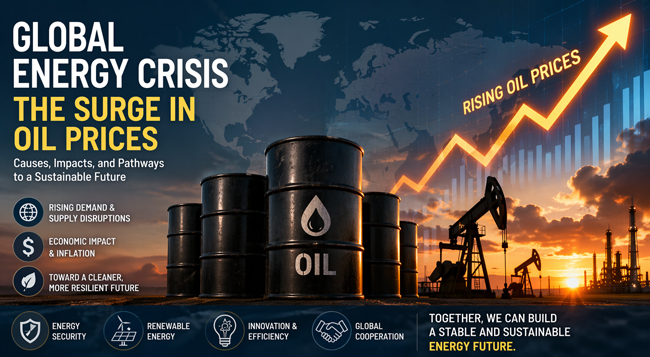
In recent years, the global economy has been significantly affected by fluctuations in energy markets. One of the most pressing concerns today is the global energy crisis, particularly the steady rise in oil prices. This issue not only influences national economies but also affects everyday life, from transportation costs to household energy bills. In this article, we will respectfully examine the causes, impacts, and potential future of this ongoing crisis.
1. Causes of the Global Energy Crisis
The global energy crisis is the result of a combination of complex factors rather than a single cause. First and foremost, geopolitical tensions play a critical role. Conflicts in key oil-producing regions, especially in the Middle East, often disrupt supply chains and create uncertainty in global markets.
Additionally, post-pandemic economic recovery has led to a sharp increase in energy demand. As industries resumed operations and global travel increased, the demand for oil surged rapidly, exceeding supply in many cases.
Another important factor is the underinvestment in energy infrastructure. Over the past decade, many countries have reduced investments in fossil fuels while transitioning toward renewable energy. While this transition is necessary for long-term sustainability, it has created short-term supply shortages.
Lastly, production cuts by major oil-exporting countries have also contributed to rising prices. When supply is intentionally limited, market prices naturally increase, affecting economies worldwide.
2. Economic and Social Impacts of Rising Oil Prices
Rising oil prices have far-reaching consequences that extend beyond the energy sector. One of the most immediate effects is inflation. As fuel costs increase, transportation and production expenses also rise, leading to higher prices for goods and services.
For households, this means a noticeable increase in the cost of living. Higher gasoline prices, increased electricity bills, and more expensive food products all place a financial burden on individuals and families.
Moreover, developing countries are particularly vulnerable. Many of these nations rely heavily on imported energy, making them more susceptible to price volatility. As a result, economic inequality between countries may widen.
Businesses are also affected, especially those in logistics, manufacturing, and aviation industries. Increased operational costs can reduce profit margins and, in some cases, lead to job losses or reduced economic activity.
3. Future Outlook and Possible Solutions
While the current situation may seem challenging, there are several pathways toward stability and improvement. One of the most promising solutions is the expansion of renewable energy sources, such as solar, wind, and hydrogen. These alternatives can reduce dependence on fossil fuels and provide more stable pricing in the long term.
Governments around the world are also encouraged to implement strategic energy policies, including diversifying energy sources and maintaining strategic reserves. Such measures can help mitigate the impact of sudden supply disruptions.
In addition, advancements in energy efficiency technologies can play a crucial role. By reducing overall energy consumption, both individuals and industries can lessen the pressure on global supply.
Finally, international cooperation is essential. By working together, countries can create more stable and transparent energy markets, ensuring that supply meets demand in a balanced manner.
Conclusion
In conclusion, the global energy crisis and rising oil prices are multifaceted challenges that require thoughtful and coordinated responses. While the causes are complex, the solutions are within reach through innovation, policy, and cooperation.
As we move forward, it is important to remain informed and adaptable. By understanding the dynamics of the energy market, we can better prepare for future changes and contribute to a more sustainable and stable global economy.