
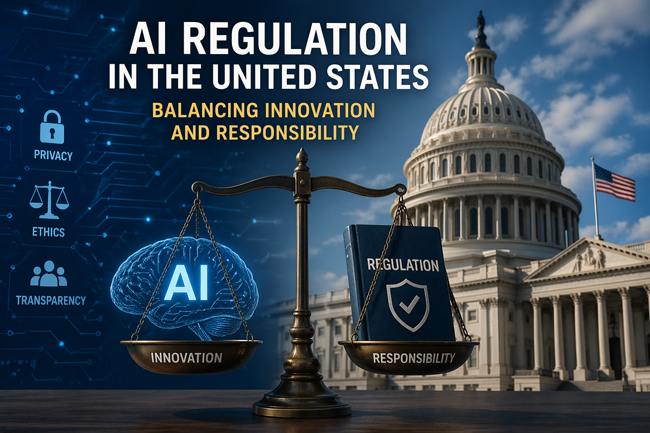
In recent years, artificial intelligence has become one of the most influential technologies shaping the global economy and digital landscape. In the United States, the rapid expansion of AI has sparked an ongoing discussion about the need for appropriate regulation. As AI systems become more advanced and widely adopted, policymakers and industry leaders are increasingly focused on ensuring that innovation progresses in a responsible and sustainable manner.
The Growing Need for AI Regulation
The rise of artificial intelligence has brought remarkable opportunities across multiple industries, including healthcare, finance, education, and media. AI technologies are improving efficiency, enhancing decision-making, and enabling new forms of innovation. However, alongside these benefits, there are growing concerns about privacy, data security, and the ethical use of AI systems.
One of the most significant concerns is the potential misuse of data. AI systems often rely on large datasets, which may include sensitive personal information. Without proper safeguards, there is a risk that such data could be misused or exposed. Additionally, the spread of AI-generated content has raised concerns about misinformation and its impact on public trust.
As a result, regulatory discussions in the United States have gained momentum. Government agencies are exploring frameworks that aim to ensure transparency, accountability, and fairness in AI development. These efforts are intended to protect individuals while allowing innovation to continue.
Challenges in Implementing Effective Policies
While the need for regulation is widely recognized, implementing effective policies remains a complex challenge. One of the key difficulties lies in balancing innovation with oversight. If regulations are too restrictive, they may hinder technological progress and limit economic growth. On the other hand, insufficient regulation could allow harmful practices to emerge.
Another challenge is the rapid pace of technological change. AI is evolving quickly, making it difficult for regulations to keep up. Policymakers must design flexible frameworks that can adapt to new developments without becoming outdated. This requires ongoing collaboration between government institutions, technology companies, and academic experts.
Industry leaders have increasingly expressed their willingness to cooperate with regulators. Many companies recognize that clear guidelines can help build trust and create a more stable environment for innovation. By working together, stakeholders can develop policies that support both growth and responsibility.
The Future of AI Regulation in the United States
Looking ahead, the future of AI regulation in the United States is expected to involve a combination of national policies and international cooperation. As AI becomes a global issue, collaboration between countries will play an important role in establishing consistent standards and best practices.
Public awareness is also expected to increase, leading to greater demand for transparency and ethical practices. Consumers are becoming more informed about how their data is used, and this awareness is likely to influence regulatory decisions. Companies that prioritize responsible AI practices may gain a competitive advantage in this evolving landscape.
In conclusion, AI regulation represents a critical step in shaping the future of technology. By adopting a balanced approach that encourages innovation while addressing potential risks, the United States can continue to lead in the development of artificial intelligence. Thoughtful regulation will not only protect society but also create a strong foundation for long-term technological progress.