
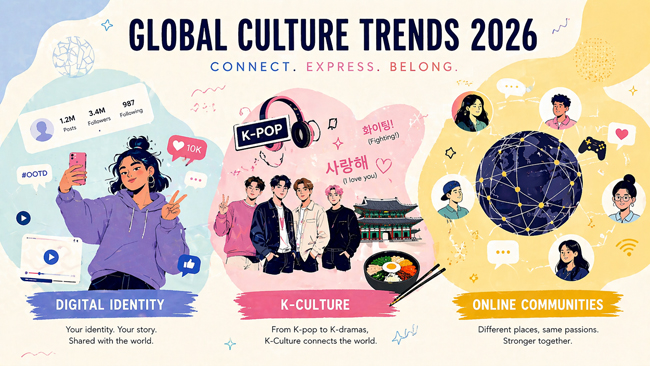
Culture in 2026 is no longer defined by geography alone. Instead, it is shaped by digital platforms, global connectivity, and rapidly evolving social values. From the influence of social media to the worldwide spread of Korean entertainment, culture today moves faster than ever. As people spend more time online, identities, communities, and trends are increasingly formed in digital spaces rather than physical ones.
This shift is not just changing how people communicate—it is redefining how culture itself is created, shared, and experienced across the world.
Digital Identity and the Social Media Era
One of the most powerful cultural forces today is digital identity. Platforms like TikTok and Instagram allow individuals to express themselves, build audiences, and even shape global trends. In many ways, a person’s online presence has become just as important as their real-world identity. For younger generations especially, identity is no longer limited to physical environments but is continuously formed and refined in digital spaces.
This shift has redefined how influence works. Individuals with strong online engagement can impact opinions, consumer behavior, and even social movements. Content creators, influencers, and everyday users all play a role in shaping culture, blurring the line between audience and producer. As a result, cultural power is becoming more decentralized and accessible than ever before.
Short-form video content, viral challenges, and influencer culture dominate attention. People are no longer just consumers of culture—they are creators. This has led to the rise of micro-trends that can spread globally within hours. A single video, hashtag, or idea can quickly move across borders, languages, and communities, creating shared cultural moments on a global scale.
At the same time, algorithms play a significant role in determining what content becomes visible. Recommendation systems prioritize engagement, often amplifying content that is emotionally impactful or highly shareable. This dynamic can accelerate trend cycles, making culture feel faster, more reactive, and sometimes more fragmented.
However, this also raises important questions. Issues like authenticity, mental health, and the pressure to maintain a curated online image are becoming central topics in cultural discussions. Many individuals feel the need to present an idealized version of themselves, which can lead to stress, comparison, and burnout.
As digital identity grows, so does the need to balance visibility with well-being. Increasingly, conversations around digital boundaries, mindful content consumption, and authentic self-expression are emerging. The challenge moving forward is not only how people express themselves online, but how they maintain a healthy relationship with the digital world while doing so.
The Global Expansion of K-Culture
Korean culture continues to be one of the most influential cultural exports in the world. Known as K-Culture, this phenomenon includes K-pop, K-dramas, fashion, and food. What started as a regional trend has now become a powerful global movement, shaping entertainment, lifestyle, and even consumer behavior across continents.
The growth of K-Culture is closely tied to digital platforms and global distribution channels. Social media and streaming services have removed traditional barriers, allowing Korean content to reach international audiences instantly. Fans from different countries can engage with the same content at the same time, creating a shared global experience.
Groups like BTS and global hits such as Squid Game have introduced millions of people to Korean storytelling, aesthetics, and values. These works go beyond entertainment—they reflect themes such as identity, social pressure, family, and resilience, which resonate with audiences worldwide. Streaming platforms like Netflix have played a major role in accelerating this spread by making content easily accessible across different regions and languages.
K-Culture’s success lies in its ability to combine strong narratives, high production quality, and emotional connection. At the same time, it demonstrates a unique blend of traditional and modern elements, offering something both familiar and fresh to global audiences. This balance has helped Korean content stand out in a highly competitive entertainment industry.
Beyond entertainment, K-Culture is also influencing fashion, beauty, tourism, and food industries. Korean brands, styles, and products are gaining international popularity, contributing to the country’s cultural and economic influence. Fans are not just consuming content—they are adopting aspects of Korean lifestyle and culture in their daily lives.
It also reflects a broader trend: audiences are increasingly open to content from different languages and cultures. This shift is creating a more diverse and interconnected global cultural landscape, where cultural exchange flows in multiple directions rather than from a single dominant source.
As K-Culture continues to evolve, it is likely to remain a key driver of global cultural trends, shaping how stories are told and how cultures connect in the digital age.
Online Communities and the New Cultural Ecosystem
Another major cultural trend is the rise of online communities. Platforms such as Reddit and Discord allow people with shared interests to connect regardless of location. These communities often develop their own language, humor, and cultural norms, forming unique identities that can be just as influential as traditional offline groups.
What makes these communities powerful is their ability to gather highly engaged individuals around specific topics. Whether it is gaming, entertainment, education, or faith-based discussions, people are able to find spaces where they feel understood and connected. This sense of belonging is a key factor in why online communities continue to grow rapidly.
From gaming and fandoms to faith-based groups and niche interests, online communities are becoming powerful cultural hubs. They influence opinions, shape trends, and even drive real-world actions such as social movements and consumer behavior. In many cases, trends that begin in small online communities eventually spread to mainstream culture, influencing media, marketing, and public discourse.
These communities also play a role in shaping identity. Individuals often express different aspects of themselves in different online spaces, contributing to a more layered and flexible sense of identity. This reflects a broader cultural shift toward personalization and diversity in how people present themselves and interact with others.
At the same time, these digital spaces can create echo chambers where people are exposed only to similar viewpoints. Algorithms and community dynamics can reinforce existing beliefs, making it harder for individuals to encounter diverse perspectives. This has led to growing concerns about polarization and the spread of misinformation.
As a result, understanding how online communities function is becoming essential to understanding modern culture itself. Moving forward, the challenge will be to maintain the positive aspects of connection and community while addressing the risks associated with division and information imbalance in the digital age.
Conclusion: Culture in a Connected World
Global culture in 2026 is dynamic, fast-moving, and deeply interconnected. Digital identity, K-Culture, and online communities are reshaping how people experience and define culture. While these changes bring new opportunities for creativity and connection, they also introduce new challenges related to identity, authenticity, and social impact.
As the world becomes more connected, culture will continue to evolve beyond borders. The key question is not just how culture spreads, but how individuals and communities choose to shape it in the digital age.