
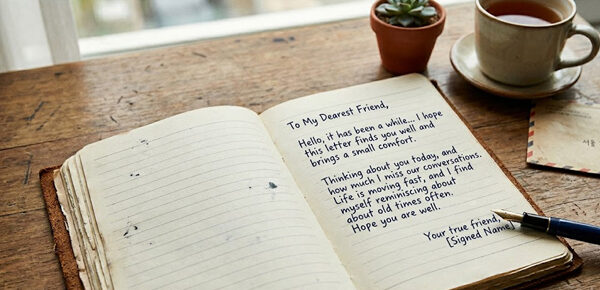
For most of human history, letters were one of the most meaningful ways people stayed connected.
Families separated by distance exchanged handwritten notes. Friends shared life updates through carefully crafted pages. Soldiers wrote home during times of war. Lovers preserved letters for decades, often keeping them in boxes long after the messages were read.
Then came email.
After that came text messaging, social media, and instant communication platforms. Within just a few decades, handwritten letters largely disappeared from everyday life. Communication became faster, easier, and more convenient than ever before.
Yet something unexpected is happening in 2026.
While digital communication dominates modern life, many people are rediscovering the appeal of handwritten letters. Pen pal communities are growing, stationery sales are increasing, and younger generations are showing renewed interest in sending physical mail.
At first glance, this trend may seem surprising. Why would anyone choose a slower form of communication when instant messaging is available at all times?
The answer reveals something important about modern culture and the changing way people think about connection.
Living in an Age of Instant Communication
Never before have people had so many ways to communicate.
A message can travel across the world in seconds. Photos can be shared instantly. Video calls allow people to see one another regardless of location.
Technology has removed many barriers that once made communication difficult.
Yet convenience has also changed the nature of communication itself.
Many digital conversations are brief and fragmented. Messages are often sent while multitasking, commuting, working, or scrolling through social media. Responses can be rushed and easily forgotten.
People exchange hundreds of messages every week, yet many struggle to remember specific conversations.
The speed of communication has increased, but depth has not always followed.
As a result, some people are beginning to crave something different.
Handwritten letters require time.
They cannot be sent instantly or answered immediately. The writer must slow down, organize thoughts, and communicate with greater intention.
That process creates a different experience for both the sender and the recipient.
Why Younger Generations Are Embracing Letters
One of the most interesting aspects of this trend is that many participants are young adults.
Generation Z is often described as the first generation to grow up entirely in the digital era. Smartphones, messaging apps, and social media have been present throughout much of their lives.
Yet many younger people are now exploring older forms of communication.
Social media platforms are filled with videos showing people decorating envelopes, collecting stationery, writing journal entries, and exchanging letters with friends around the world.
For some, letter writing offers a break from the constant flow of notifications.
Digital communication often feels urgent. Messages arrive continuously, creating an expectation of immediate response.
Letters operate differently.
There is no pressure to reply within minutes. The process unfolds naturally over days or weeks.
Many young people describe letter writing as calming and intentional. Rather than reacting quickly, they can take time to reflect on what they want to say.
In an era dominated by speed, that slower pace feels refreshing.
The Growth of Pen Pal Communities
The modern revival of letter writing is not limited to personal correspondence.
Around the world, pen pal communities are experiencing renewed interest.
Some participants exchange letters to practice foreign languages. Others enjoy learning about different cultures through direct communication. Many simply appreciate the opportunity to form friendships beyond their local communities.
Unlike social media interactions, which often involve large audiences, letters are typically private and personal.
The conversation exists between two individuals rather than being shared publicly.
This creates a sense of authenticity that many people find appealing.
A letter often reveals more about a person than a carefully curated social media profile.
Writers discuss daily life, personal challenges, future goals, and small details that rarely appear online.
Over time, these exchanges can develop into meaningful friendships.
For many participants, the anticipation is part of the experience.
Checking the mailbox and discovering a handwritten letter feels very different from receiving another notification on a phone.
The physical nature of the communication gives it a sense of significance.
The Appeal of Tangible Memories
Another reason letter writing is returning is that physical objects often carry emotional value.
Digital messages are convenient, but they are also temporary.
Thousands of texts can disappear into archives that are rarely revisited. Social media posts become buried beneath newer content. Emails accumulate until they are deleted.
Letters are different.
They exist in the physical world.
A handwritten note can be stored, displayed, reread, and preserved for years. The paper itself becomes part of the memory.
The handwriting reflects personality. Small imperfections reveal human presence. Even the choice of paper or ink contributes to the experience.
Many people still treasure letters received from parents, grandparents, friends, or loved ones decades earlier.
These letters become more than communication.
They become keepsakes.
In a culture increasingly dominated by digital content, tangible memories carry unique emotional weight.
The Influence of Stationery and Creative Culture
The return of letter writing is also connected to broader creative trends.
Interest in journaling, scrapbooking, calligraphy, and analog hobbies has grown significantly in recent years.
Many people enjoy the artistic aspects of writing letters.
Decorative paper, stickers, stamps, fountain pens, wax seals, and handmade envelopes have become popular among hobby communities.
What begins as communication often becomes a creative project.
Some people spend considerable time designing letters that reflect their personality and interests.
For others, the process offers a welcome opportunity to step away from screens and engage in a more hands-on activity.
This overlap between creativity and communication helps explain why letter writing appeals to so many people today.
It is not simply about sending information.
It is about creating something meaningful.
Businesses and Organizations Are Paying Attention
The growing interest in letter writing has not gone unnoticed.
Stationery brands have reported increasing demand for premium notebooks, greeting cards, and writing supplies. Independent stationery shops have found new audiences among younger consumers.
Libraries, schools, and community organizations have also begun organizing letter-writing events.
Some programs encourage participants to write to senior citizens experiencing loneliness. Others connect students with international pen pals.
These initiatives highlight the social value of handwritten communication.
In many cases, letter writing serves not only as a personal activity but also as a way to strengthen communities.
The practice encourages patience, empathy, and thoughtful communication—qualities that are increasingly valuable in a fast-paced world.
What the Return of Letter Writing Means for the Future
The revival of letter writing does not suggest that people are abandoning technology.
Digital communication will remain an essential part of modern life.
However, the growing popularity of letters demonstrates that convenience is not the only thing people value.
People also value meaning.
They value effort.
They value experiences that feel personal and memorable.
Handwritten letters require all three.
In many ways, the return of letter writing reflects a broader cultural shift. As technology becomes faster and more automated, people are seeking experiences that feel distinctly human.
They want communication that cannot be replicated by algorithms or reduced to quick reactions.
A handwritten letter requires presence.
It requires attention.
It requires time.
Those qualities may seem old-fashioned, but they are becoming increasingly rare.
And perhaps that is exactly why letter writing is finding a place in modern culture once again.
In a world filled with instant messages, the simple act of putting pen to paper has become something special.
Not because it is efficient.
But because it reminds people that meaningful communication is often worth waiting for.