
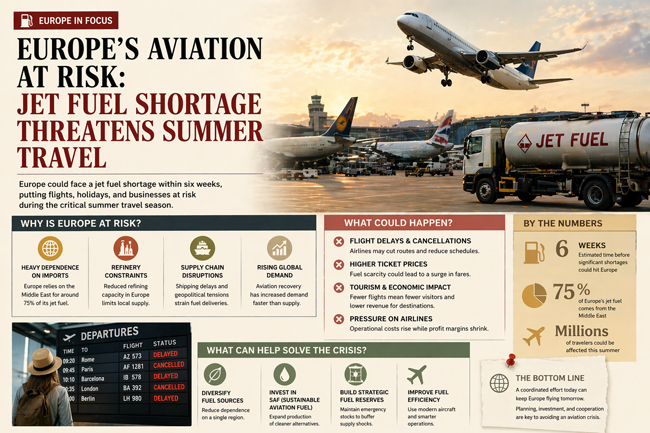
In recent months, concerns have been growing regarding a potential aviation crisis in Europe due to the risk of jet fuel shortages. As global supply chains face increasing pressure from geopolitical tensions and energy market instability, the aviation industry is once again confronting significant uncertainty. This issue is particularly important as Europe prepares for the busy summer travel season, during which millions of passengers rely on stable and efficient air transportation. In this article, we will respectfully examine the causes of this potential shortage, its impact on the aviation sector, and the possible solutions moving forward.
1. Causes Behind the Jet Fuel Shortage Risk
The risk of jet fuel shortages in Europe can be attributed to several interconnected factors. One of the primary causes is the region’s heavy dependence on imported fuel, particularly from the Middle East. Any disruption in these supply routes, whether due to geopolitical conflict or logistical challenges, can significantly reduce availability.
In addition, refining capacity within Europe has declined in recent years. Several refineries have either reduced operations or shut down entirely as part of long-term energy transition strategies. While this shift supports environmental goals, it has also limited Europe’s ability to produce sufficient jet fuel domestically.
Another contributing factor is the increase in global demand for aviation fuel. As international travel continues to recover and expand following previous global disruptions, the demand for jet fuel has risen sharply. This increase places additional strain on already limited supply.
Furthermore, transportation and distribution bottlenecks—including shipping delays and infrastructure limitations—have complicated the timely delivery of fuel to major European airports. When combined, these factors create a situation where supply may not be able to meet peak demand.
2. Potential Impact on Airlines and Travelers
If jet fuel shortages were to materialize, the consequences could be substantial for both airlines and passengers. One of the most immediate effects would likely be flight disruptions, including delays, cancellations, and reduced flight schedules. Airlines may be forced to prioritize certain routes while cutting others to manage limited fuel supplies.
In addition, ticket prices could increase significantly. As fuel is one of the largest operational costs for airlines, any rise in fuel prices or scarcity can directly impact fares. This may make air travel less accessible for some passengers, particularly during peak seasons.
The tourism industry could also experience negative effects. Many European economies rely heavily on tourism, especially during the summer months. A reduction in flight availability could lead to fewer visitors, affecting hotels, restaurants, and local businesses.
Moreover, airlines themselves may face financial pressure. Smaller carriers or those with limited fuel contracts could be particularly vulnerable, potentially leading to reduced profitability or operational challenges.
3. Possible Solutions and Future Outlook
Despite these concerns, there are several strategies that may help mitigate the risk of a jet fuel shortage. One important approach is the diversification of fuel supply sources. By reducing reliance on a limited number of regions, Europe can improve its resilience against disruptions.
Another promising development is the increased focus on sustainable aviation fuels (SAF). These alternatives can help supplement traditional jet fuel while also supporting environmental goals. Although currently limited in scale, continued investment may expand their availability in the future.
Governments and industry stakeholders can also work together to improve fuel storage and strategic reserves. Maintaining sufficient запас capacity can help buffer short-term disruptions and stabilize supply during critical periods.
Additionally, advancements in fuel efficiency and aircraft technology may reduce overall consumption. Airlines that invest in newer, more efficient aircraft can lower their dependency on fuel while improving operational sustainability.
Conclusion
In conclusion, the potential jet fuel shortage in Europe represents a serious but manageable challenge. While the causes are complex and interconnected, proactive planning and collaboration between governments, energy providers, and the aviation industry can help prevent a full-scale crisis.
As the global energy landscape continues to evolve, adaptability and innovation will be essential. By taking strategic steps today, Europe can ensure the stability of its aviation sector while preparing for a more sustainable future.