
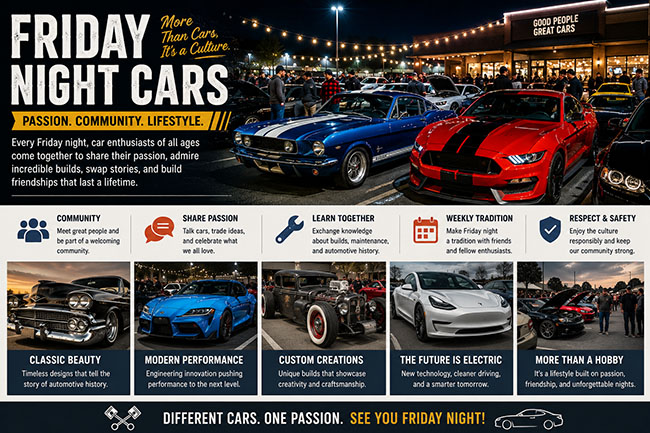
Automobiles have played an important role in modern society for more than a century. Beyond their practical function as transportation, cars have also become symbols of engineering, design, innovation, and personal expression. Across many countries, automotive enthusiasts regularly gather to share their passion for vehicles, exchange knowledge, and celebrate automotive culture.
One of the most recognizable examples of this tradition is the Friday night car gathering. Often referred to as “Friday Night Cars,” these community events bring together people who share an interest in automobiles, whether they appreciate classic vehicles, modern performance cars, custom builds, or emerging automotive technologies.
The popularity of these gatherings demonstrates how automobiles continue to connect people and create opportunities for social interaction, education, and community engagement.
The Origins of Car Enthusiast Culture
Automotive culture began shortly after automobiles became widely available to the public.
As vehicle ownership increased, drivers naturally formed clubs and organizations centered around shared interests. Early enthusiasts exchanged maintenance tips, discussed engineering innovations, and organized recreational drives.
Over time, these informal gatherings evolved into organized events that included exhibitions, competitions, and educational activities.
Today, car culture exists in many forms, including:
- Car shows
- Enthusiast clubs
- Racing events
- Restoration communities
- Automotive museums
- Community meetups
Friday night gatherings represent one of the most accessible and welcoming aspects of automotive culture.
Why Car Gatherings Remain Popular
Despite advances in technology and changing transportation trends, automotive gatherings continue to attract large numbers of participants.
Several factors contribute to their popularity.
Shared Interests
Car enthusiasts enjoy discussing topics such as:
- Vehicle design
- Engineering
- Performance
- Restoration
- Customization
- Automotive history
Gatherings provide opportunities to connect with others who share similar interests.
Community Building
Many participants attend not only to view vehicles but also to socialize.
Automotive events often foster long-term friendships and strong community connections.
Education and Learning
Car gatherings offer valuable opportunities for informal learning.
Participants frequently exchange information about maintenance, restoration techniques, technological developments, and historical vehicles.
This educational aspect contributes significantly to the continued growth of enthusiast communities.
The Diversity of Modern Automotive Communities
One notable characteristic of contemporary car culture is its diversity.
Vehicle enthusiasts may focus on many different categories, including:
Classic Cars
Classic vehicles provide insight into automotive history and design evolution.
Many collectors invest significant time and effort into preserving historically important automobiles.
Sports Cars
Performance-oriented vehicles continue to attract enthusiasts interested in speed, engineering, and driving dynamics.
Custom Builds
Custom vehicles showcase creativity and craftsmanship.
Owners often modify vehicles to reflect personal preferences and unique design concepts.
Electric Vehicles
As electric transportation becomes more common, new enthusiast communities are emerging around sustainable automotive technologies.
This diversity helps ensure that automotive culture remains relevant across multiple generations.
The Educational Value of Automotive Events
Automobiles incorporate numerous scientific and engineering principles.
Car gatherings often expose participants to concepts related to:
- Mechanical engineering
- Electrical systems
- Aerodynamics
- Materials science
- Manufacturing
- Design
Young enthusiasts frequently develop technical interests through exposure to automotive communities.
Many professionals working in engineering and transportation industries trace their early inspiration to experiences involving cars and vehicle technology.
Automotive events can therefore serve as informal educational environments.
The Role of Restoration and Preservation
Vehicle restoration represents an important segment of automotive culture.
Restoration projects help preserve historical vehicles that might otherwise disappear.
These efforts require knowledge in areas such as:
- Mechanical repair
- Bodywork
- Painting
- Historical research
- Fabrication
Restored vehicles often provide valuable insight into transportation history and industrial development.
Preservation efforts contribute to cultural heritage while allowing future generations to appreciate automotive innovation from earlier eras.
Automotive Design as an Art Form
Many enthusiasts view automobile design as a form of artistic expression.
Vehicle designers balance multiple objectives, including:
- Functionality
- Safety
- Aerodynamics
- Comfort
- Aesthetics
Throughout history, certain vehicles have become recognized as iconic examples of industrial design.
Automotive gatherings allow people to appreciate the visual and creative aspects of vehicle development.
The design element of car culture attracts individuals who may not necessarily be interested in performance or engineering but appreciate craftsmanship and aesthetics.
Technology and the Modern Automobile
Technology has transformed the automotive industry dramatically.
Modern vehicles often include advanced systems such as:
- Driver assistance technologies
- Navigation systems
- Connectivity features
- Electric powertrains
- Digital displays
- Advanced safety systems
These innovations continue to reshape the driving experience.
Automotive gatherings increasingly feature discussions about emerging technologies and the future direction of transportation.
The combination of traditional automotive passion and modern innovation helps keep enthusiast communities dynamic and forward-looking.
The Economic Impact of Automotive Enthusiasm
Automotive culture contributes to economic activity in many ways.
Industries supported by automotive enthusiasts include:
- Vehicle restoration
- Parts manufacturing
- Maintenance services
- Event management
- Tourism
- Specialty retail
Car-related events often attract visitors who support local businesses, restaurants, hotels, and service providers.
As a result, community gatherings can generate positive economic benefits while supporting regional tourism initiatives.
Responsible Enthusiast Communities
Modern automotive communities increasingly emphasize responsible participation.
Important priorities include:
- Vehicle safety
- Respectful driving behavior
- Community engagement
- Environmental awareness
- Legal compliance
Organized events often encourage safe and respectful conduct while providing structured environments for enthusiasts to gather.
This focus on responsibility helps maintain positive relationships between automotive communities and the broader public.
The Social Benefits of Shared Hobbies
Research consistently demonstrates the value of hobbies and community participation.
Shared interests help individuals:
- Build friendships
- Develop skills
- Reduce stress
- Increase social engagement
- Improve overall well-being
Automotive gatherings provide opportunities for meaningful social interaction across age groups and backgrounds.
People who might otherwise never meet often develop strong connections through their shared appreciation of vehicles and transportation history.
These social benefits help explain the lasting popularity of community car events.
The Future of Car Culture
The automotive industry continues to evolve rapidly.
Emerging trends include:
- Electric vehicles
- Sustainable transportation
- Autonomous driving technologies
- Connected vehicle systems
- Advanced manufacturing methods
Despite these changes, the fundamental appeal of automotive culture remains strong.
People continue to appreciate innovation, craftsmanship, engineering excellence, and personal expression through vehicles.
Future enthusiast communities will likely incorporate both traditional automotive interests and emerging transportation technologies.
Conclusion
Friday Night Cars gatherings represent much more than opportunities to display vehicles. They serve as community events that bring together individuals who share an interest in automotive history, technology, design, and innovation.
These gatherings encourage learning, social interaction, and appreciation for the engineering achievements that have shaped transportation over the past century. Whether focused on classic restorations, modern performance vehicles, custom builds, or emerging electric technologies, automotive communities continue to provide meaningful experiences for enthusiasts around the world.
As transportation technology advances, car culture will continue evolving while preserving the passion and community spirit that have defined automotive gatherings for generations.