The AI Economic Boom: A New Era of Growth and Transformation
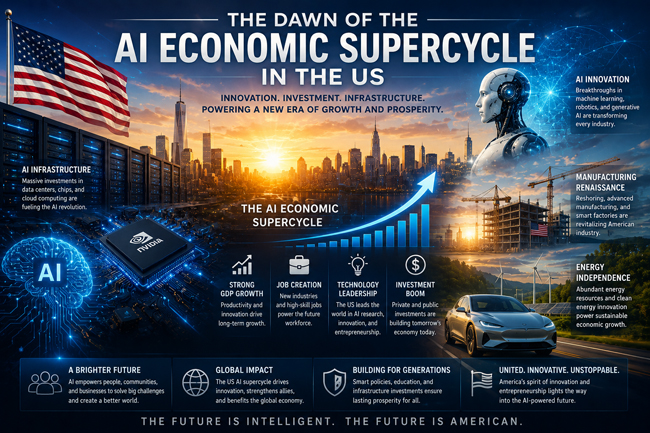
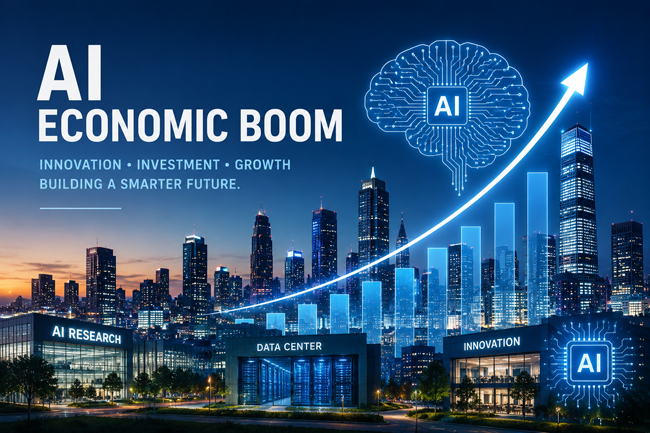
Artificial intelligence (AI) is no longer a futuristic concept; it’s a present-day force driving a significant economic boom. This transformative wave, often referred to as the “AI Economic Boom,” is reshaping industries, creating new opportunities, and fundamentally altering how we work, live, and interact. From automating complex tasks to unlocking novel insights, AI’s influence is pervasive and its economic impact is only beginning to unfold.
This boom isn’t just about technological advancement; it’s about a fundamental shift in economic paradigms. Businesses are leveraging AI to enhance efficiency, personalize customer experiences, and develop innovative products and services. Governments and researchers are exploring AI’s potential to solve pressing global challenges, from climate change to disease prevention. For individuals, it means a dynamic job market, new skill demands, and the potential for enhanced productivity and creativity.
Understanding the AI Economic Boom is crucial for anyone looking to navigate the evolving economic landscape. This article will delve into the core drivers of this phenomenon, explore its impact across various sectors, and discuss the opportunities and challenges it presents.
Drivers of the AI Economic Boom
Several interconnected factors are fueling the current AI Economic Boom:
-
Advancements in Computing Power: The exponential growth in processing power, particularly with GPUs (Graphics Processing Units), has made it feasible to train and deploy complex AI models that were once computationally impossible. This has enabled breakthroughs in areas like deep learning.
-
Vast Data Availability: The digital age has generated an unprecedented amount of data. AI algorithms thrive on data, and the availability of massive datasets for training models has been a critical catalyst. This includes everything from user-generated content to sensor data and scientific research.
-
Algorithmic Innovations: Continuous research and development in machine learning algorithms, especially deep learning and neural networks, have led to more sophisticated and effective AI capabilities. These advancements allow AI to perform tasks with remarkable accuracy and efficiency.
-
Increased Investment and Funding: Venture capital firms, corporations, and governments are pouring significant resources into AI research, development, and deployment. This influx of capital accelerates innovation and the commercialization of AI technologies.
-
Growing Demand for Automation and Efficiency: Businesses across all sectors are seeking ways to optimize operations, reduce costs, and improve productivity. AI offers powerful solutions for automation, predictive analytics, and intelligent decision-making, meeting this growing demand.
-
The Rise of Cloud Computing: Cloud platforms provide scalable and accessible infrastructure for developing, deploying, and managing AI applications. This democratizes access to AI tools and resources, enabling smaller businesses and startups to compete.
AI’s Transformative Impact Across Industries
The AI Economic Boom is not confined to the tech sector; its influence is rippling through virtually every industry imaginable.
Healthcare: Revolutionizing Diagnosis and Treatment
AI is transforming healthcare by improving diagnostic accuracy, personalizing treatment plans, and accelerating drug discovery.
-
Diagnostic Imaging: AI algorithms can analyze medical images like X-rays, CT scans, and MRIs with remarkable speed and precision, often detecting subtle anomalies that might be missed by the human eye. This leads to earlier diagnosis of diseases like cancer and diabetic retinopathy.
-
Personalized Medicine: By analyzing a patient’s genetic information, lifestyle data, and medical history, AI can help tailor treatment plans for maximum effectiveness and minimal side effects.
-
Drug Discovery and Development: AI can significantly speed up the lengthy and costly process of drug discovery by analyzing vast biological datasets, predicting molecular interactions, and identifying potential drug candidates.
-
Robotic Surgery: AI-powered robots are assisting surgeons with increased precision, minimally invasive procedures, and faster recovery times for patients.
Finance: Enhancing Efficiency and Security
The financial sector is leveraging AI for everything from fraud detection to algorithmic trading and personalized financial advice.
-
Fraud Detection and Prevention: AI algorithms can analyze transaction patterns in real-time to identify and flag suspicious activities, significantly reducing financial fraud.
-
Algorithmic Trading: AI-driven trading systems can execute trades at high speeds based on complex market analyses, often outperforming human traders.
-
Credit Scoring and Risk Assessment: AI models can assess creditworthiness more accurately by analyzing a wider range of data points, potentially expanding access to credit for underserved populations.
-
Customer Service: AI-powered chatbots and virtual assistants are handling customer inquiries, providing support, and offering personalized financial advice 24/7.
Retail and E-commerce: Personalizing the Customer Journey
AI is revolutionizing how consumers shop by offering personalized recommendations, optimizing supply chains, and enhancing customer service.
-
Personalized Recommendations: AI analyzes customer browsing history, purchase patterns, and preferences to provide tailored product suggestions, increasing sales and customer satisfaction.
-
Inventory Management and Demand Forecasting: AI can predict demand for products with greater accuracy, optimizing inventory levels, reducing waste, and ensuring products are available when customers want them.
-
Chatbots for Customer Support: AI-powered chatbots handle customer queries, track orders, and resolve issues, freeing up human agents for more complex tasks.
-
Optimized Pricing: AI can dynamically adjust prices based on demand, competitor pricing, and inventory levels to maximize revenue.
Manufacturing: Driving Automation and Predictive Maintenance
AI is ushering in a new era of smart manufacturing, increasing efficiency, quality, and safety.
-
Robotics and Automation: AI-powered robots are performing repetitive, dangerous, or precision-intensive tasks on assembly lines, increasing production speed and consistency.
-
Predictive Maintenance: AI analyzes sensor data from machinery to predict potential failures before they occur, allowing for proactive maintenance and minimizing costly downtime.
-
Quality Control: AI-powered vision systems can inspect products for defects with high accuracy, ensuring consistent quality.
-
Supply Chain Optimization: AI can optimize logistics, predict potential disruptions, and improve overall supply chain efficiency.
Transportation and Logistics: Optimizing Routes and Autonomous Systems
AI is a key enabler of autonomous vehicles and is significantly improving the efficiency of logistics operations.
-
Autonomous Vehicles: AI is the core technology behind self-driving cars, trucks, and drones, promising to revolutionize personal mobility and freight transportation.
-
Route Optimization: AI algorithms analyze traffic patterns, weather conditions, and delivery schedules to determine the most efficient routes for delivery vehicles, saving time and fuel.
-
Warehouse Automation: AI-powered robots are automating tasks within warehouses, from picking and packing to sorting and inventory management.
New Opportunities and Job Creation
While concerns about AI-driven job displacement are valid, the AI Economic Boom is also a powerful engine for job creation and the emergence of entirely new roles and industries.
-
AI Specialists and Engineers: There is a high demand for professionals who can develop, deploy, and maintain AI systems, including machine learning engineers, data scientists, AI researchers, and AI ethicists.
-
Data Curators and Annotators: AI models require vast amounts of labeled data for training. This has created jobs for individuals who can collect, clean, and annotate data.
-
AI Trainers and Educators: As AI becomes more integrated into various professions, there will be a growing need for individuals who can train others to use AI tools effectively and understand AI concepts.
-
Human-AI Collaboration Roles: Many future jobs will involve close collaboration between humans and AI systems. This could include roles like AI-assisted designers, AI-powered customer service managers, and human oversight for autonomous systems.
-
New Industries and Business Models: AI is enabling entirely new business models and industries that were not previously possible, such as personalized AI tutoring platforms, AI-driven content creation services, and advanced AI-powered analytics firms.
Challenges and Ethical Considerations
Despite its immense potential, the AI Economic Boom also presents significant challenges and ethical considerations that must be addressed.
-
Job Displacement and Reskilling: As AI automates certain tasks, some jobs may become obsolete. A proactive approach to reskilling and upskilling the workforce is essential to ensure a smooth transition.
-
Bias in AI Systems: AI models trained on biased data can perpetuate and even amplify existing societal biases related to race, gender, and other factors. Ensuring fairness and equity in AI development is paramount.
-
Privacy Concerns: The collection and use of vast amounts of data by AI systems raise significant privacy concerns. Robust data protection regulations and transparent data practices are needed.
-
Security Risks: AI systems can be vulnerable to cyberattacks, and the potential misuse of AI for malicious purposes (e.g., autonomous weapons) is a serious concern.
-
The Digital Divide: Unequal access to AI technologies and the skills needed to use them could exacerbate existing inequalities between individuals, businesses, and nations.
-
Accountability and Transparency: Determining accountability when an AI system makes an error or causes harm can be complex. Ensuring transparency in how AI systems make decisions is crucial for trust.
Navigating the AI Economic Boom: Strategies for Success
To thrive in the era of the AI Economic Boom, individuals and organizations must adopt a proactive and adaptive mindset.
For Individuals:
-
Embrace Lifelong Learning: Continuously acquire new skills, particularly in areas related to technology, data analysis, and AI. Online courses, certifications, and workshops are valuable resources.
-
Develop “Human” Skills: Focus on skills that AI currently struggles to replicate, such as critical thinking, creativity, emotional intelligence, collaboration, and complex problem-solving.
-
Understand AI Fundamentals: Gain a basic understanding of how AI works, its capabilities, and its limitations. This will help you leverage AI tools more effectively and identify new opportunities.
-
Be Adaptable and Flexible: The job market is evolving rapidly. Be open to new roles, industries, and ways of working.
-
Explore AI-Powered Tools: Experiment with AI tools relevant to your profession or interests to enhance your productivity and creativity.
For Businesses:
-
Develop an AI Strategy: Clearly define how AI can support your business objectives, identify specific use cases, and allocate resources accordingly.
-
Invest in Your Workforce: Provide training and development opportunities for employees to acquire AI-related skills and adapt to new technologies.
-
Prioritize Ethical AI Development: Implement robust ethical guidelines, address potential biases, and ensure transparency and accountability in your AI systems.
-
Foster a Culture of Innovation: Encourage experimentation and learning, and be willing to adapt your business models as AI technologies evolve.
-
Collaborate and Partner: Consider partnerships with AI technology providers, research institutions, or other businesses to accelerate AI adoption and innovation.
-
Focus on Data Governance: Ensure your data is clean, secure, and ethically managed, as data is the foundation of effective AI.
The Future of the AI Economic Boom
The AI Economic Boom is not a fleeting trend; it’s a foundational shift that will continue to shape our economy and society for decades to come. As AI technologies mature and become more integrated into our lives, we can expect:
-
Increased Automation: More tasks across various sectors will be automated, leading to significant efficiency gains and potential shifts in employment.
-
Hyper-Personalization: AI will enable unprecedented levels of personalization in products, services, and experiences.
-
Solving Grand Challenges: AI will play a crucial role in addressing complex global issues like climate change, disease, and poverty.
-
Enhanced Human Capabilities: AI will augment human intelligence and creativity, enabling us to achieve things previously thought impossible.
-
Evolving Regulatory Landscapes: Governments worldwide will continue to develop regulations to govern the ethical and responsible use of AI.
The journey through the AI Economic Boom will undoubtedly involve both excitement and challenges. By understanding its drivers, embracing its opportunities, and proactively addressing its complexities, we can collectively harness the power of AI to build a more prosperous, equitable, and innovative future.
Conclusion: Embracing the AI-Powered Future
The AI Economic Boom represents a profound transformation, driven by rapid technological advancements and a growing demand for intelligent solutions. It’s reshaping industries, creating new avenues for economic growth, and fundamentally altering the nature of work. While challenges such as job displacement and ethical considerations require careful attention and proactive strategies, the opportunities for innovation, efficiency, and societal advancement are immense.
To navigate this dynamic landscape successfully, individuals must commit to lifelong learning and cultivate uniquely human skills, while businesses need to develop clear AI strategies, invest in their workforce, and prioritize ethical development. By embracing adaptability and foresight, we can all play a part in shaping a future where AI serves as a powerful force for good, driving progress and creating shared prosperity.